
Table of Contents
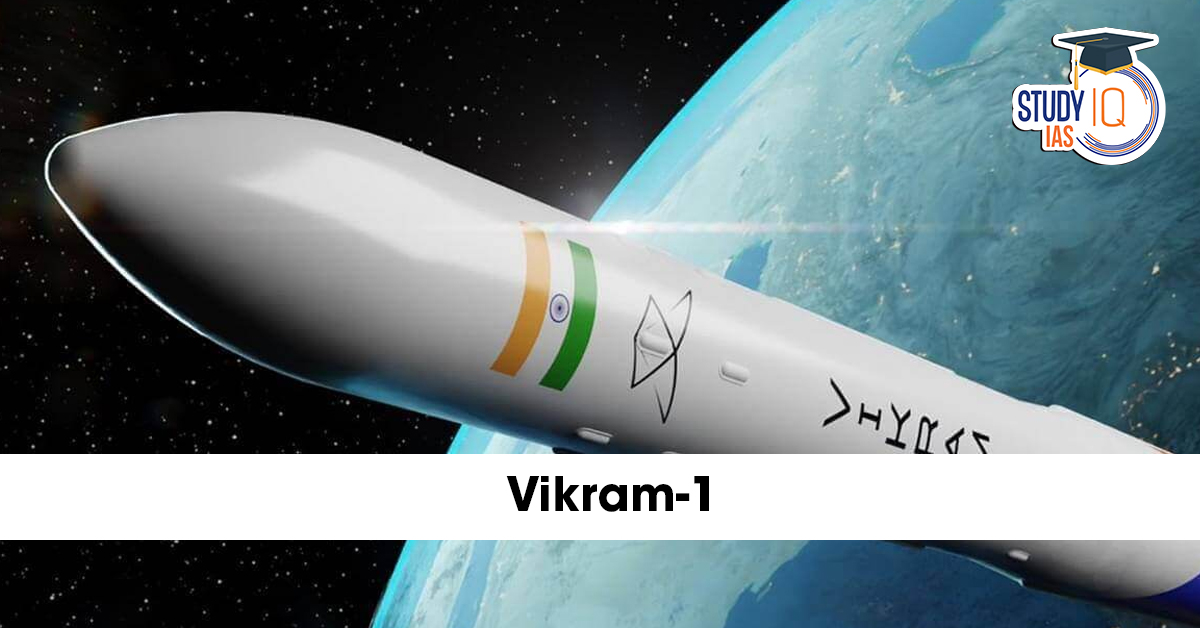
India’s private space revolution reached a historic milestone when Prime Minister Narendra Modi unveiled the Vikram-I rocket on 27 November 2025 at Skyroot Aerospace’s new Infinity Campus in Hyderabad. Named after Dr. Vikram Sarabhai, the father of India’s space programme, Vikram-I is the country’s first fully private orbital-class launch vehicle and is set to make its maiden flight in early 2026.
With the ability to place up to 350 kg in Low Earth Orbit (LEO) and launch within 24 hours of arrival at the pad, Vikram-I is poised to capture a significant share of the booming global small-satellite launch market.
Vikram-I Rocket Latest News (November–December 2025)
- 27 Nov 2025: PM Modi physically unveiled the fully integrated Vikram-I rocket at Hyderabad.
- Skyroot declared the vehicle “launch-ready” with the first mission targeted for February–March 2026 from Sriharikota.
- The company aims to scale production to one orbital rocket per month from its 200,000 sq ft Infinity Campus.
- Over ₹1,000 crore in new investments announced to accelerate Vikram-series development.
What is Vikram-I Rocket?
Developed by Skyroot Aerospace (founded 2018), Vikram-I is a four-stage, small-lift launch vehicle designed exclusively for the commercial small-satellite segment. It follows Skyroot’s successful sub-orbital Vikram-S flight in November 2022 — India’s first private rocket to reach space.
Key Highlights
- Height: 26 metres
- Total Thrust: ~1,200 kN
- Payload to LEO (500 km): 350 kg
- Payload to SSO (500 km): 260 kg
- Launch turnaround: As low as 24 hours
Technical Specifications & Features of Vikram-I
| Parameter | Specification |
|---|---|
| Stages | 4 (3 solid + 1 liquid upper stage) |
| Stage 1–3 | Solid propellant motors |
| Stage 4 | Hypergolic liquid stage with 4 × Raman engines (3D-printed) |
| Propellant (Stage 4) | MMH fuel + MON-3/NTO oxidiser (instant ignition on contact) |
| Structure | All-carbon composite body – India’s first fully carbon-fibre orbital rocket |
| Separation System | Ultra-low-shock pneumatic separation |
| Avionics | Advanced real-time navigation, guidance & control |
| Launch Flexibility | Mobile launch capability; can operate from any Indian spaceport |
These innovations make Vikram-I lighter, cheaper, and far more responsive than traditional government-built rockets.
Why Vikram-I is a Game-Changer for India’s Space Sector
- Dedicated Small-Sat Launches – No more waiting years for a slot on PSLV or GSLV.
- On-Demand Launches – 24-hour call-up time rivals global leaders like Rocket Lab.
- Cost-Competitive – Expected pricing ~$5–10 million per launch.
- 100% Indigenous – Over 400 Indian vendors contributed components.
- Scalable Family – Vikram-I is the first of a series; larger reusable versions already in planning.
Vikram-I vs Global Competitors (2025)
| Rocket | Company | Country | Payload to LEO | Launch Price (est.) |
|---|---|---|---|---|
| Vikram-I | Skyroot Aerospace | India | 350 kg | $6–10M |
| Electron | Rocket Lab | New Zealand/US | 300 kg | $7.5M |
| Rocket 3 | Astra (defunct) | USA | 150 kg | $12M |
| Alpha | Firefly | USA | 1,000 kg | $15M |
Vikram-I directly competes with Rocket Lab’s Electron while offering lower costs and faster integration for Indian and international customers.
Roadmap After Vikram-I
- 2026: 2–3 orbital launches of Vikram-I
- 2027–28: Introduction of Vikram-II (700–800 kg to LEO)
- 2030: Reusable first-stage technology demonstration
Skyroot aims to capture 10% of the global small-satellite launch market by 2030.
Conclusion
The unveiling of Vikram-I marks the arrival of India’s private space age. From carrying rocket parts on bicycles in the 1960s to unveiling a carbon-composite orbital rocket in 2025, India has come full circle — and the journey has only begun.
 UPSC Cut Off 2025-26: Prelims, Mains and...
 Mascots for Census 2027 in India: Theme,...
 The Legality of The U.S.-Israel Strikes ...











 WhatsApp





