
Table of Contents
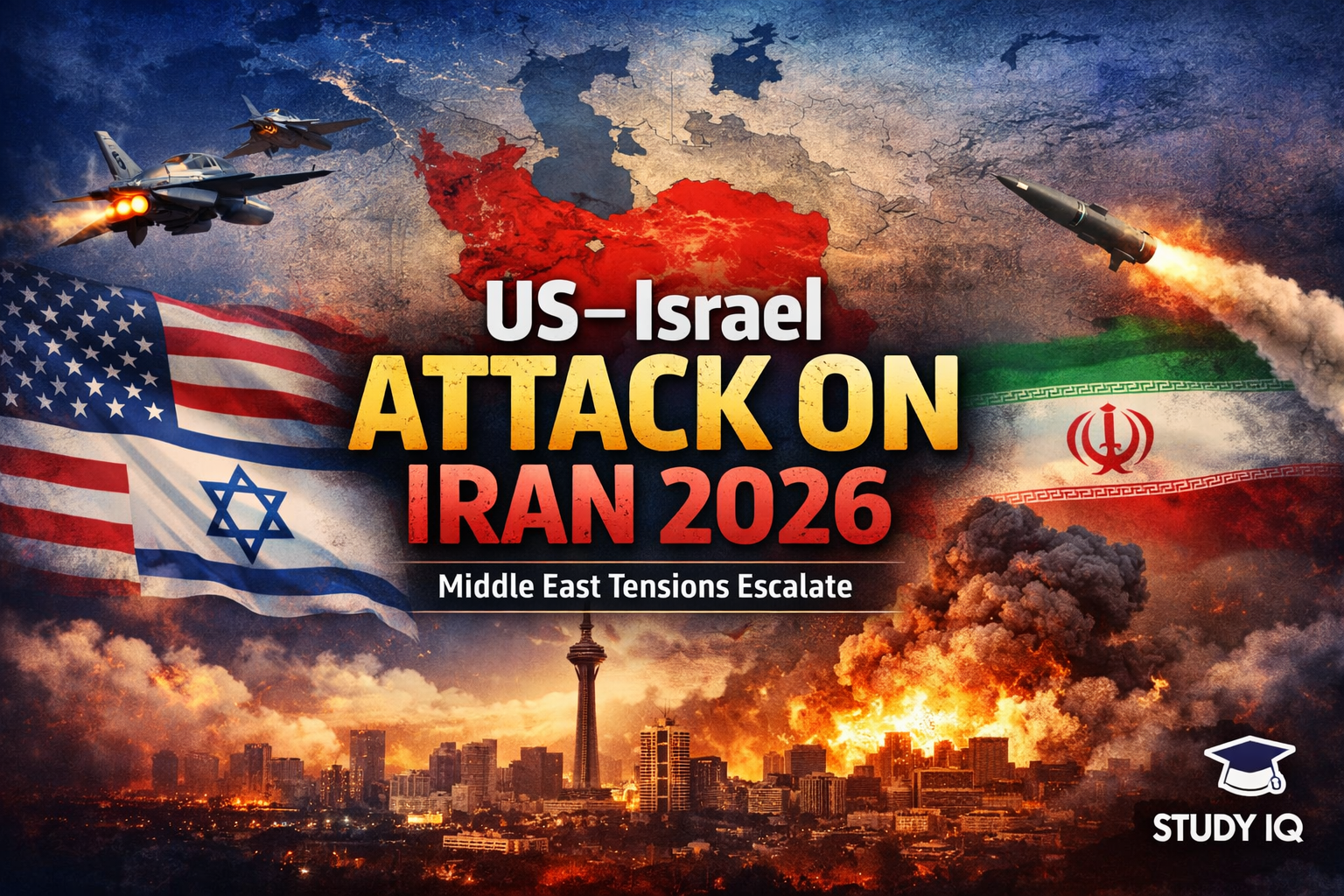
US–Israel Attack on Iran 2026: The US-Israel attack on Iran in February 2026 was one of the most dramatic incidents in Middle Eastern geopolitics in decades. In a coordinated military attack involving airstrikes and missile strikes, the United States and Israel carried out large-scale attacks across Iran targeting military installations, nuclear sites, and important compounds of Iranian leaders.
Iranian media reports have confirmed that Iran’s Supreme Leader Ayatollah Ali Khamenei was killed in the attack, and this could have significant implications for Iran’s political future and possibly start a larger-scale war in the Middle East.
The military attack on Iran by the United States and Israel, dubbed Operation Epic Fury by the United States and Operation Lion’s Roar by Israel, marks a significant turning point in the longstanding US-Iran conflict.
Israel-Iran Conflict: Background
US–Israel Attack on Iran 2026: What Happened in the US–Israel Attack on Iran?
On 28 February 2026, US and Israeli forces launched a coordinated military offensive across multiple Iranian cities, including Tehran. The strikes targeted:
-
Air defense systems
-
Ballistic missile sites
-
Nuclear facilities
-
Revolutionary Guard installations
-
Leadership compounds
Reports indicate that hundreds of targets were hit, making it one of the largest military operations in the region in recent history.
US warships fired cruise missiles while Israeli aircraft conducted air raids on strategic locations.
Explosions were reported across Tehran and other major cities as the attacks continued.
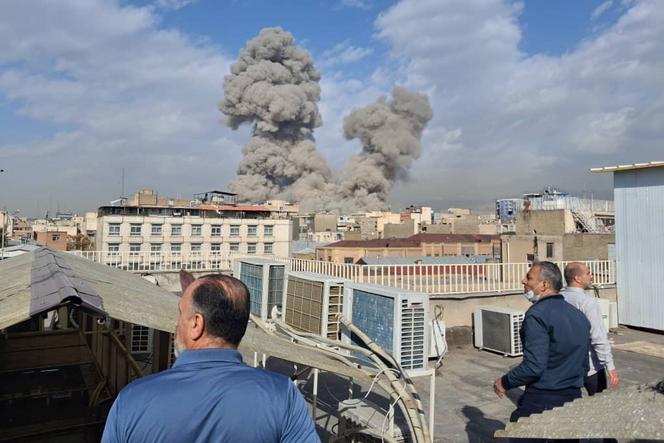
US–Israel Attack on Iran 2026: Supreme Leader Ali Khamenei Killed
The most significant development in the conflict was the reported killing of Iran’s Supreme Leader Ayatollah Ali Khamenei, who had ruled Iran since 1989.
Iranian state media confirmed that Khamenei died in a strike targeting his compound in Tehran.
The Iranian government declared 40 days of national mourning, signaling the magnitude of the loss for the country.
Several members of Khamenei’s family and senior officials were also reportedly killed in the attack.
The assassination of a sitting Supreme Leader is extremely rare and represents a major escalation in international conflict.
Operation Epic Fury and Operation Lion’s Roar
The joint US–Israel military campaign has been described as one of the largest operations against Iran.
Key Features of the Operation
-
Hundreds of missile strikes
-
Air raids by fighter jets
-
Leadership targeting
-
Nuclear facility attacks
-
Military infrastructure destruction
Israel called the campaign Operation Lion’s Roar, while the US military referred to it as Operation Epic Fury.
The operations were designed to:
-
Neutralize Iran’s nuclear program
-
Destroy missile capabilities
-
Weaken Iranian leadership
-
Encourage regime change
Why Did the US and Israel Attack Iran?
1. Iran Nuclear Program
The main justification for the attack was Iran’s nuclear ambitions.
US officials argued that:
-
Iran was pursuing nuclear capabilities
-
Diplomacy had failed
-
A nuclear-armed Iran would threaten global security
Israel has long viewed Iran’s nuclear program as an existential threat.
2. Failed Nuclear Talks
Diplomatic negotiations between Iran and Western countries collapsed before the strikes.
The failure of talks increased tensions and pushed the situation toward military confrontation.
3. Regional Security Concerns
Iran has influence across the Middle East through allied groups and military networks.
US and Israeli leaders argued that:
-
Iran supports armed groups
-
Iran threatens Israel
-
Iran threatens US troops in the region
Iran Retaliation After US–Israel Strikes
Iran has vowed strong retaliation against both the United States and Israel.
Iran’s Revolutionary Guard warned of a major military response and promised revenge for Khamenei’s death.
Iran launched:
-
Missile attacks
-
Drone strikes
-
Attacks on US bases
Targets included:
-
US military bases
-
Israeli cities
-
Strategic installations
This retaliation has raised fears of a wider Middle East war.
Is the US at War With Iran?
The United States has described the strikes as major combat operations, but Congress has not formally declared war.
This means:
-
No official war declaration
-
Active military conflict ongoing
Many analysts describe the situation as a de facto war between the US and Iran.
Global Reactions to the Iran Attack
World leaders reacted cautiously to the US–Israel strikes.
Many countries expressed concern that the conflict could escalate into a broader regional war.
International organizations warned of:
-
Rising oil prices
-
Shipping disruptions
-
Economic instability
The Middle East remains on high alert.
Impact on the Middle East
The US–Israel attack on Iran could reshape the Middle East.
Possible outcomes include:
1. Regional War
Countries that could be affected:
-
Israel
-
Gulf countries
-
Iraq
-
Syria
-
Lebanon
Iran’s allies may also become involved.
2. Political Instability in Iran
Khamenei’s death creates uncertainty about Iran’s leadership.
Iran’s political system depends heavily on the Supreme Leader.
The transition of power could be unstable.
3. Oil Market Shock
Iran is a major oil producer.
War in the region could:
-
Disrupt oil supply
-
Increase fuel prices
-
Impact global economy
Could This Become World War 3?
Many analysts warn that escalation could draw in major powers.
Possible risks include:
-
US–Iran war expansion
-
Israel–Iran war escalation
-
Regional proxy wars
However, a global war remains unlikely unless major powers become directly involved.
Historical Significance of the Iran Attack
The US–Israel attack on Iran is one of the biggest military operations in the Middle East since the Iraq War.
Key historical features:
-
First killing of Iran’s Supreme Leader
-
Largest US–Israel joint strikes on Iran
-
Possible regime change attempt
-
Major escalation of nuclear tensions
This event could define global geopolitics for years.
Future of Iran After Khamenei
Iran now faces a major political transition.
Possible scenarios include:
Scenario 1 – Hardline Leadership
Iran may adopt a more aggressive policy.
This could increase conflict with the US and Israel.
Scenario 2 – Political Reform
Some analysts believe the crisis could trigger reforms.
This could reduce tensions.
Scenario 3 – Long-Term War
The worst-case scenario is prolonged conflict.
This could destabilize the entire Middle East.
Conclusion
The US–Israel attack on Iran in 2026 marks a historic turning point in global politics. The killing of Supreme Leader Ali Khamenei, combined with large-scale military strikes and Iranian retaliation, has pushed the region toward a major conflict.
The situation remains fluid, with continued military operations and rising tensions across the Middle East. The coming weeks will determine whether the crisis evolves into a full-scale war or stabilizes through diplomacy.
The US–Iran conflict 2026 is now one of the most important geopolitical developments in the world, with significant implications for global security, energy markets, and international relations.
 Agentic AI vs AI Agents: Meaning, Differ...
 Prahaar Missile System: Range, Features ...
 New GDP Data and Methodology Update: Key...











 WhatsApp





