
Table of Contents
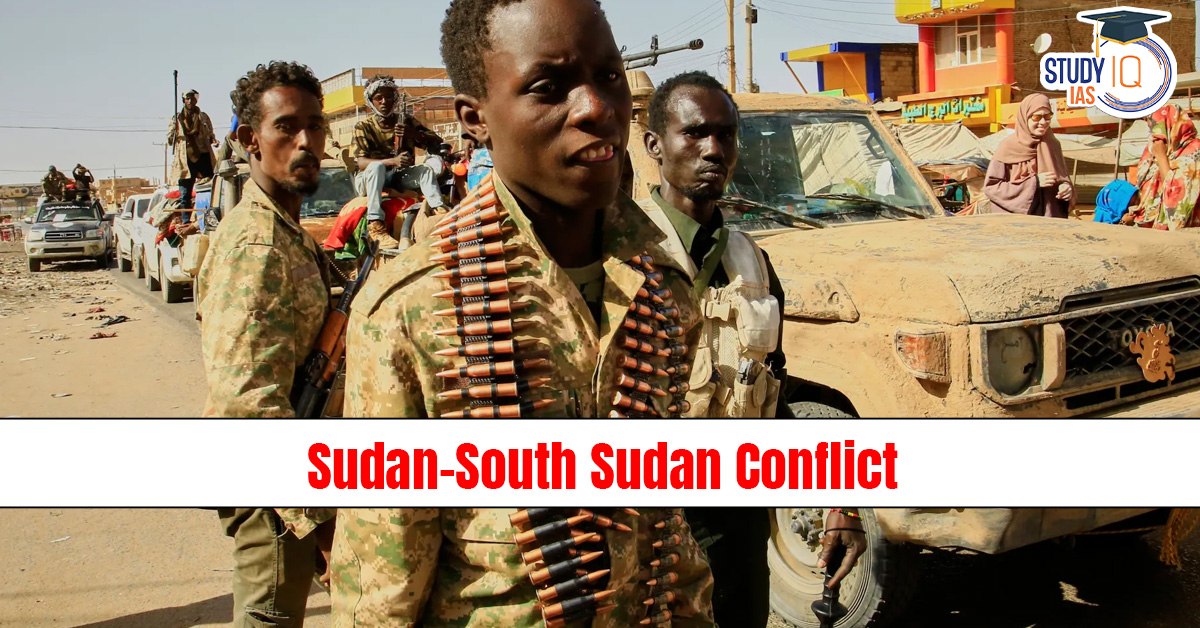
Context: Ongoing wars in Sudan and South Sudan have created one of the largest humanitarian crises in the world, with over 12 million people displaced since the Sudan conflict began in April 2023.
Sudan: From Independence to the Current Crisis
| Period | Event / Phase | Key Details and Outcomes |
| 1956 | Independence | Sudan gained independence from Anglo-Egyptian rule on January 1, 1956, and became one of Africa’s earliest independent nations. |
| 1955–1972 | First Civil War | Conflict between the northern government and southern rebels (Anya Nya) over autonomy and resource control. Ended with the Addis Ababa Agreement (1972), which granted limited self-rule to the South. |
| 1983–2005 | Second Civil War | It resumed after President Jaafar Nimeiry imposed Islamic law (Sharia) across Sudan. Ended with the Comprehensive Peace Agreement (CPA) in 2005, paving the way for South Sudan’s independence. |
| 2003–2005 | Darfur Conflict | Government-backed Janjaweed militias carried out atrocities against non-Arab groups in Darfur; over 3 lakh were killed and millions were displaced. President Omar al-Bashir indicted by ICC for war crimes. |
| 2011 | Partition of Sudan | South Sudan separated, becoming the world’s newest nation. Sudan lost major oil revenues, deepening economic and political instability. |
| 2019 | Ouster of Omar al-Bashir | After 30 years of authoritarian rule, Bashir was ousted by mass protests. A civilian–military transitional government was established. |
| 2021 | Military Coup | Gen. Abdel Fattah al-Burhan seized power, dissolving the transitional government and halting the democratic process. |
| April 2023 – Present | Civil War between SAF and RSF |
|
Main Parties in Conflict
- Sudanese Armed Forces (SAF) led by Abdel Fattah al-Burhan
- Rapid Support Forces (RSF) led by Mohamed Hamdan Dagalo (Hemedti)
Origins of the Conflict
- The conflict began after a power struggle following the 2021 military coup that ended Sudan’s civilian transitional government.
Territorial Division
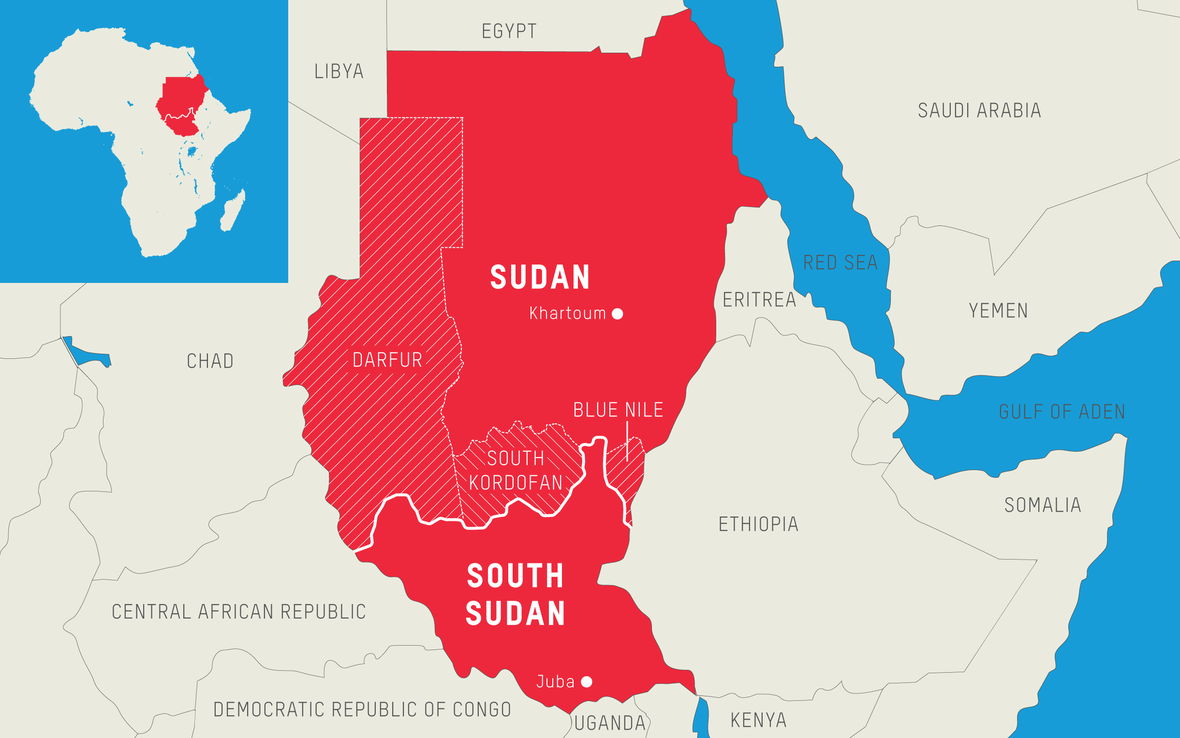
- SAF controls northern and eastern Sudan, including Port Sudan.
- RSF controls western regions, especially Darfur.
Crisis due to Intensifying Conflicts in Sudan and South Sudan
- Humanitarian Crisis: The conflict has displaced over 12 million people, with millions fleeing to neighbouring countries.
- Ethnic Violence: RSF-led attacks in Darfur against non-Arab communities have triggered genocide allegations and mass killings.
- Food and Health Emergency: War has caused famine risks, disease outbreaks, and collapse of healthcare services.
- Territorial Fragmentation: Sudan is divided between SAF and RSF control, raising fears of long-term political fragmentation.
- Regional Instability: Renewed conflict in South Sudan and tightened borders in neighbouring states have worsened the refugee crisis.

 Political Shift in Nepal: Opportunity an...
 Investment Facilitation for Development ...
 India's Food Aid To Afghanistan and its ...













 WhatsApp





