
Table of Contents
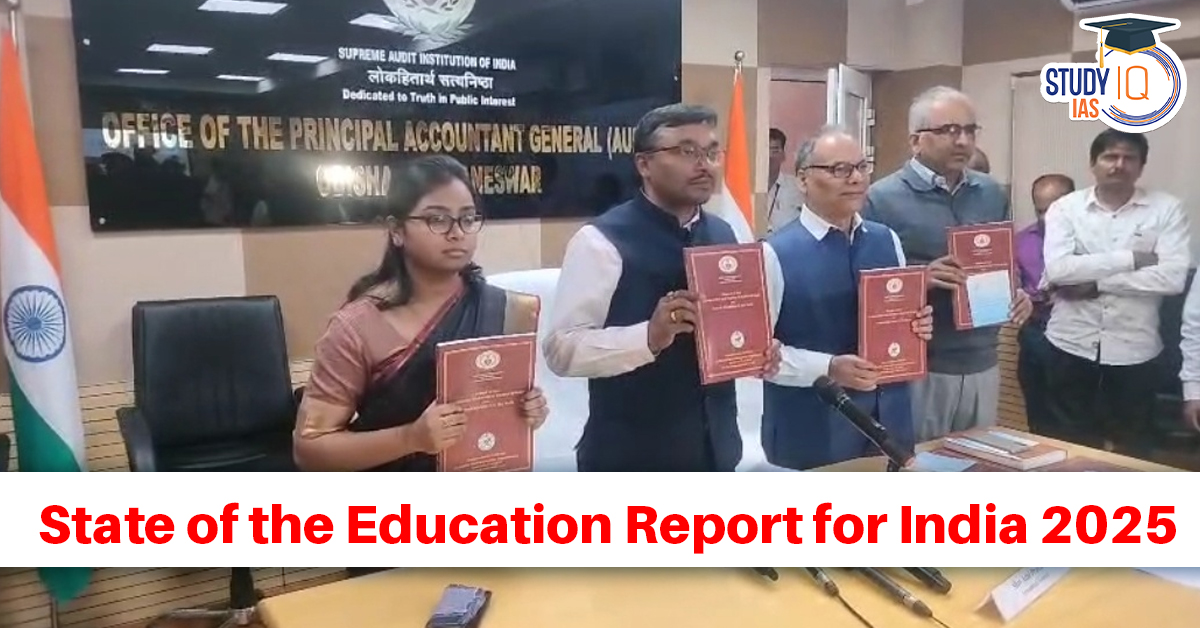
The State of the Education Report for India 2025, titled “Bhasha Matters: Mother Tongue and Multilingual Education”, released by UNESCO, makes a strong and evidence-based case for adopting mother tongue–based multilingual education (MTB-MLE) across India’s schooling system. The report highlights how language lies at the heart of educational equity, learning outcomes, and cultural inclusion, especially in a linguistically diverse country like India.
What is the State of the Education Report for India 2025?
The State of the Education Report for India is UNESCO’s annual flagship publication, aimed at strengthening education discourse and policymaking in India. The 2025 edition, released on 16 December 2025 in New Delhi, is the seventh report in the series and focuses exclusively on Mother Tongue and Multilingual Education.
Key Highlights:
-
Title: Bhasha Matters: State of the Education Report for India 2025
-
Publisher: UNESCO
-
Focus Area: Mother Tongue-Based Multilingual Education (MTB-MLE)
-
Partner Organisations: UNICEF India, British Council India
-
Alignment: NEP 2020, National Curriculum Frameworks (2022 & 2023)
Why Language Matters in Indian Education
India is home to 1,369 languages, making it one of the most linguistically diverse countries in the world. However, a large number of children begin formal education in a language different from their home or first language, leading to:
-
Poor comprehension in early grades
-
Low classroom participation
-
Weak foundational literacy and numeracy
-
Higher dropout rates, especially among tribal and marginalised communities
UNESCO stresses that children learn best when education begins in a language they understand.
“Mother Tongue and Multilingual Education is the foundation for educational inclusion, linguistic diversity preservation and enhanced learning outcomes.”
— Tim Curtis, Director, UNESCO Regional Office for South Asia
What is Mother Tongue-Based Multilingual Education (MTB-MLE)?
MTB-MLE is an educational approach where:
-
The child’s first language (mother tongue/home language) is used as the medium of instruction in early years.
-
Additional languages (regional, national, global) are introduced gradually.
-
Learning progresses through planned multilingual pathways, rather than abrupt language transitions.
Benefits of MTB-MLE:
-
Better cognitive development
-
Improved reading and comprehension skills
-
Higher retention and attendance
-
Stronger conceptual understanding
-
Preservation of linguistic and cultural identity
Alignment with National Education Policy (NEP) 2020
The report closely aligns with India’s National Education Policy (NEP) 2020, which recognises language as a central pillar of foundational learning.
NEP 2020 Key Provision:
-
Recommends home language/local language as the medium of instruction till at least Grade 5 and preferably till Grade 8.
According to the Ministry of Education, multilingual education is critical for achieving Foundational Literacy and Numeracy (FLN) under the NIPUN Bharat Mission.
Evidence from the Ground: What the Report Found
The report is based on extensive field research across states such as Odisha, Telangana, Andhra Pradesh, and other tribal and rural regions. It draws evidence from:
-
Classrooms and schools
-
Teacher education institutions
-
Community-led initiatives
-
Digital and language technology innovations
Observed Outcomes:
-
Improved reading comprehension
-
Increased classroom engagement
-
Enhanced confidence among first-generation learners
-
Stronger foundations for lifelong learning
These improvements were most visible where home languages were respected and integrated into teaching.
Key Recommendations of the State of the Education Report for India 2025
UNESCO proposes ten major recommendations to strengthen multilingual education in India:
1. National Mission on MTB-MLE
-
Establish a coordinated national mission.
-
Strengthen Centre–State institutional alignment while respecting federal diversity.
2. State-Level Language-in-Education Policies
-
Develop clear, context-specific policies grounded in MTB-MLE.
-
Avoid one-size-fits-all language solutions.
3. Teacher Recruitment and Capacity Building
-
Recruit teachers with multilingual competence.
-
Strengthen professional standards for language teaching.
4. Reform Teacher Education
-
Embed multilingual pedagogy in pre-service and in-service training.
-
Equip teachers to handle multilingual classrooms effectively.
5. Community and Indigenous Knowledge Integration
-
Institutionalise community participation.
-
Integrate local and indigenous knowledge systems into school practices.
6. Multilingual Learning Materials
-
Develop quality textbooks, assessments, and digital resources in multiple languages across grades.
7. Gender-Responsive MTB-MLE
-
Apply MTB-MLE across middle, secondary and alternative schooling.
-
Address gender-based barriers to learning.
8. Digital Public Infrastructure
-
Leverage digital platforms for multilingual content and teacher mentoring.
9. Inclusive Language Technologies
-
Invest in translation tools, speech technologies, and AI.
-
Bridge the digital divide for marginalised learners.
10. Sustainable and Equitable Financing
-
Ensure long-term funding for multilingual education.
-
Support language-responsive digital innovations.
Cultural and Symbolic Significance
The report launch featured a multilingual musical rendition of Rabindranath Tagore’s Gitanjali in Bangla, Hindi, and Gujarati, symbolising:
-
India’s linguistic richness
-
The spirit of unity in diversity
-
The cultural foundations of multilingual education
Conclusion
The State of the Education Report for India 2025 makes it clear that language is not just a medium of instruction, but a medium of inclusion. Mother tongue-based multilingual education is essential for achieving equitable learning outcomes, reducing dropouts, and preserving India’s rich linguistic heritage.
By aligning global evidence with NEP 2020, UNESCO’s Bhasha Matters report offers a clear roadmap for building an education system that is inclusive, effective, and culturally rooted.
In essence, multilingual education is not a choice—it is a necessity for India’s educational and social justice goals.
 Mahad Satyagraha 1927, History and Signi...
 Punjab–Rajasthan River Dispute: Raviâ€...
 Approved List of Models and Manufacturer...





 WhatsApp





