
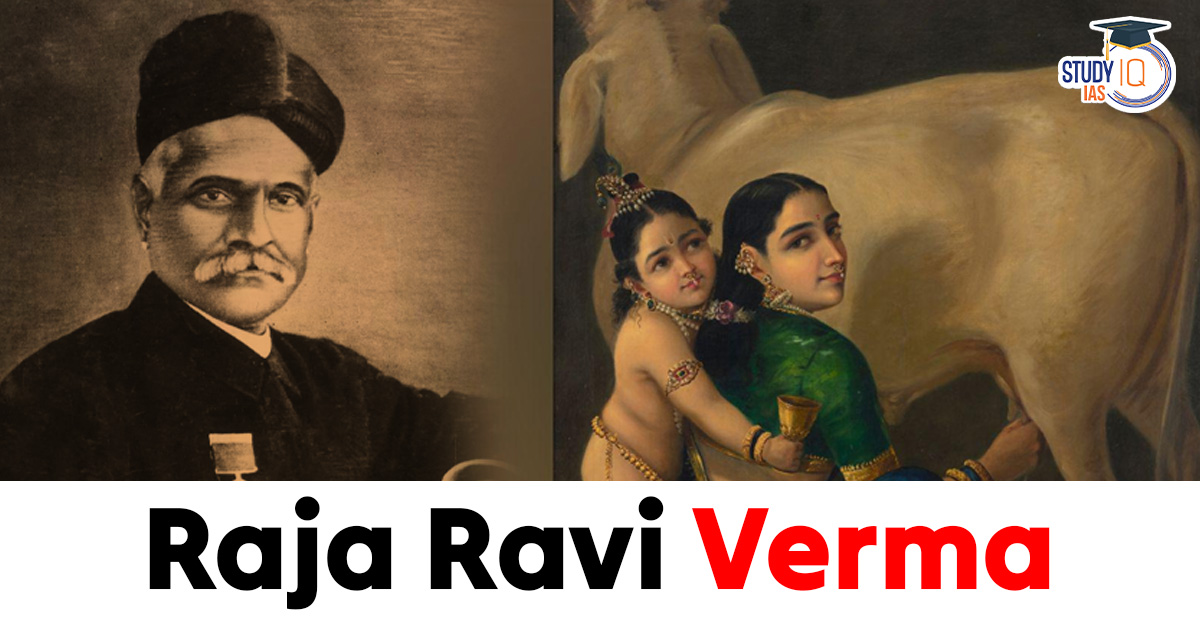
Context: Raja Ravi Varma’s Yashoda and Krishna painting sells for ₹167.2 crore, setting a new record for Indian art.
Raja Ravi Varma (1848–1906) was one of India’s most celebrated painters, known for blending traditional Indian themes with European artistic techniques. He played a crucial role in making art more accessible to the public and is often regarded as a pioneer of modern Indian art.
About Raja Ravi Verma
- Raja Ravi Varma (1848–1906), born into the royal family of Kilimanoor in the erstwhile State of Travancore (Kerala), is credited with revolutionising the Indian aesthetic.
- Title: Known as the “Koil Thampuran” of Kilimanoor and the “Father of Modern Indian Art.“
- Technique: Oil on Canvas; European Academic Realism.
- Style: Before Varma, Indian deities were often depicted in stylised, two-dimensional forms (e.g., Tanjore or Kalighat styles).
- Varma gave them human proportions, expressive faces, and realistic textures, making the divine more relatable to the common man.
- Puranic Themes: Shakuntala (looking back for Dushyanta), Damayanti Talking to a Swan, and Jatayu Vadha.
- Major Innovation: Established the first Lithographic Press in India (1894).
- Award: Awarded the Kaiser-i-Hind Gold Medal by Viceroy Lord Curzon in 1904.
Artistic Style of Raja Ravi Verma
- Combined Indian mythology with Western realism
- Used techniques like:
- Oil painting
- Perspective
- Realistic human anatomy
👉 This fusion made his work unique and widely admired.
Famous Paintings
Some of his most iconic works include:
- Shakuntala
- Hamsa Damayanti
- Lady in the Moonlight
- Jatayu Vadham
👉 Many of his paintings depict scenes from:
- Ramayana
- Mahabharata
Legacy
- Considered a bridge between traditional and modern Indian art
- Inspired generations of artists
- His works are displayed in major museums across India

 Kashmiri Silk Carpets: Handmade Luxury R...
 Ancient Buddhist Site Discovered in Kash...
 Poompuhar Port: Ancient Sangam-Era Marit...


 WhatsApp





