
Table of Contents
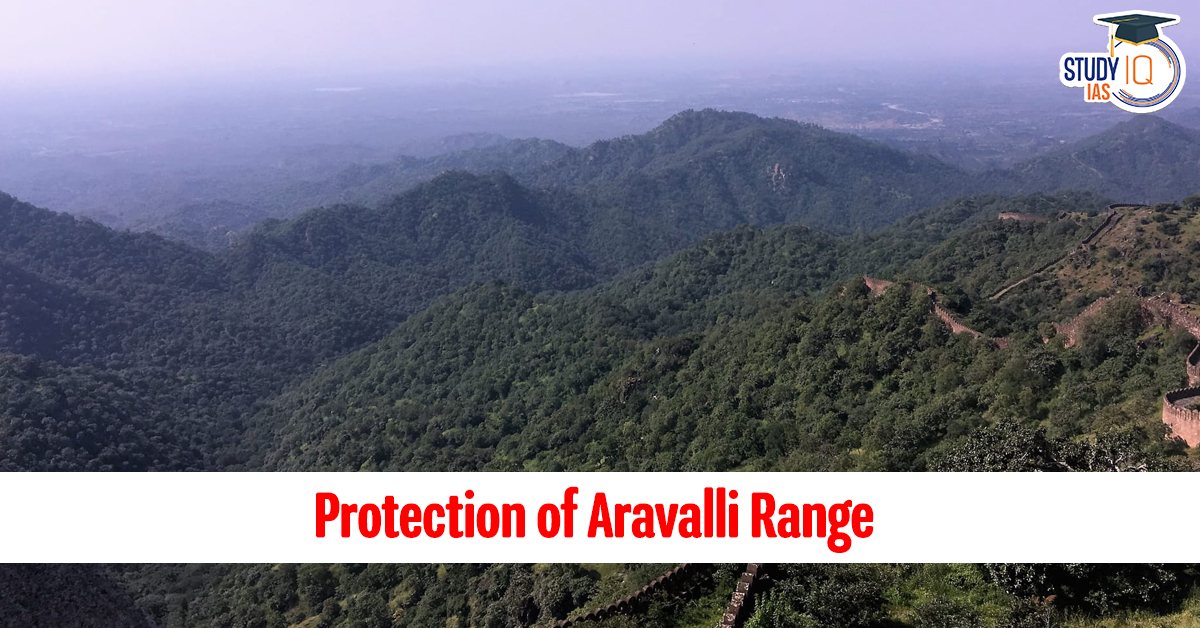
The Aravalli Range, one of the world’s oldest mountain systems, plays a crucial role in India’s environmental stability. Stretching across Delhi, Haryana, Rajasthan and Gujarat, the range acts as a natural barrier against desertification, supports biodiversity, recharges groundwater, and regulates regional climate. However, decades of unregulated mining, deforestation and urban expansion have severely degraded this fragile ecosystem.
Recognising the urgency, the Supreme Court of India has stepped in with landmark directions to ensure the long-term protection of the Aravalli hills. This article explains the importance of the Aravalli range, key threats, Supreme Court interventions, Central Empowered Committee (CEC) recommendations, the need for a uniform definition, and the future roadmap for conservation.
What is the Aravalli Range?
The Aravalli Range is the oldest mountain range in India, estimated to be nearly 2 billion years old. It extends for about 650 km from Delhi in the northeast to Gujarat in the southwest.
Key Facts:
-
Oldest fold mountains in India
-
Runs through Delhi, Haryana, Rajasthan and Gujarat
-
Source region of rivers like Chambal, Sabarmati and Luni
-
Rich in minerals such as limestone, marble, copper, zinc and granite
Why is the Aravalli Range Important?
1. Barrier Against Desertification
The Aravallis act as a natural shield, preventing the eastward expansion of the Thar Desert into the fertile Indo-Gangetic plains. Without this barrier, large parts of Haryana, Delhi and western Uttar Pradesh would face accelerated desertification.
2. Groundwater Recharge
The rocky terrain and forest cover of the Aravallis allow rainwater percolation, replenishing underground aquifers—especially critical for the National Capital Region (NCR).
3. Climate Regulation
The range helps:
-
Moderate temperatures
-
Influence rainfall patterns
-
Reduce dust storms and air pollution
4. Biodiversity Hotspot
The Aravallis support:
-
Forest ecosystems
-
Wildlife corridors
-
Endangered flora and fauna
-
Important tiger and leopard habitats
5. International Environmental Commitment
India is a signatory to the UN Convention to Combat Desertification (UNCCD), making the protection of vulnerable ecosystems like the Aravallis a global obligation.
Major Threats to the Aravalli Range
1. Illegal and Excessive Mining
-
Rampant quarrying of stone, sand and minerals
-
Mining in eco-sensitive zones and forest areas
-
Falling groundwater levels and air pollution
2. Urbanisation and Construction
-
Rapid expansion of cities like Gurugram and Faridabad
-
Real estate projects on hill slopes
-
Encroachment of forest land
3. Deforestation
-
Loss of native vegetation
-
Increased soil erosion
-
Reduced moisture retention
4. Fragmented Governance
-
Different States followed different definitions of the Aravalli hills
-
Legal loopholes enabled continued exploitation
Supreme Court Intervention on Aravalli Protection
Early Measures
-
Environmental regulations since the 1990s
-
2009 SC ban on mining in parts of Haryana (Faridabad, Gurugram, Mewat)
Major 2024–2025 Orders
-
May 2024: Supreme Court paused new mining leases and renewals in the Aravalli range
-
Directed the Central Empowered Committee (CEC) to conduct a detailed review
-
November 2025: SC accepted key CEC recommendations and issued fresh directions
Recommendations of the Central Empowered Committee (CEC)
The CEC proposed a science-based and ecosystem-centric approach:
Key Recommendations:
-
Complete scientific mapping of the Aravalli range across States
-
Macro-level Environmental Impact Assessment (EIA)
-
Absolute ban on mining in:
-
Protected forests
-
Wildlife habitats and corridors
-
Water bodies and aquifer recharge zones
-
National Capital Region eco-sensitive areas
-
-
Strict regulation of stone-crushing units
-
No new mining leases until assessments are completed
Why Was a Uniform Definition of the Aravalli Needed?
Different States used inconsistent criteria, allowing mining in disputed areas.
Earlier Definition (FSI, 2010):
-
Slope-based criteria
-
Foothill buffer zones
-
Valley width parameters
Supreme Court-Approved Definition (2025):
-
Only hills above 100 metres in height are classified as part of the Aravalli hills and ranges
Though debated, the Court ruled that this definition was administratively practical and inclusive for nationwide implementation.
Has Mining Been Completely Banned in the Aravallis?
No. The Supreme Court has not imposed a total ban.
SC’s Balanced Approach:
-
New mining leases → Paused
-
Existing legal mining → Allowed under strict regulation
-
Eco-sensitive zones → Permanent no-mining areas
Reason:
Total bans often encourage illegal mining, sand mafias and violence. The Court preferred regulated legality over blanket prohibition.
Management Plan for Sustainable Mining (MPSM)
The Supreme Court ordered preparation of a comprehensive Management Plan for Sustainable Mining, which will:
-
Identify no-go zones
-
Demarcate limited mining zones
-
Map wildlife corridors
-
Assess ecological carrying capacity
-
Provide restoration and rehabilitation measures
Aravalli Green Wall Project (2025)
Launched by the Central Government to restore degraded landscapes:
-
5 km green buffer around the Aravalli range
-
Covers 29 districts across Delhi, Haryana, Rajasthan and Gujarat
-
Aims to restore 26 million hectares of degraded land by 2030
-
Helps fight desertification and climate change
Way Forward: Strengthening Aravalli Conservation
-
Strict enforcement of SC directions
-
Inter-State coordination
-
Community participation in forest protection
-
Use of satellite mapping and GIS
-
Sustainable livelihoods to reduce mining dependency
Conclusion
The protection of the Aravalli Range is not merely an environmental issue—it is a matter of water security, climate resilience, biodiversity conservation and national interest. The Supreme Court’s science-based approach, combined with sustainable mining, ecological restoration and the Green Wall initiative, provides a long-term roadmap for preserving one of India’s most critical natural barriers.
 Mahad Satyagraha 1927, History and Signi...
 Punjab–Rajasthan River Dispute: Raviâ€...
 Approved List of Models and Manufacturer...











 WhatsApp





