
Table of Contents
Context
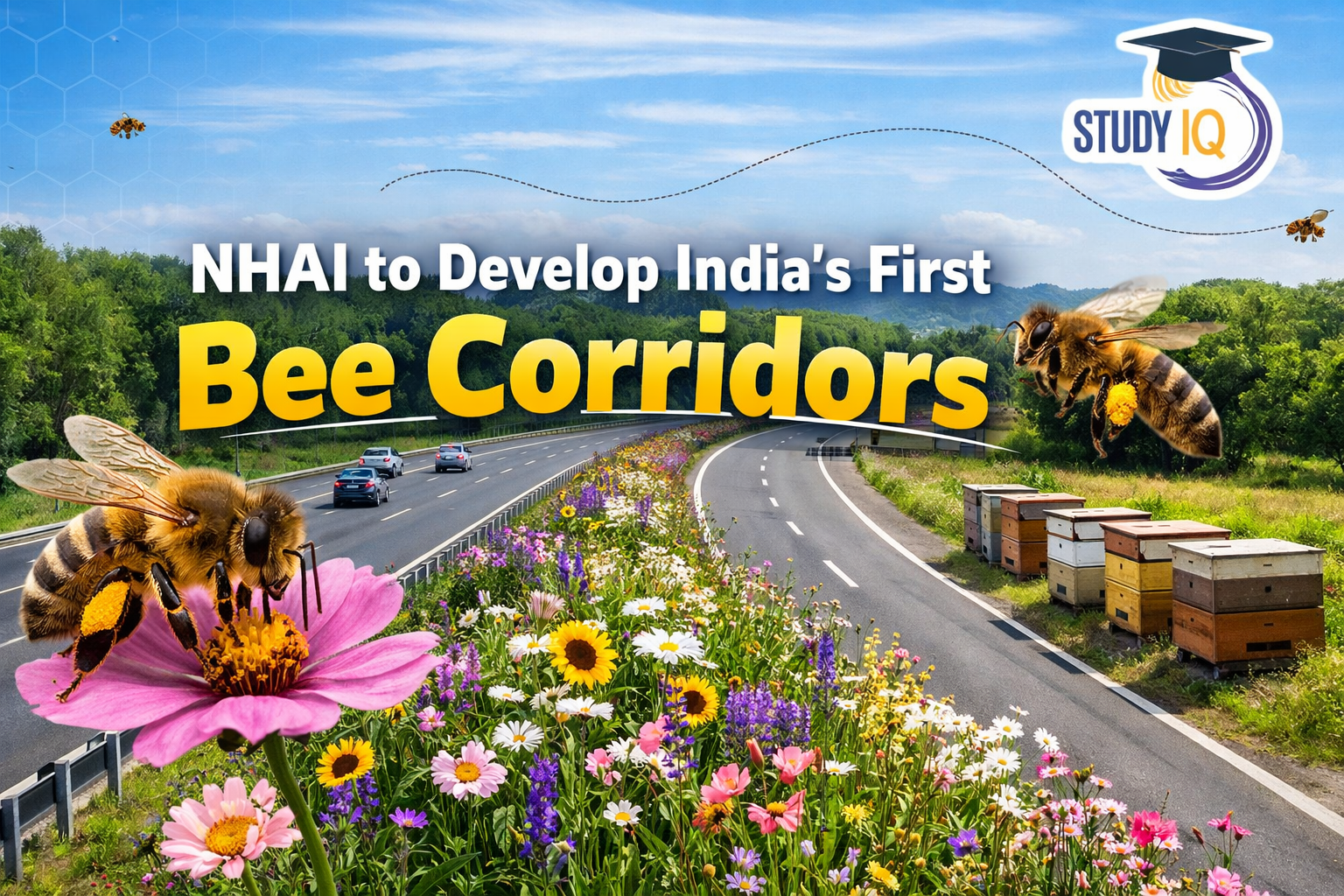
The National Highways Authority of India (NHAI), under the Ministry of Road Transport and Highways, announced the development of the country’s first-ever ‘Bee Corridors’ along National Highways.
About Bee Corridors
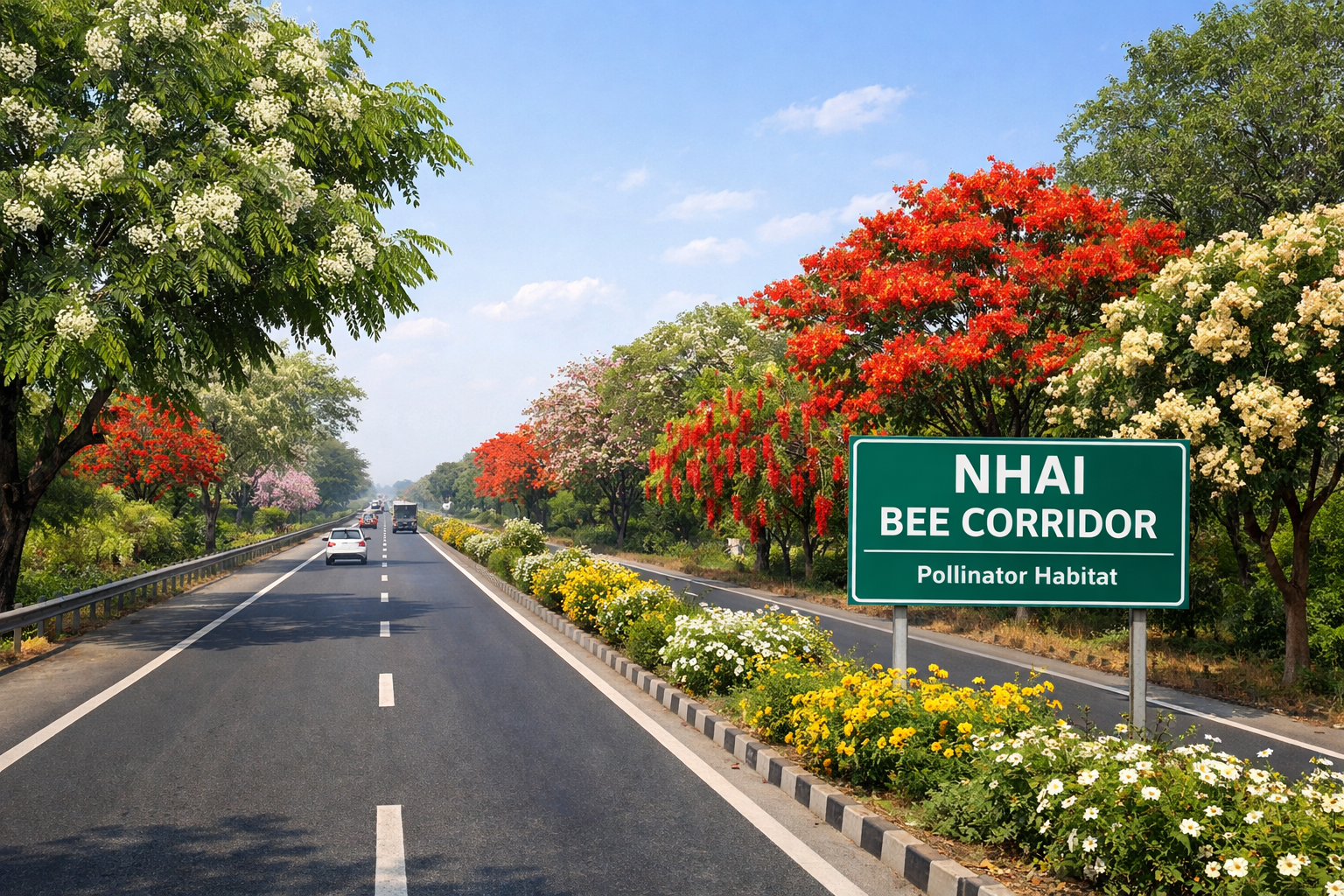
- Bee Corridors are continuous, linear stretches of bee-friendly vegetation planted along highway medians and roadsides.
- Composition: These corridors consist of a strategic mix of flowering trees, shrubs, medicinal plants, and various grasses.
- Objective: To ensure the year-round availability of nectar and pollen, providing a safe habitat and migratory path for honeybees and other pollinators (butterflies, birds, etc.).
- Target: NHAI plans to establish at least 3 pollination corridors and plant 40 lakh saplings during 2026-27, with 60% of these falling under the Bee Corridor project.
- This initiative aligns with the Green Highways (Plantation, Transplantation, Beautification & Maintenance) Policy, 2015, which mandates that 1% of the total project cost of any highway be set aside for plantation.
- Ecological and Economic significance
- Boosting Agriculture: Bees are responsible for pollinating approximately one-third of the world’s food crops. Improved pollination in fields adjacent to highways will directly increase the yield of oilseeds, pulses, fruits, and vegetables.
- Combating Ecological Stress: Pollinators are currently facing “ecological stress” due to habitat loss and pesticide use. These corridors act as “refuges” for these insects.
- Soil Health: The diverse root systems of the corridor plants help prevent soil erosion along highway embankments.
|
Read More Notes |
|
| Environment Notes | Art and Culture Notes |
| Science and Tech | History Notes |
| Geography Notes | Indian Polity Notes |
| General Knowledge | International Relation |
|
Explore StudyIQ Courses |
|
 World Day of Social Justice 2026: Theme,...
 Loggerhead Turtles – Ecology, Habitat,...
 Upgradation of Helsinki Treaty and Green...











 WhatsApp





