
Table of Contents
Context: A new butterfly species, Euthalia zubeengargi, has been discovered in Arunachal Pradesh (Leparada district) and named after Assamese cultural icon Zubeen Garg.
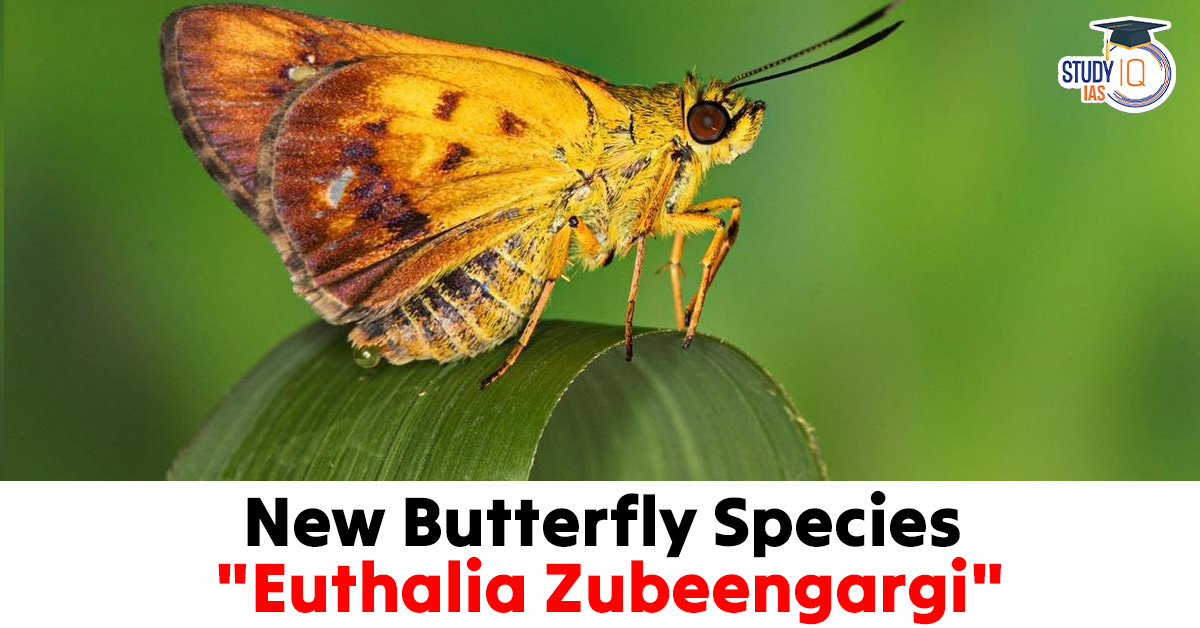
New Butterfly Species Euthalia Zubeengargi
A new butterfly species, Euthalia zubeengargi, has recently been discovered in the biodiverse forests of Arunachal Pradesh. This discovery has gained national attention not only for its scientific importance but also because the species has been named after renowned Assamese singer Zubeen Garg, highlighting the intersection of science and cultural recognition.
- Common name: “Basar Duke”, inspired by a local Arunachal Pradesh police constable.
- Habitat and Distribution: The butterfly was recorded in semi-evergreen forests at elevations ranging between 600 and 750 metres in the Leparada district.
Biology and Characteristics
- The species belongs to the genus Euthalia, which is widely distributed across South and Southeast Asia.
- Members of this genus are typically associated with dense forest ecosystems.
- The butterfly is characterised by: Earthy brown wings, Pale spot markings, typical of the genus.
Physical Characteristics
The butterfly is distinguished by:
- Olive-brown wings with white markings
- A subtle iridescent sheen
- Unique wing patterns and anatomical features
These traits helped scientists confirm it as a new and distinct species.
Discovery and Location
The species was discovered in the Basar region of Leparada district in Arunachal Pradesh during field surveys conducted in 2025.
- Discovered by Roshan Upadhaya and Kalesh Sadasivan
- Found in semi-evergreen forests at elevations of 600–700 meters
- Only two individuals have been recorded so far, indicating rarity
The butterfly has been given the common name “Basar Duke.”
Habitat and Behaviour
- Lives in dense, shaded forest understories
- Prefers cool, moist environments
- Feeds on:
- Tree sap
- Minerals from damp surfaces
Rarity and Conservation Concerns
- Only two specimens have been observed so far
- May be rare or highly localised
- Conservation status is not yet evaluated
This raises concerns about:
- Habitat loss
- Limited distribution
- Need for further ecological research
Significance of the Discovery
1. Biodiversity of Northeast India
- Highlights the rich biodiversity of the Eastern Himalayas
- Reinforces the ecological importance of Arunachal Pradesh
2. Scientific Advancement
- Adds a new species to the Euthalia genus
- Expands knowledge of butterfly diversity
3. Conservation Awareness
- Draws attention to fragile forest ecosystems
- Encourages the protection of lesser-known species
Conclusion
The discovery of Euthalia zubeengargi is a significant milestone in India’s biodiversity research. It not only enriches scientific knowledge but also underscores the importance of conserving fragile ecosystems in the Northeast. As more such species remain undiscovered, continued research and conservation efforts are essential to protect India’s natural heritage.

 EV Charging Infrastructure: Background, ...
 Rural Self-Employment Training Institute...
 Wildlife Crime Control Bureau (WCCB): Ro...













 WhatsApp





