
Table of Contents
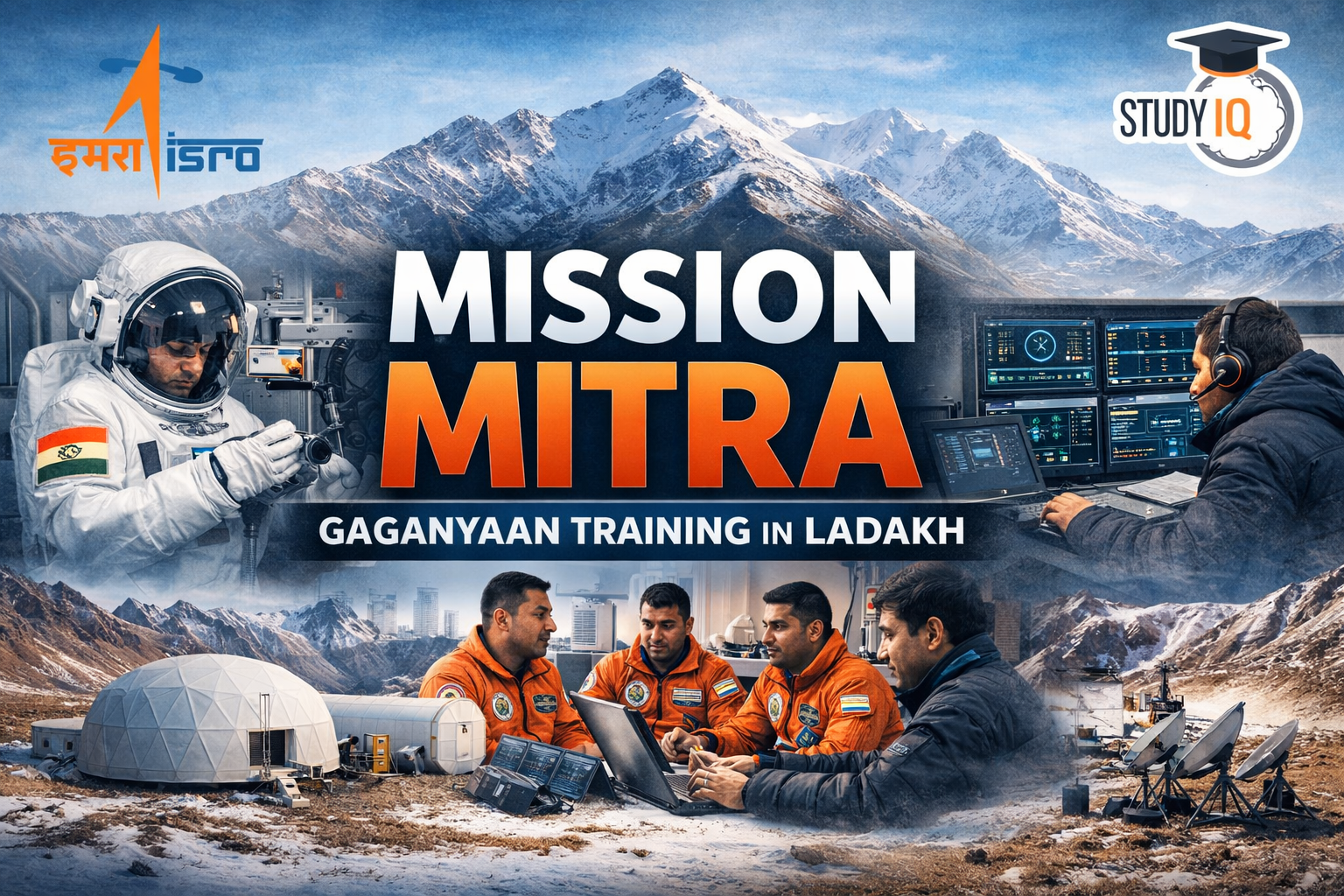
India has taken another significant step in its human spaceflight journey with the launch of Mission MITRA, an advanced astronaut training experiment conducted by the Indian Space Research Organisation. This unique initiative, carried out in the extreme conditions of Leh, aims to evaluate the mental, physical, and operational capabilities of India’s astronaut-designates, known as Gaganyatris.
The results of this mission are expected to play a critical role in shaping the success of India’s ambitious Gaganyaan Mission, which seeks to send Indian astronauts into space and bring them back safely.
What is Mission MITRA?
Mission MITRA stands for Mapping of Interoperable Traits and Response Assessment. It is a short-duration analogue mission being conducted from April 2 to April 9, 2026, in Ladakh’s harsh high-altitude environment.
Unlike traditional astronaut training, which primarily focuses on physical fitness and technical skills, Mission MITRA emphasizes psychological resilience, team dynamics, and decision-making under stress. It is designed to simulate space-like conditions on Earth, enabling scientists and researchers to study how astronauts behave in extreme and isolated environments.
This experiment reflects a global shift in space programs—from focusing solely on engineering and hardware to incorporating human factors and behavioural science into mission planning.
Astronauts Participating in Mission MITRA
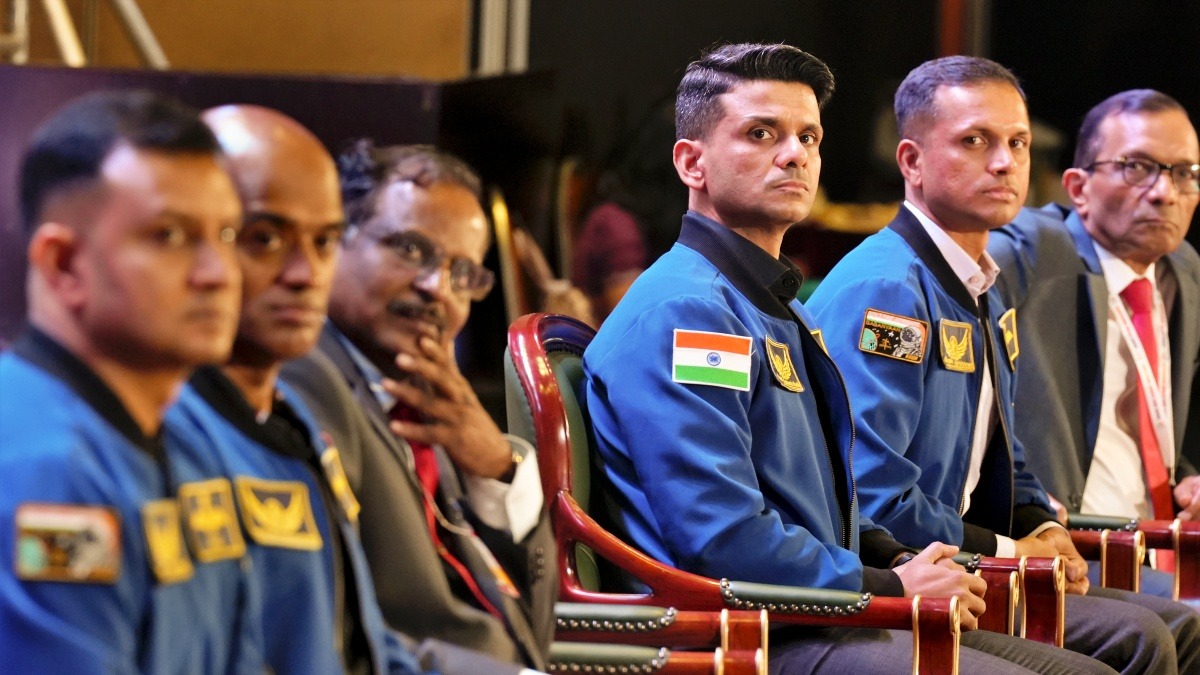
Four astronaut-designates are participating in this critical mission:
- Shubhanshu Shukla
- Prashanth Balakrishnan Nair
- Ajit Krishnan
- Angad Pratap
These Gaganyatris are undergoing a series of rigorous tests to assess their ability to function effectively under extreme physical and psychological stress.
Objectives of Mission MITRA
The primary objective of Mission MITRA is to generate data-driven insights into human performance in extreme conditions. The mission focuses on multiple dimensions:
Psychological Assessment
Astronauts are evaluated for their ability to handle stress, isolation, and uncertainty, which are common challenges in space missions.
Physiological Testing
The mission studies how the human body responds to low oxygen levels (hypoxia) and extreme cold conditions.
Team Interoperability
A key focus area is understanding how astronauts work together as a team, build trust, and maintain coordination under pressure.
Operational Efficiency
The mission tests decision-making abilities when communication with ground control is limited or delayed.
Communication Skills
Effective communication between astronauts and ground control teams is analyzed to ensure seamless mission execution.
Why Ladakh is Ideal for Space Simulation
Ladakh offers one of the closest Earth-based analogues to space conditions due to:
- High Altitude (~3,500 meters): Leads to low oxygen levels, simulating hypoxia
- Extreme Cold Temperatures: Comparable to thermal stress in space
- Low Humidity and Sparse Vegetation: Creates a barren, Mars-like environment
- Geographical Isolation: Mimics confinement and limited human interaction
These conditions allow researchers to replicate the physical and psychological challenges astronauts face during space missions.
Institutional Collaboration
Mission MITRA is led by ISRO’s Human Space Flight Centre (HSFC) in collaboration with:
- Institute of Aerospace Medicine
- Protoplanet Pvt Ltd
This collaboration highlights the interdisciplinary nature of modern space missions, combining expertise in aerospace medicine, behavioural science, and space technology.
Analogue Missions: A Global Practice
Mission MITRA is part of a broader category known as analogue space missions, which are widely used by global space agencies like NASA and ESA.
These missions simulate space conditions in controlled Earth environments to:
- Study human behaviour under stress
- Test mission protocols and technologies
- Identify potential risks before actual spaceflight
By adopting such practices, India is aligning its space program with global standards and best practices.
How Mission MITRA Supports Gaganyaan
The Gaganyaan Mission is India’s first human spaceflight initiative, aimed at sending astronauts to Low Earth Orbit (LEO).
Mission MITRA contributes to Gaganyaan in several critical ways:
- Enhancing Crew Preparedness: Ensures astronauts are mentally and physically ready
- Improving Mission Design: Provides insights into human limitations and requirements
- Strengthening Safety Protocols: Helps develop better emergency response strategies
- Optimizing Team Coordination: Improves interaction between crew and ground control
Ultimately, the mission increases the probability of success and safety of India’s first human spaceflight.
Importance for India’s Space Ambitions
Mission MITRA is not just a training exercise—it represents a strategic shift in India’s space program.
Key Significance:
- Focus on Human Factors: Recognizes that human performance is as critical as technology
- Preparation for Long-Duration Missions: Essential for future Moon and Mars missions
- Boost to Indigenous Capabilities: Strengthens India’s self-reliance in space technology
- Global Competitiveness: Positions India alongside leading spacefaring nations
As space missions become more complex, understanding human behaviour in extreme environments will be crucial for mission success.
Future Implications
The data collected from Mission MITRA will be used to:
- Develop advanced training modules for astronauts
- Design habitats and life-support systems
- Improve crew selection criteria
- Enhance mission planning and execution strategies
This knowledge will not only benefit Gaganyaan but also future missions involving space stations, lunar exploration, and interplanetary travel.
Conclusion
Mission MITRA marks a milestone in India’s journey towards becoming a major player in human space exploration. By focusing on the psychological, physiological, and operational aspects of astronaut performance, ISRO is ensuring that its Gaganyatris are prepared for the harsh realities of space.
Conducted in the extreme environment of Ladakh, this mission demonstrates India’s innovative approach to space training—leveraging natural conditions to simulate extraterrestrial challenges.
As the Gaganyaan Mission progresses, Mission MITRA will serve as a foundational step in building a robust, reliable, and globally competitive human spaceflight program.
|
Read More Notes |
|
| Environment Notes | Art and Culture Notes |
| Science and Tech | History Notes |
| Geography Notes | Indian Polity Notes |
| General Knowledge | International Relation |
|
Explore StudyIQ Courses |
|
 West Bengal Elections 2026: Full Schedul...
 Disaster Management in India, Classifica...
 Good Friday 2026: Date, History, Meaning...













 WhatsApp





