Table of Contents
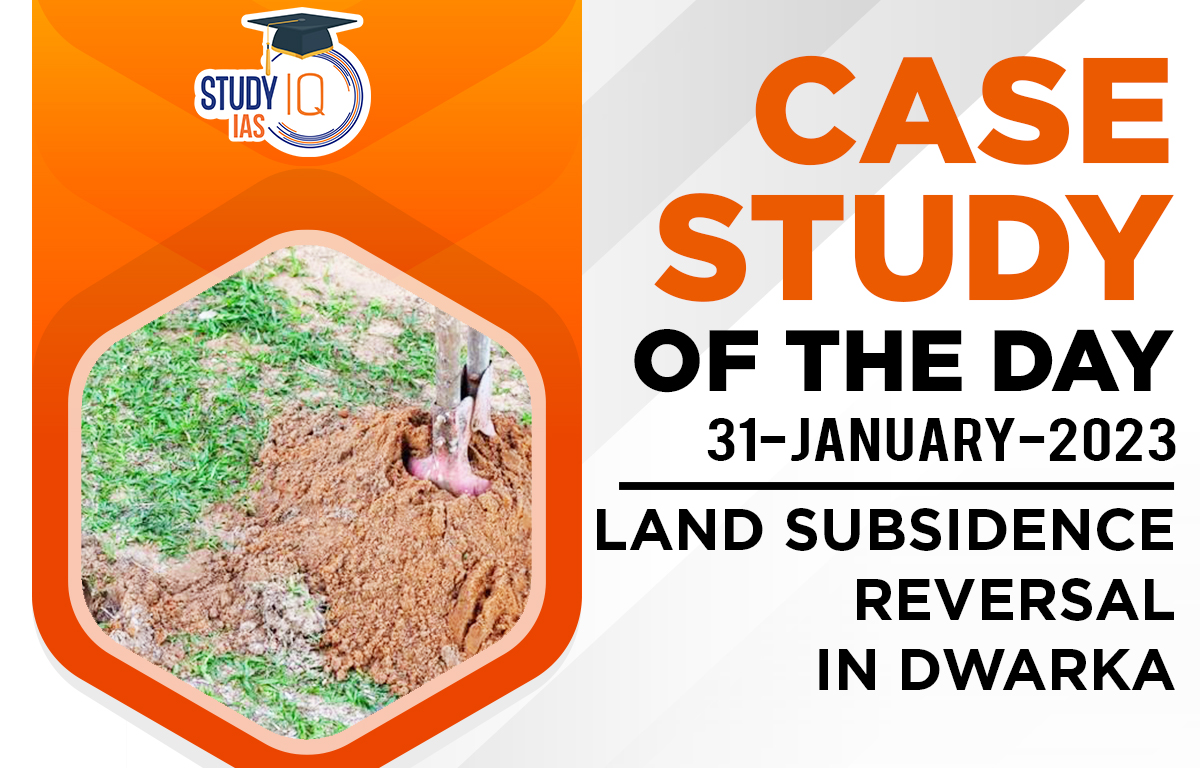
In News: Amidst the excessive Ground Water Extraction leading to Land Subsidence crisis in Delhi-NCR region, a study has highlighted a reverse “uplift trend” in Land Subsidence at Dwarka, a neighbourhood around Delhi Capital.
About Land Subsidence Reversal in Dwarka
- Land subsidence occurs when large amounts of groundwater are withdrawn from some types of rocks and underground soil.
- Several studies show that the same was happening in Dwarka.

Measures by Government and Residents that Resulted in Reversal
- Government Role: Government began supplying piped water to the residents so that borewells could be shut down
- Heavy fines were imposed on buildings still using borewells and residents began harvesting rainwater to increase the water table in the area.
- Local lakes were rejuvenated, helping the groundwater table rise.
- Government made it mandatory to irrigate thousands of acres of public parks and grounds using only sewage and treated surface water.
- Community Role: Residents came together to revive a 200-year-old local reservoir, by clearing weeds and silt to aid water percolation during Rains.

Conclusion
- India is one of the world’s largest users of groundwater, extracting more water than the US and China combined.
- Thus, considering the recent disaster of Land subsidence in Joshimath, there is a need to consider the measures in Dwarka as a model for other areas in Delhi and India, to reduce burden on Groundwater resource and prevent consequent impacts.

 US Treasury Yields at 25-Year High: Impa...
 National Coastal Mission 2.0 (NCM 2.0): ...
 New CAFE Norms 2027–32: Key Features, ...











 WhatsApp