

Table of Contents
Discover the revolutionary concept of “jumping genes,” also known as transposons, first uncovered by Nobel Prize winner Barbara McClintock. Learn how these mobile DNA elements shape evolution, influence human health, and drive recent scientific breakthroughs.
In the mid-20th century, a groundbreaking discovery challenged the static view of genetics: genes could “jump” within the genome. These jumping genes, formally called transposons or transposable elements, are segments of DNA that can move from one location to another, altering gene expression and genome structure.
First identified in maize plants, jumping genes have since been found in nearly all organisms, including humans, where they make up about 45-50% of our DNA. While often silenced, their activity can drive evolution, cause diseases, and even respond to environmental stresses.
The Discovery of Jumping Genes: Barbara McClintock’s Legacy
Barbara McClintock, an American cytogeneticist, discovered transposons in the 1940s while studying corn (maize) at Cold Spring Harbor Laboratory.
She observed unusual color patterns in maize kernels—spots and streaks of purple on otherwise colorless backgrounds. These patterns resulted from genes turning on and off unpredictably.
McClintock identified two elements: Activator (Ac), an autonomous transposon that can move itself, and Dissociation (Ds), a non-autonomous element that moves only in Ac’s presence.
Her work showed that transposons could insert into genes, disrupting them (causing colorless kernels), or excise, restoring function (creating colored spots).
Initially met with skepticism—genes were thought to be fixed—McClintock’s findings were vindicated when similar elements were found in bacteria and other organisms. She won the Nobel Prize in Physiology or Medicine in 1983, the only woman to receive an unshared prize in that category.
What Are Jumping Genes and How Do They Work?
Transposons are classified into two main types:
- Class I: Retrotransposons – These “copy-and-paste” via an RNA intermediate. They transcribe into RNA, reverse-transcribe into DNA, and insert elsewhere. Examples include LINE-1 (active in humans) and LTR retrotransposons.
- Class II: DNA Transposons – These “cut-and-paste” directly, excising from one site and inserting into another.
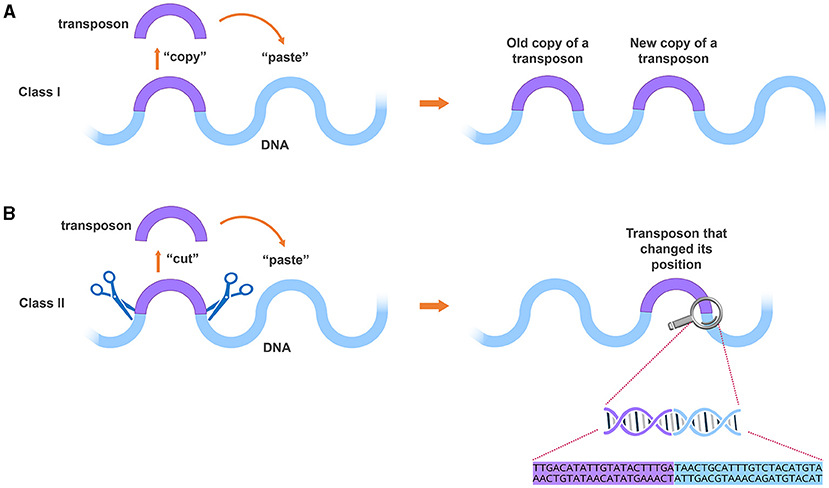
Transposon movement can:
- Disrupt genes (causing mutations)
- Regulate nearby gene expression
- Create genetic diversity
In humans, most transposons are inactive fossils, but some, like LINE-1, remain mobile, especially in brain cells or during early development.
Jumping Genes in Evolution and Adaptation
Transposons are major drivers of genomic evolution:
- They contribute to genetic variation, enabling rapid adaptation.
- In plants like maize, up to 85% of the genome is transposon-derived.
- Recent studies show polar bears in southern Greenland use transposon activity to adapt to melting sea ice by rewriting DNA for survival.
Transposons can also provide new regulatory elements, co-opting for beneficial functions, such as in embryonic development or immune responses.
The Role of Jumping Genes in Human Health and Disease
While beneficial for evolution, uncontrolled transposon activity can harm health:
- Cancer: LINE-1 jumps can disrupt tumor suppressor genes or activate oncogenes.
- Neurodegenerative Diseases: Increased activity linked to Alzheimer’s, ALS, and Parkinson’s; may trigger inflammation or neuronal death.
- Autoimmune Diseases: Like lupus, where transposons mimic viral infections, provoking immune responses.
- Aging: Transposon activation rises with age, potentially contributing to decline; regulators like STARD5 may be therapeutic targets.
- Genetic Disorders: Insertions cause diseases like hemophilia.
Recent research (2024-2025) explores inhibitors to block transposons, with clinical trials underway for Alzheimer’s and other conditions.
Recent Breakthroughs in Transposon Research (2024-2025)
- Mechanisms revealed for controlling transposons in plants, with human homologs like HELLS potentially treatable.
- Bacterial transposons targeting chromosome ends, aiding antibiotic resistance understanding.
- Transposon storms implicated in neurodegeneration; drugs like lamivudine (3TC) tested to suppress activity.
- In polar bears, jumping genes enable rapid climate adaptation.
These findings highlight transposons’ dual role: evolutionary innovators and potential disease culprits.
Conclusion: Why Jumping Genes Matter Today
From Barbara McClintock’s maize fields to modern genomics, jumping genes continue to surprise us. They remind us that genomes are dynamic, not fixed blueprints.
Understanding transposons unlocks insights into evolution, disease, and potential therapies. As research advances, targeting these mobile elements could revolutionize treatments for cancer, aging, and neurological disorders.
 Punjab–Rajasthan River Dispute: Raviâ€...
 Approved List of Models and Manufacturer...
 RELIEF Scheme, Key Features, Need, Compo...











 WhatsApp





