
Table of Contents
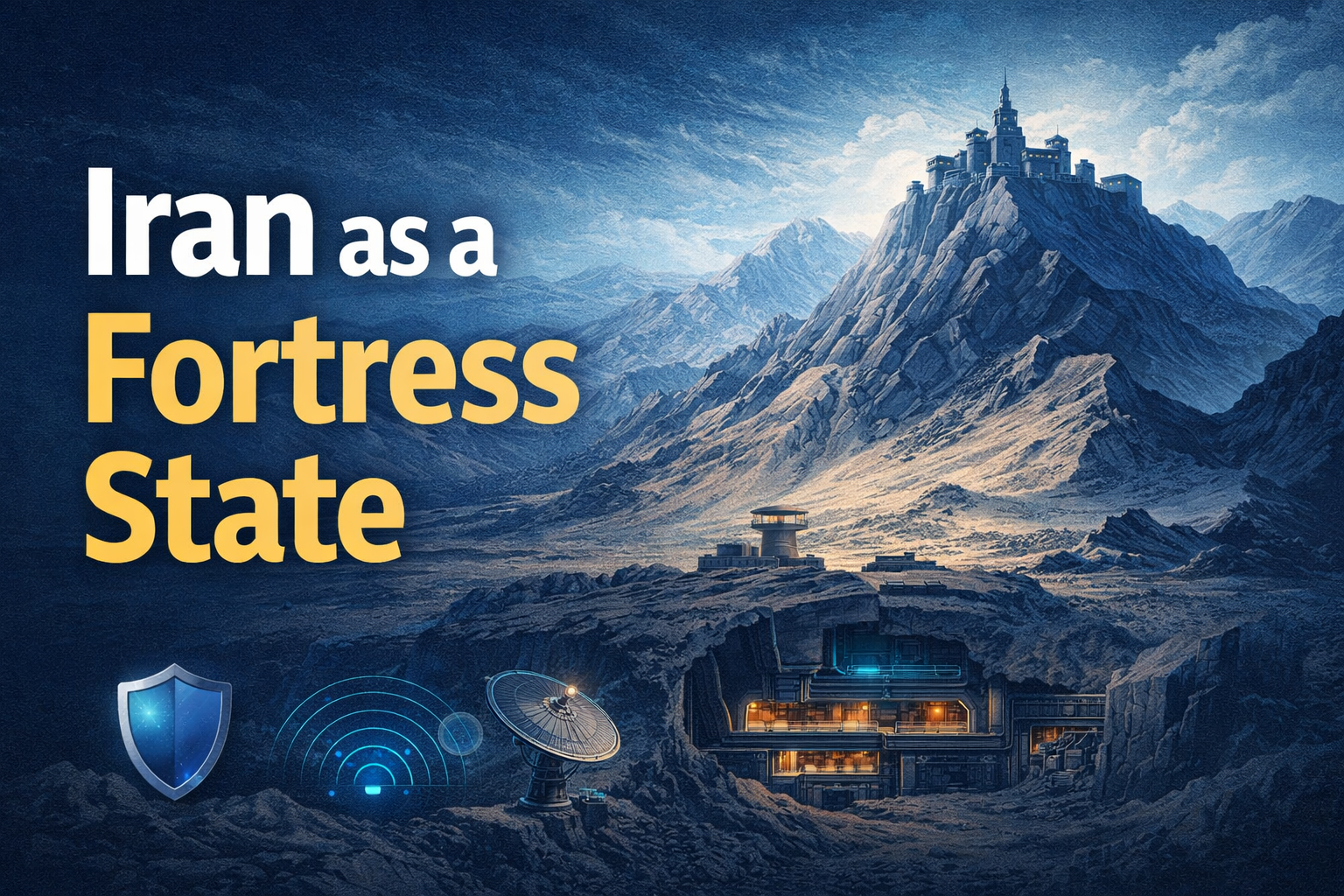
Context: The ongoing confrontation between the United States and Iran has demonstrated Iran as a “fortress state”—a political system built with multiple layers of institutional, military and social protection.
Concept of the Fortress State
The idea resembles the theory of Italian political thinker Antonio Gramsci, who compared a modern state to a system of fortifications. In this model, the coercive power of the state (military or police) is only the outer defensive ditch, while civil society and social legitimacy form deeper defensive layers that make the system resilient during crises.
Features of Iran’s Fortress State
Iran has developed this model to an extreme—creating interlocking institutions, parallel security forces and social support networks that collectively protect the political system.
- Interlocking Political Institutions: Iran’s political system is designed with overlapping institutions that prevent the concentration of power in a single office.
- The Supreme Leader of Iran (Rehbar) exercises overarching authority.
- The President of Iran manages day-to-day governance.
- Dual Security Architecture: Iran maintains parallel security institutions for both external defence and internal stability.
- The regular military under Artesh handles traditional defence.
- Revolutionary military: Islamic Revolutionary Guard Corps (IRGC) protects the Islamic revolution and oversees strategic operations. Within the IRGC:
- Quds Force manages regional alliances and proxy networks.
- Basij mobilises civilians and suppresses internal unrest.
- Decentralised Command Structure: Iran’s security forces use decentralised command systems. If senior commanders are assassinated, mid-level officers retain operational autonomy and continue missions.
- Eg. regional networks remained functional after the killing of Qasem Soleimani in 2020.
- Ideological Legitimacy: The political ideology of the Islamic Republic blends religious authority with narratives of social justice operations
- Fragmented Opposition: Opposition groups often remain divided or leaderless, ranging from diaspora organisations lacking domestic legitimacy
- Parallel Welfare Networks: Extensive welfare distribution through revolutionary foundations (bonyads) and social committees strengthens regime legitimacy.

 Pakistan as Mediator in Iran–US Confli...
 WTO's 14th Ministerial Conference (MC14)
 China’s Global Ocean Mapping Initiativ...













 WhatsApp





