
Table of Contents
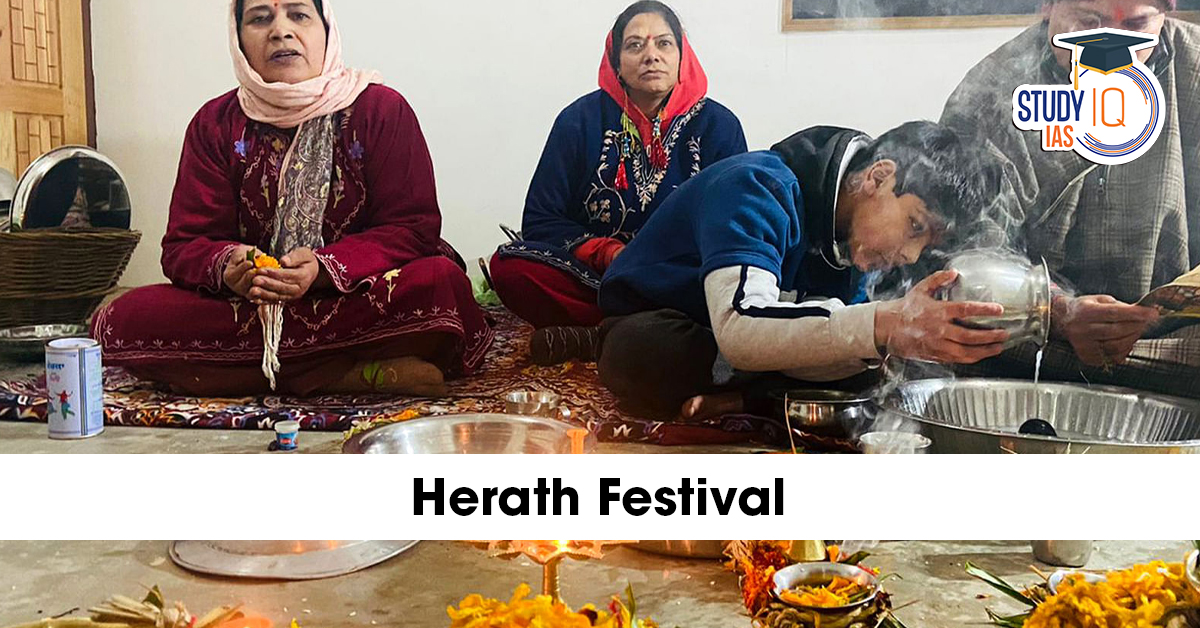
Herath Festival is one of the most important religious festivals of the Kashmiri Pandit community. Celebrated as the Kashmiri version of Maha Shivratri, Herath holds deep spiritual, cultural, and historical significance. The festival is celebrated across Jammu & Kashmir and by the displaced Kashmiri Pandit diaspora worldwide, symbolizing faith, identity, and cultural continuity.
What is Herath Festival?
Herath is the Kashmiri Pandit celebration dedicated to Lord Shiva and Goddess Parvati. Unlike the pan-Indian observance of Maha Shivratri, Herath is marked by elaborate rituals, family traditions, and festive feasting.
The festival is not only religious but also a symbol of Kashmiri Pandit heritage and resilience.
Etymology of Herath
The word Herath is derived from the Sanskrit term Hararatri, which means “The Night of Hara (Lord Shiva)”.
Over time, due to linguistic adaptation in the Kashmiri language, Hararatri evolved into Herath.
Date and Unique Timing of Celebration
One of the most unique aspects of Herath is its timing:
-
Most of India celebrates Maha Shivratri on Phalguna Bahula Chaturdashi (14th day of dark fortnight).
-
Kashmiri Pandits celebrate Herath on Trayodashi (13th day of dark fortnight).
This distinction makes Herath culturally unique among Shiva festivals in India.
Religious Significance of Herath
Herath commemorates the divine wedding of Lord Shiva and Goddess Parvati.
It symbolizes:
-
Union of Shiva (consciousness) and Shakti (energy)
-
Victory of spiritual purity over material ignorance
-
Renewal of faith and devotion
For Kashmiri Pandits, Herath is considered more than a festival—it is a sacred civilizational marker.
Key Rituals of Herath Festival
1. Vatuk Puja (Central Ritual)
-
Worship of Shiva in the form of Vatuk Bhairav
-
Sacred vessels (Kalash) represent divine presence
2. Night-long Worship
-
Devotional prayers and offerings
-
Recitation of sacred mantras
3. Family-centered Celebration
-
Rituals performed at home rather than temples
-
Elders play a key role in passing traditions
4. Herath Feast
Unlike fasting traditions elsewhere, Kashmiri Pandits prepare elaborate meals including traditional dishes.
Cultural Importance for Kashmiri Pandits
Herath represents:
✔ Preservation of cultural identity
✔ Continuity of traditions despite displacement
✔ Community bonding across diaspora populations
✔ Spiritual connection with Kashmir’s Shaivite heritage
For displaced Kashmiri Pandits, Herath is also an emotional and cultural anchor linking them to their homeland.
Herath vs Maha Shivratri: Key Differences
| Feature | Herath | Maha Shivratri (Rest of India) |
|---|---|---|
| Community | Kashmiri Pandits | Pan-Indian |
| Date | Trayodashi | Chaturdashi |
| Tradition | Rituals + Feast | Mostly fasting |
| Focus | Shiva-Parvati wedding + Vatuk Puja | Shiva worship and meditation |
Herath in Modern Times
Today, Herath is celebrated:
-
Across Jammu & Kashmir
-
In Delhi, Mumbai, and other Indian cities
-
Among global Kashmiri Pandit diaspora
The festival has become a symbol of cultural revival and preservation.
Relevance for UPSC and Cultural Studies
Herath is important for:
-
Indian culture and diversity topics
-
Regional religious practices
-
Kashmiri Shaivism heritage
-
Diaspora cultural continuity
Conclusion
Herath Festival is not just a religious event but a celebration of identity, faith, and cultural survival for Kashmiri Pandits. Its unique rituals, historical roots, and spiritual symbolism make it one of the most distinctive Shiva festivals in India. As India continues to celebrate its cultural diversity, Herath stands as a powerful example of regional traditions enriching the national cultural fabric.
|
Read More Notes |
|
| Environment Notes | Art and Culture Notes |
| Science and Tech | History Notes |
| Geography Notes | Indian Polity Notes |
| General Knowledge | International Relation |
|
Explore StudyIQ Courses |
|
 West Bengal Elections 2026: Full Schedul...
 ISRO Launches Mission MITRA in Ladakh: A...
 Disaster Management in India, Classifica...













 WhatsApp





