
Table of Contents
- Panel warns unconditional handouts now consume 20% of state subsidies, urges sunset clauses and periodic reviews
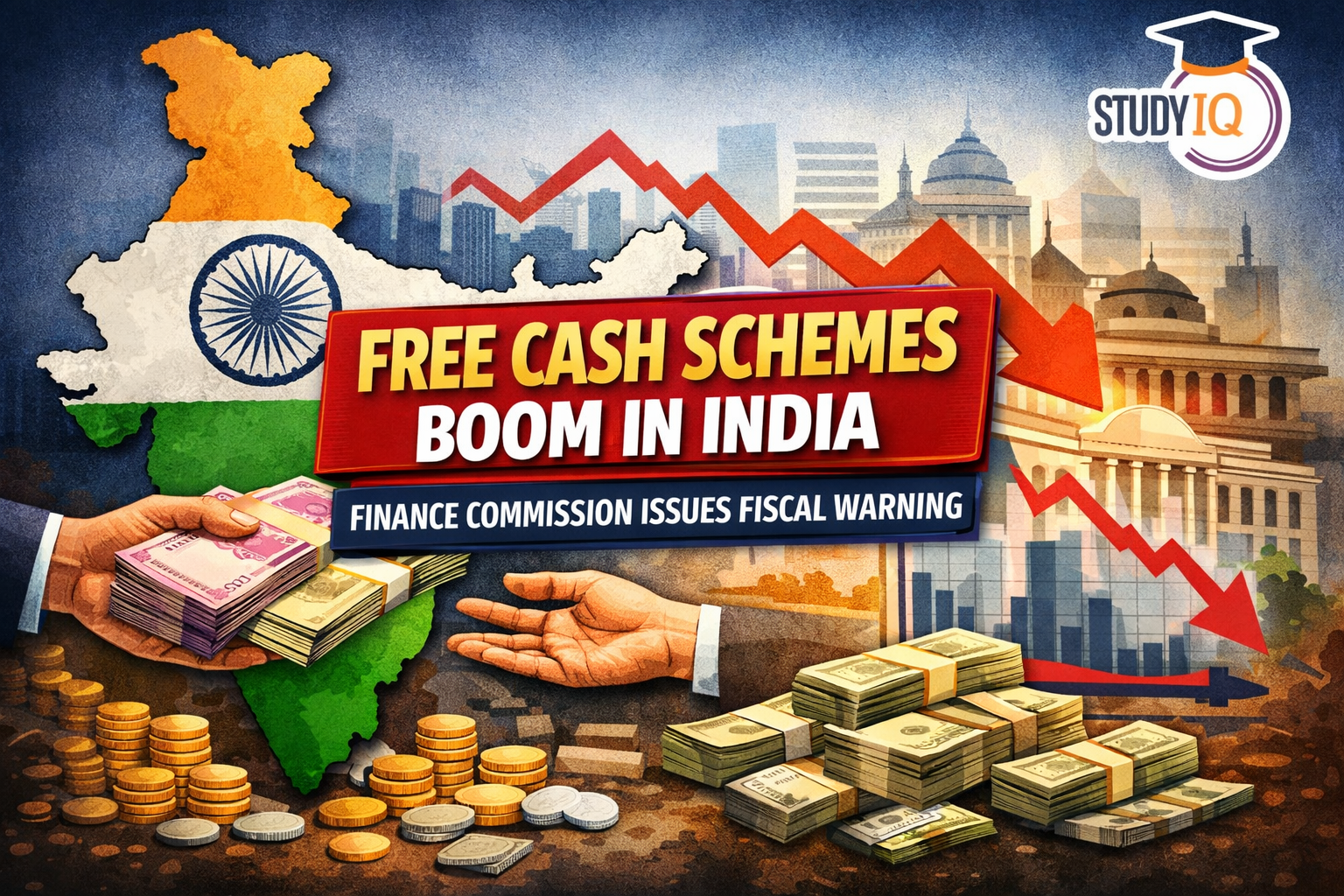
- Mumbai: The 16th Finance Commission has flagged a concerning trend of states increasingly relying on large-scale cash transfer schemes, warning that the practice could destabilize public finances if left unchecked.
Sharp Surge in Direct Cash Handouts
- In its report for the 2026-31 period tabled in Parliament on Sunday, the Commission revealed that large cash transfer schemes now account for over one-fifth (20.2%) of total subsidy spending across 21 states in the 2025-26 Budget Estimates—a dramatic increase from just 3% in 2018-19.
- The Commission, chaired by economist Arvind Panagariya, specifically highlighted three states that have seen the steepest rises in such expenditure over the past two years:
- Maharashtra (BJP-ruled): Spending jumped from 0.6% of total revenue expenditure in 2023-24 to 6.2% in 2025-26.
- Jharkhand (opposition-ruled): Rose from 0.8% to 13% over the same period.
- Odisha (BJP-ruled): Increased from nil to 5.1%
Major Schemes Driving the Trend
- The largest cash transfer programs currently operating include:
- Maharashtra’s Majhi Ladki Bahin Yojana: Rs 1,500 monthly to 2.3 crore eligible women
- Karnataka’s Gruha Lakshmi: Rs 2,000 monthly for women heads of households
- West Bengal’s Lakshmir Bhandar: Rs 1,000-1,200 monthly for women beneficiaries
- Total outlay for such schemes is projected to reach Rs 1.96 lakh crore in 2025-26, with trend growth of 53.6% between 2018-19 and 2025-26.
Commission’s Key Concerns
- The Finance Commission identified several risks associated with the proliferation of these schemes:
- Fiscal Burden
- “If major states continue to allocate rising proportions of revenue expenditures to large-group unconditional cash transfers, they will not only impose a significant burden on the states’ budgets but also destabilize their finances in the long run,” the report states.
- Crowding Out Critical Spending
- The panel warned that such schemes “crowd out capital expenditure and other critical expenditures related to the provision of basic services, such as education and health.”
- Untargeted Benefits
- Many schemes have expanded to include “large and untargeted beneficiary bases,” making them inefficient and fiscally costly.
- Off-Budget Financing
- The Commission cautioned that financing these schemes through off-budget borrowings, guarantees, or revenue assignments is “fiscally imprudent” as it creates opacity in public accounts.
Recommended Reforms
- The Commission called for several measures to address the growing reliance on cash transfers:
- Sunset clauses: Mandatory exit provisions, especially for schemes providing subsidies on non-merit private goods and general unconditional transfer.
- Periodic reviews: Formal mechanisms to regularly assess whether benefits are reaching the most vulnerable.
- Rationalization: Review and reduction of beneficiary bases to improve targeting.
- Transparency: Discontinue off-budget financing practices that obscure true fiscal positions
The Road Ahead
- The Finance Commission emphasized that the review process must ensure benefits reach the most vulnerable while helping to reduce and eventually eliminate revenue deficits. It called for states to implement formal mechanisms for periodic subsidy reviews to maintain fiscal sustainability while protecting essential welfare spending.
- The Commission’s warnings come at a time when cash transfer schemes have become politically popular across states, with parties viewing them as effective electoral tools while critics question their long-term fiscal viability.
|
Read More Notes |
|
| Environment Notes | Art and Culture Notes |
| Science and Tech | History Notes |
| Geography Notes | Indian Polity Notes |
| General Knowledge | International Relation |
|
Explore StudyIQ Courses |
|
 Removal of the Chief Election Commission...
 Artemis II Launch 2026 LIVE: Crew Begins...
 Utkal Divas 2026: Date, History, Signifi...









 WhatsApp





