
Table of Contents
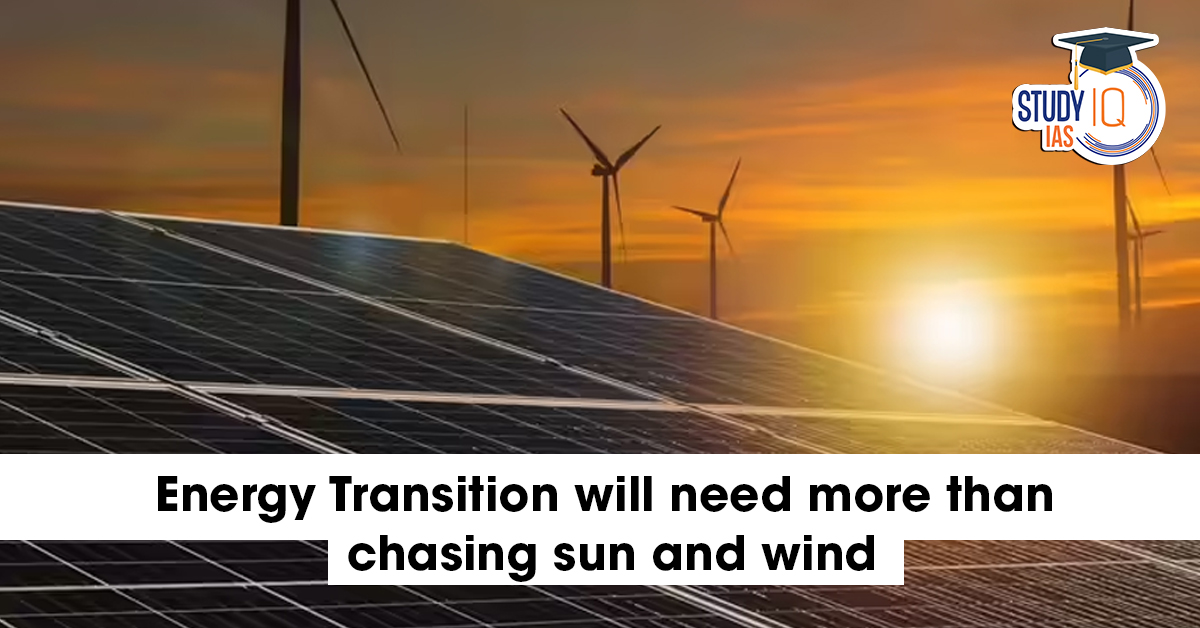
India’s energy transition has entered a new phase. With solar and wind capacity crossing 180 GW, renewable energy is no longer limited by technology or cost. In fact, solar and wind are now among the cheapest sources of new electricity generation. Yet, the clean energy transition is increasingly constrained not by generation, but by how efficiently India’s power system can absorb, distribute, and use green electricity.
The next leap in India’s energy transition will depend on deep reforms in distribution, tariffs, and electricity markets, rather than simply adding more renewable capacity.
India’s Renewable Energy Success Story — And Its Limits
Over the last decade, India has rapidly scaled up renewable energy capacity. Ambitious targets, falling costs, and strong policy support have made solar and wind central to India’s climate and energy strategy.
However, as renewable penetration rises, new challenges have emerged:
-
Curtailment of renewable power despite surplus availability
-
Rising peak demand costs
-
Grid balancing and forecasting challenges
-
Financial stress on power distribution companies
These issues point to a structural reality: building green power is easier than integrating it efficiently into the grid.
Distribution Companies: The Weakest Link in the Energy Transition
India’s distribution companies (DISCOMs) are at the heart of the power system—and the clean energy transition.
Despite reforms such as UDAY and RDSS, many discoms continue to face:
-
High Aggregate Technical and Commercial (AT&C) losses (~16%)
-
Persistent cost under-recovery
-
Heavy fixed costs from long-term power purchase agreements and network maintenance
As renewable energy expands, variability increases and system flexibility becomes critical. Yet, discom incentives remain tied mainly to selling more electricity, not to improving system efficiency, reliability, or flexibility.
The Cross-Subsidy and Rooftop Solar Challenge
In many states:
-
Commercial and industrial consumers pay above-cost tariffs
-
Households and agriculture receive subsidised electricity
This cross-subsidy structure creates stress when high-paying consumers:
-
Invest in energy efficiency
-
Install rooftop solar
-
Shift to open access power
Rooftop solar, especially under net metering, allows consumers to reduce daytime purchases while relying on the grid at night—often without paying adequately for grid services. Without tariff reform, discoms risk becoming backup providers without fair compensation.
Time-of-Day Tariffs and Smart Meters: A Strong Foundation
India has taken an important step by:
-
Mandating time-of-day (ToD) tariffs
-
Rapidly scaling smart meters, with nearly 49 million installed
These measures lay the groundwork for a modern, responsive electricity grid. Time-varying prices can signal consumers to shift demand away from peak hours, reducing system stress.
However, price signals alone are not enough.
Why Automation Matters in Demand Response
For ToD tariffs to truly work, consumers must be able to respond easily. In reality:
-
Most households cannot monitor real-time prices continuously
-
Appliance-level energy awareness is limited
-
Manual demand shifting is impractical
The solution lies in automated demand response, enabled by:
-
Smart thermostats for cooling
-
Smart charging for electric vehicles
-
Smart plugs and appliance-level controls
Well-designed demand response can provide grid flexibility at a lower cost than large-scale energy storage, especially for short-duration peak demand.
Wholesale Market Reform: Unlocking System Efficiency
India’s renewable resources are unevenly distributed geographically, while electricity demand is concentrated in cities and industrial hubs. Although the physical grid connects regions, the electricity market remains fragmented.
Currently:
-
Most power is tied up in long- and medium-term contracts
-
Discoms largely self-schedule generation
-
Power exchanges handle only 7–9% of total electricity traded
This limits the ability to use cheap renewable power efficiently across states.
Two Critical Wholesale Reforms
1. Nationwide Market-Based Economic Dispatch (MBED)
A unified, centralised dispatch system would ensure that:
-
The cheapest available power, including zero-marginal-cost renewables, is dispatched first
-
System-wide efficiency improves over fragmented scheduling
Estimates by the Central Electricity Regulatory Commission (CERC) suggest that MBED could reduce annual power procurement costs by around $1.6 billion, while also lowering renewable curtailment.
2. Integrating Captive Power Plants into Markets
Captive power plants represent a large, underutilised source of flexible capacity. Integrating them into wholesale markets would:
-
Increase competition
-
Improve market liquidity
-
Lower overall system costs
Together, these reforms can significantly strengthen renewable integration.
Redefining the Role of DISCOMs
With the right policy and market design:
-
Discoms can evolve from passive intermediaries to active system optimisers
-
Revenue models can reward reliability, flexibility, and loss reduction
-
Demand-side measures can become financial opportunities rather than threats
This shift is essential for aligning discom incentives with India’s clean energy goals.
Conclusion
India’s energy transition will not succeed on renewable capacity addition alone. Distribution reform, smart tariffs, automated demand response, and integrated wholesale markets are now the decisive factors.
If renewable integration leads to reliable, affordable electricity, public support for the transition will deepen. If it results in uncertainty and financial stress, resistance will grow.
Ultimately, India’s clean energy future depends not just on chasing the sun and harnessing the wind, but on rewiring how electricity is priced, dispatched, and consumed.
 Illegal Sand Mining in National Chambal ...
 16th Finance Commission: Key Facts, Func...
 Species in News for UPSC Prelims 2026: C...












 WhatsApp





