
Table of Contents
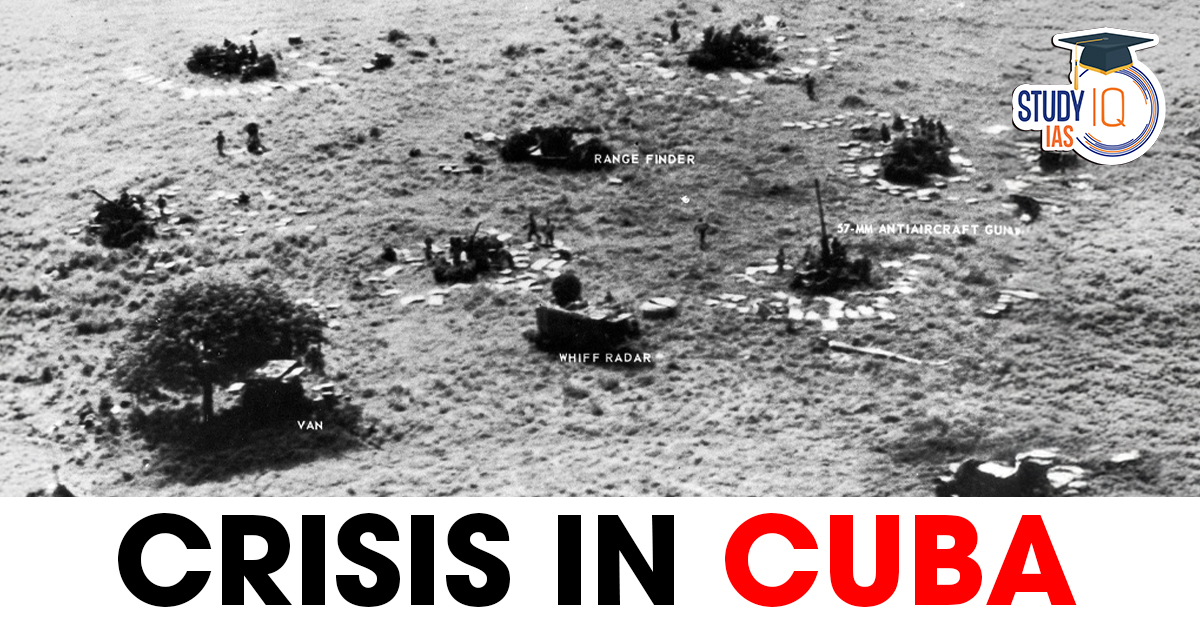
Context: The United States embargo on Cuba remains one of the longest-running sanctions regimes in modern history; recent measures, including oil shipment restrictions and financial sanctions, have triggered a severe crisis in Cuba.
US Blockade on Cuba
- Origins after Cuban Revolution: Following the 1959 Cuban Revolution led by Fidel Castro, Cuba nationalised the U.S.-owned assets, prompting Washington to impose economic sanctions and a full embargo in 1962 under President John F. Kennedy.
Legal Framework of Sanctions
Several U.S. laws institutionalised the embargo:
- Cuban Democracy Act (Torricelli Act, 1992) – restricted trade with subsidiaries of U.S. firms abroad.
- Helms-Burton Act (1996) – internationalised sanctions by penalising foreign companies investing in expropriated U.S. property in Cuba.
- Trump-era sanctions expansion – more than 240 additional restrictive measures targeting tourism, remittances, and financial flows.
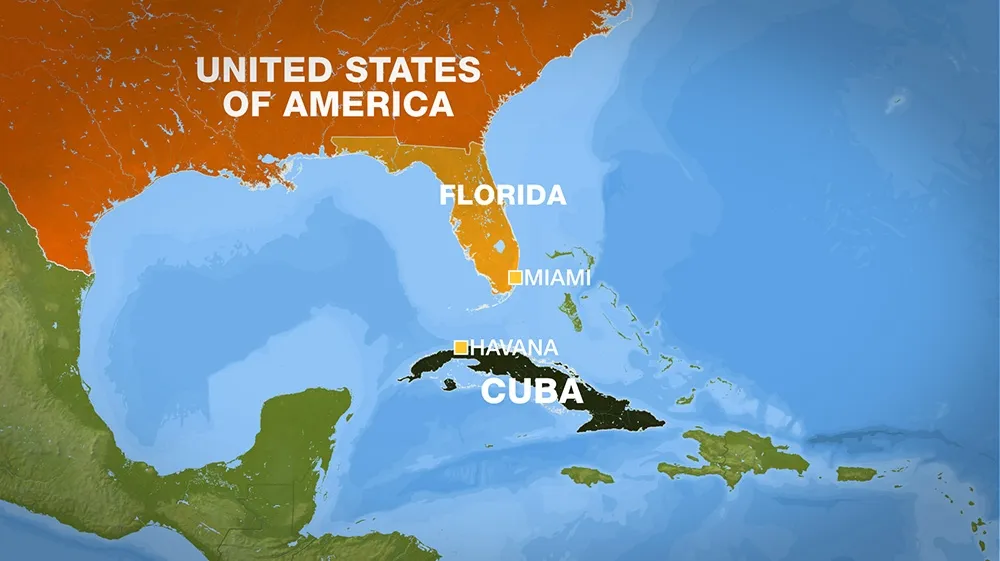
- Financial and Trade Restrictions: Cuba faces restrictions on dollar transactions, access to global banking networks, and international credit institutions (e.g., limited access to IMF and World Bank financing).
- Energy and Supply Constraints: Recent sanctions targeting oil shipments and tanker access have intensified energy shortages; Cuba produces only ~20% of its oil demand)
- Extraterritorial Sanctions: The embargo penalises third-country firms trading with Cuba, discouraging foreign investment and international banking cooperation.
Impact of the US Blockade
- Economic Contraction: Limits trade, finance, and technology access → constrains growth and investment.
- Energy Crisis: Oil supply restrictions → electricity shortages and repeated grid failures.
- Healthcare Strain: Import barriers and power shortages → delays in surgeries and medicine supply.
- Tourism Decline: Travel restrictions reduced visitors (~5M → ~2.2M), weakening foreign exchange earnings.
- Agriculture Impact: Fuel shortages affect irrigation and mechanisation → underutilised farmland.
- Migration Pressure: Economic hardship increases outward migration (mainly to U.S. and Latin America).
Divergent Perspectives on Blockade
| U.S. Perspective | Cuban Perspective |
| Political System Pressure: Sanctions aim to promote democratic reforms and regime change in Cuba. | Violation of Sovereignty: Cuba argues that sanctions attempt to undermine its political system and independence. |
| Human Rights Concerns: Washington cites restrictions on political freedoms in Cuba. | Economic Coercion: Havana describes the embargo as collective punishment affecting civilians. |
| Cold War Legacy: Initially imposed to counter Soviet influence in the Western Hemisphere. | Imperial Continuity: Seen as a continuation of U.S. dominance in Latin America (linked to the Monroe Doctrine). |
| Security Concerns: U.S. policymakers argue Cuba supports adversarial regimes (historically, the USSR, Venezuela). | Right to Self-Determination: Cuba frames its policies as sovereign choices independent of U.S. influence. |
| Domestic Political Factors: Influence of Cuban-American exile community in U.S. politics (particularly in Florida). | International Isolation of Policy: The UN General Assembly repeatedly votes overwhelmingly against the embargo. |
Cuba as a Nation of the Global South
- Champion of Global South Cooperation: Cuba actively supports South-South cooperation, particularly in healthcare, education, and disaster relief.
- Medical Diplomacy: Cuba has deployed tens of thousands of doctors globally (e.g., Ebola response in West Africa; pandemic medical missions).
- Biotechnology Leadership: Despite limited resources, Cuba developed domestic vaccines and biotechnology innovations (e.g., Abdala COVID-19 vaccine).
- South-South Solidarity Networks: Cuba maintains strong partnerships with countries such as Venezuela, Mexico, and other Latin American states, including oil-for-services cooperation programs.
- Advocacy in Multilateral Forums: Cuba frequently advocates for sovereignty, non-intervention, and economic justice within the United Nations and Global South institutions

 AI and Copyright: Key Concerns, Fair Use...
 Skills Outcomes Fund: Purpose, Benefits ...
 Quantum Reference Facilities in India: C...







 WhatsApp





