
Table of Contents
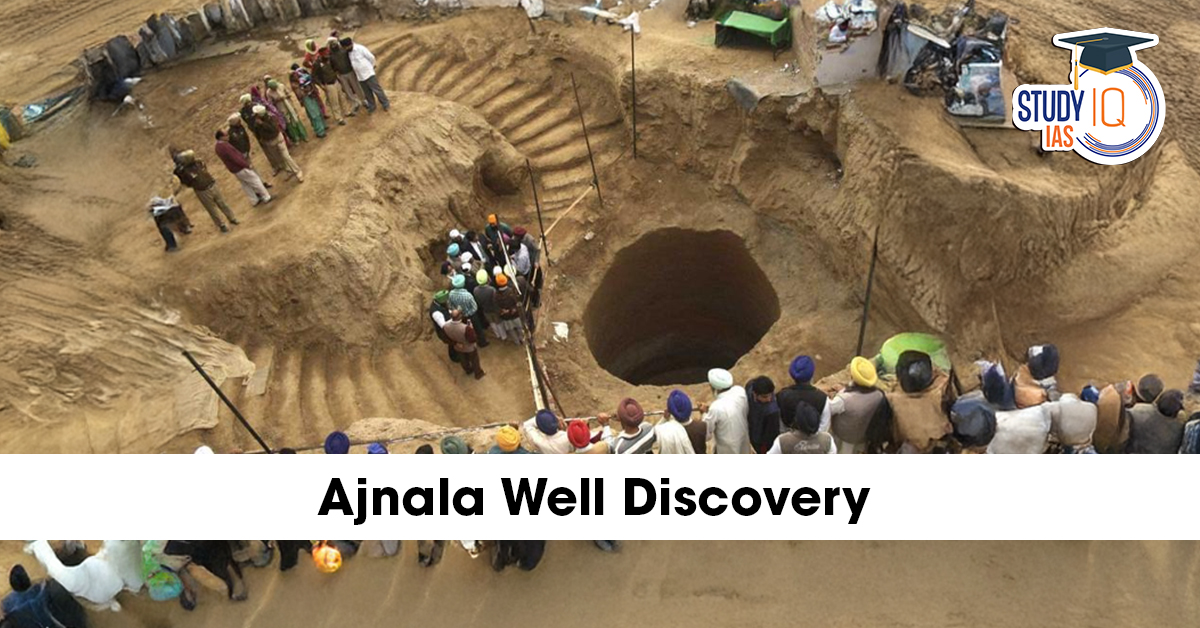
The discovery and historical recognition of the Ajnala Well in Punjab has brought renewed attention to lesser-known local narratives of the 1857 Uprising. Often referred to as India’s First War of Independence, the revolt of 1857 is usually studied through major centers like Delhi, Kanpur, and Lucknow. However, the Ajnala Well discovery highlights how local events and forgotten sacrifices also formed an integral part of the resistance against British colonial rule.
This discovery has helped historians reconstruct suppressed stories of rebellion, colonial brutality, and regional participation in the freedom struggle.
Historical Background of the Ajnala Incident
During the 1857 revolt, Indian soldiers (sepoys) across British-controlled territories revolted against colonial rule due to multiple grievances, including military discrimination, economic exploitation, and cultural interference.
In the Ajnala region (present-day Amritsar district, Punjab), a group of rebel soldiers attempted to resist British authority. Many were captured by British forces after failed escape attempts.
What is the Ajnala Well Discovery?
The Ajnala Well is believed to be the burial site of Indian rebel soldiers who were executed or died in British custody during the suppression of the 1857 revolt in Punjab.
Key aspects of the discovery include:
-
Human skeletal remains believed to belong to rebel sepoys
-
Historical records linking executions to the site
-
Oral histories preserved by local communities
-
Archaeological and historical investigations validating local accounts
The well is sometimes referred to locally as “Kalianwala Khu” (Well of the Blacks / Martyrs), symbolizing colonial-era brutality.
Why is the Ajnala Discovery Historically Important?
1. Expands Understanding of the 1857 Uprising
It shows that resistance was not limited to major cities but extended to smaller regions like Punjab.
2. Challenges Colonial Narratives
British records often minimized local resistance. The discovery provides evidence of large-scale suppression.
3. Highlights Local Participation
It recognizes Punjab’s role in the uprising, which is often overshadowed in mainstream history.
4. Strengthens People’s History Approach
The discovery validates oral traditions and local memory as important historical sources.
Punjab and the 1857 Uprising: A Complex Story
Punjab had a mixed response in 1857:
-
Some sections supported the British (due to recent annexation politics and military recruitment patterns).
-
Some soldiers and local groups revolted or resisted colonial authority.
The Ajnala incident reflects this complex political and social landscape.
Role of Archaeology and Local History in Rewriting the Past
The Ajnala Well discovery demonstrates the importance of:
-
Micro-history studies
-
Archaeological verification of oral narratives
-
Local archives and community memory
-
Regional history integration into national narratives
Modern historiography increasingly emphasizes such localized evidence to present a more balanced understanding of India’s freedom struggle.
Socio-Cultural Significance Today
Today, the Ajnala Well is seen as:
-
A symbol of forgotten martyrs
-
A reminder of colonial violence
-
A site of historical memory and tribute
-
An example of grassroots history preservation
Conclusion
The Ajnala Well discovery is a powerful reminder that history is not only shaped by major battles and famous leaders but also by local sacrifices and suppressed stories. By bringing attention to the fate of rebel soldiers in Punjab during 1857, the discovery enriches our understanding of India’s freedom struggle. It also reinforces the importance of integrating local histories into the national narrative, ensuring that forgotten voices are finally heard.
|
Read More Notes |
|
| Environment Notes | Art and Culture Notes |
| Science and Tech | History Notes |
| Geography Notes | Indian Polity Notes |
| General Knowledge | International Relation |
|
Explore StudyIQ Courses |
|
 West Bengal Elections 2026: Full Schedul...
 ISRO Launches Mission MITRA in Ladakh: A...
 Disaster Management in India, Classifica...













 WhatsApp





