
Table of Contents
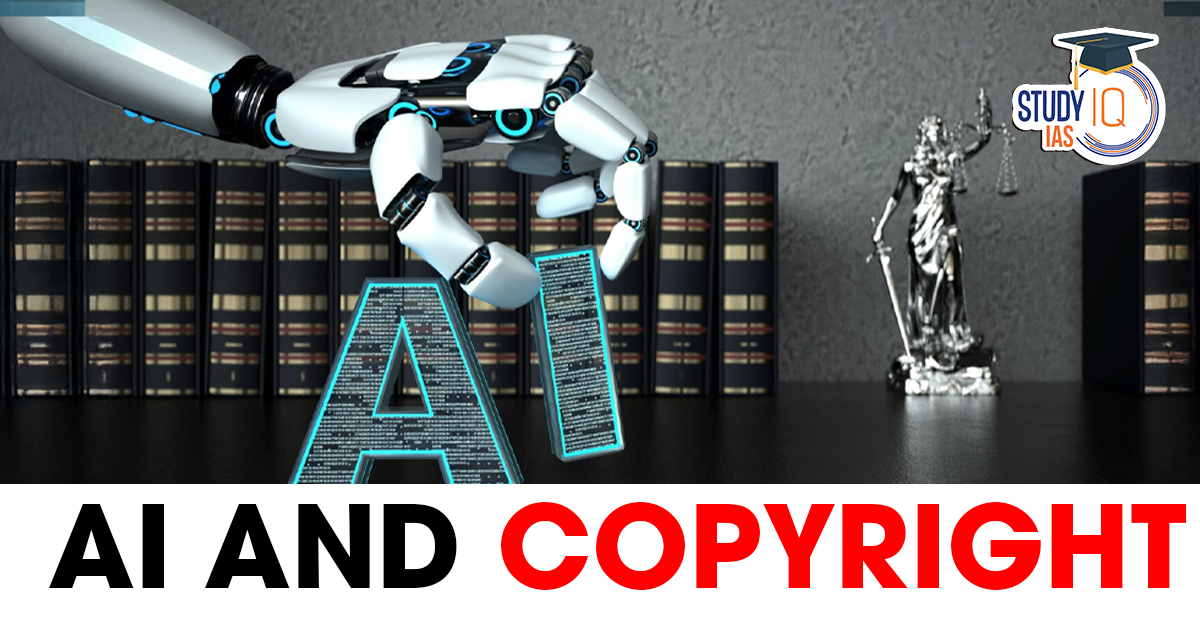
Context: The Delhi High Court has asked the Copyright Office to decide whether an Artificial Intelligence (AI) system can be recognised as the sole author of an artwork. The case involves an AI-generated painting and raises important legal and ethical questions about ownership of creative works.
AI and Copyright: About the Case
- Issue before the court: The Delhi High Court has asked the Copyright Office to decide whether an Artificial Intelligence (AI) system can be recognised as the sole author of an artwork. This raises questions about ownership of machine-generated content.
- Application by AI researcher: Stephen Thaler applied for copyright for an artwork created by his AI system DABUS, claiming that the AI independently generated the work without human input.
- Legal framework involved: Under the Copyright Act, 1957, authorship is traditionally granted only to human beings, making this case a test of existing legal definitions.
- Previous practice in India: In an earlier instance, AI was recognised as a co-author (not sole author), indicating some flexibility but no full legal recognition of AI authorship.
AI and Copyright: Key Concerns
- Unclear definition of authorship: Current laws do not clearly address whether a non-human entity like AI can be considered an author, leading to legal ambiguity.
- Ownership and rights issues: If AI is not recognised as an author, it is unclear whether ownership should lie with the developer, user, or organisation behind the AI.
- Accountability challenges: Recognising AI as an author raises questions about responsibility in cases of copyright violation or misuse.
- Impact on human creativity: Granting authorship to AI may reduce the importance of human effort and originality in creative fields.
- Global differences in approach: Different countries follow different standards, creating uncertainty in cross-border recognition of AI-generated works.
Way Forward
- Clarify legal definitions: Laws should clearly define authorship and ownership in the context of AI-generated works to remove ambiguity.
- Recognise human role in AI creation: Copyright may be linked to the person who designs, controls, or uses the AI, ensuring accountability.
- Develop balanced regulations: Policies should encourage innovation in AI while also protecting the rights of human creators.
- Ensure accountability mechanisms: Legal provisions must clearly fix responsibility for misuse or infringement involving AI-generated content.
- Learn from global practices: India can study international approaches and adopt a suitable framework that aligns with its legal and technological needs.

 Puducherry Union Territory: Governance S...
 Assam Election 2026: Exit Poll, Result D...
 Skills Outcomes Fund: Purpose, Benefits ...




 WhatsApp





