
Table of Contents
Context
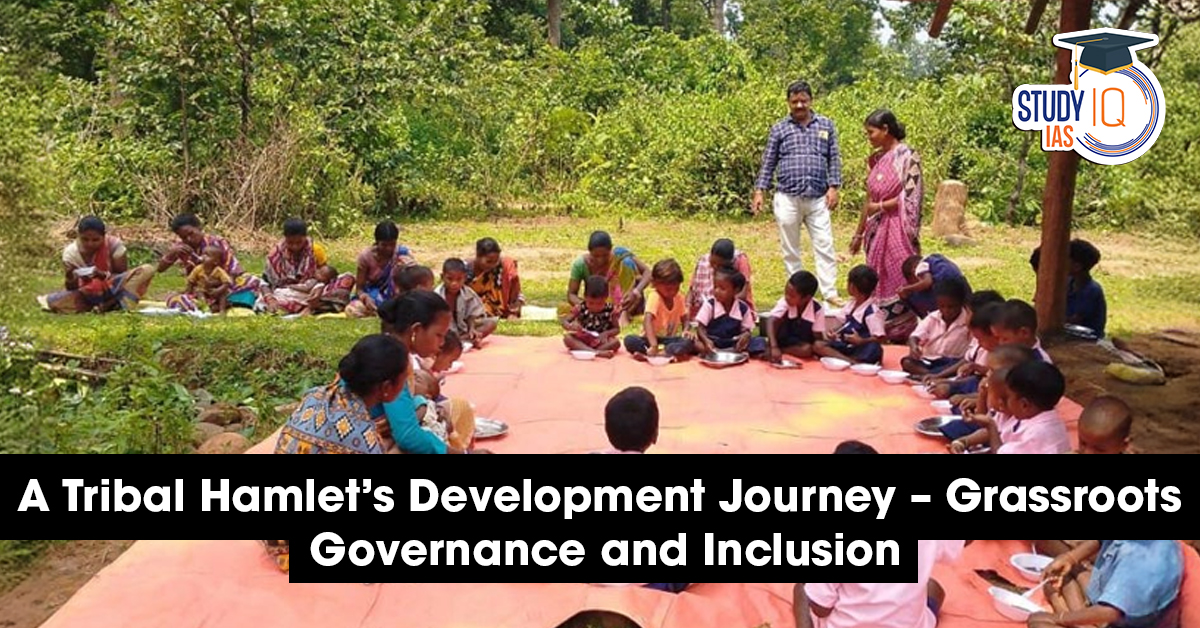
In the remote hills of Kumram Bheem Asifabad district in Telangana, Limbuguda, a hamlet of less than 40 Kolam tribal families, is witnessing a silent transformation. A Multipurpose Centre (MPC) set up under the Pradhan Mantri Janjati Adivasi Nyaya Maha Abhiyan is using AI-assisted tools to improve education, healthcare and nutrition in one of the most marginalised, Particularly Vulnerable Tribal Group (PVTG) habitations.
Quotes on Tribal Communities
| DR. B.R. Ambedkar | The tribal people of India are the most vulnerable and marginalised, yet they carry with them a rich heritage of culture, art, and wisdom. |
| Mahatma Gandhi | The Adivasis of India have lived in harmony with nature for centuries. They are the real custodians of India’s forests, rivers, and mountains |
|
Amartya Sen |
The development of tribal communities should not only be measured by economic standards, but also by the extent to which they can preserve their culture and dignity |
| Ramchandra Guha
(Historian) |
The Adivasis are the original environmentalists of India. Long before the concept of ‘sustainable development’ entered our vocabulary, tribal communities practised it in their daily lives |
About PVTGs
- Fourth Five-Year Plan devised a sub-category within the STs to identify the most vulnerable groups as PVTGs.
- There are 75 PVTGs spread over 18 states and the Union Territory of Andaman and Nicobar Islands.
- Criteria for identification of PVTGs as based on the Dhebar Commission report:
- Pre-agriculture level of technology
- Stagnant or declining population,
- Low level of literacy,
- Subsistence level of the economy
Significance of PVTGs
- Cultural preservation: The Toda tribe of the Nilgiri hills is known to preserve traditional embroidery and unique temple architecture, adding to the country’s cultural fabric.
- Environment stewardship: The Baiga tribe of MP practices shifting cultivation in a way that minimises environmental impact and allows forests to regenerate.
- Sustainable living: The Kattunayakan tribe of Kerala lives in close harmony with nature while relying on the sustainable harvest of honey and non-timber forest products.
- Exemplify indigenous knowledge: The Dongria Kondh tribe of Odisha holds extensive knowledge of medicinal plants found in the Niyamgiri hills which aids modern medical research.
| About Limbuguda PVTG Hamlet |
| ● Location and community profile: Limbuguda lies about 320 km from Hyderabad in a hilly, forested region. It is home mainly to the Kolam tribe, classified as a PVTG due to low literacy, fragile livelihoods and social vulnerability.
● High dropout rates: School dropout levels among PVTGs in the district remain high, reflecting poverty, poor connectivity and limited access to quality education. |
The Multipurpose Centre (MPC): A one-stop facility
- Established in 2025 at ₹60 lakh cost: The centre was built under PM-JANMAN to provide integrated services in remote tribal areas.
- Education, health and nutrition under one roof: The MPC houses an Anganwadi, an Auxiliary Nurse Midwife (ANM) health unit, a computer lab and a digital learning hall.
- AI-assisted learning tools introduced: Programmes such as Assisted Language Learning (ALL) and Assisted Mathematics Learning (AML) help improve basic skills among primary students.
- Use of digital platforms: For higher classes, tech-enabled resources such as Khan Academy are used to explain mathematics and science concepts in simple ways.
Bridging the Digital Divide
- First exposure to computers: Many tribal children are using computers for the first time within their own village, reducing the rural–urban learning gap.
- Promoting aspirations: Access to digital tools is encouraging students to aim for higher education and government jobs.
- Improved connectivity: The establishment of the MPC also led to the construction of a cement road connecting the hamlet, improving physical access.
Integrated Approach to Development
- Health and nutrition focus: The centre addresses malnutrition and anemia among women and children through regular monitoring and services.
- Renewable energy and infrastructure expansion: The district plans to extend similar MPCs to other PVTG habitations, along with mobile medical units, housing and electricity support.
- Community participation: Local villagers contributed land and support, reflecting ownership and trust in education-led change.
Challenges
- Transport gaps: Lack of regular bus services limits easy access to mandal headquarters and higher institutions.
- Internet connectivity issues: Reliable high-speed internet is needed for smooth functioning of AI-based learning tools.
- Livelihood concerns: Most Kolam families depend on rain-fed cotton farming and daily wage work, pointing to the need for skill development.
- Social barriers: Superstitions, inadequate housing and limited economic opportunities still affect parts of the community.
Cultural Preservation Alongside Technology
- Revival of tribal identity: Murals at the centre celebrate Adivasi heritage and local heroes such as Kumram Bheem, linking modern education with cultural pride.
- Protection of traditional knowledge: Community leaders stress safeguarding indigenous medicinal and ecological knowledge even as digital tools expand.
- Model for tribal empowerment: Limbuguda’s MPC is being seen as a potential role model for other tribal regions.
- Shift from welfare to capacity-building: The focus is not just on infrastructure but on improving skills, confidence and long-term self-reliance.
- Technology as an equaliser: When combined with local participation, AI-assisted education can reduce inequality in remote areas.
| Government Initiatives for PVTGs |
| ● PM-JANMAN: Housing scheme for PVTGs (2023) to ensure their socio-economic welfare. It focuses on holistic development, inter-ministerial collaboration in providing roads, housing, health, education and livelihood support for the PVTGs.
● Van Dhan Vikas Karyakram: Launched to promote livelihood for tribal communities through value addition and marketing forest produce. ● MSP for Minor forest produce (MFP): In order to ensure fair prices for MFP collected by the PVTGs and to protect them from middlemen exploitation. ● PM Awas Yojana: Affordable housing to rural poor & financial aid for constructing pucca houses. ● TRIFED Digital connect: Initiative to digitally connect tribal artisans, entrepreneurs to the market. Provision of an E-marketplace for tribal products and access to financial services |
|
Read More Notes |
|
| Environment Notes | Art and Culture Notes |
| Science and Tech | History Notes |
| Geography Notes | Indian Polity Notes |
| General Knowledge | International Relation |
|
Explore StudyIQ Courses |
|
 Legal Issues in the Definition of Rape â...
 US Supreme Court Rejects Trump Tariffs â...
 A Treatise for Federalism: The Kurian Jo...








 WhatsApp





