
Table of Contents
What Is China Zorrilla?
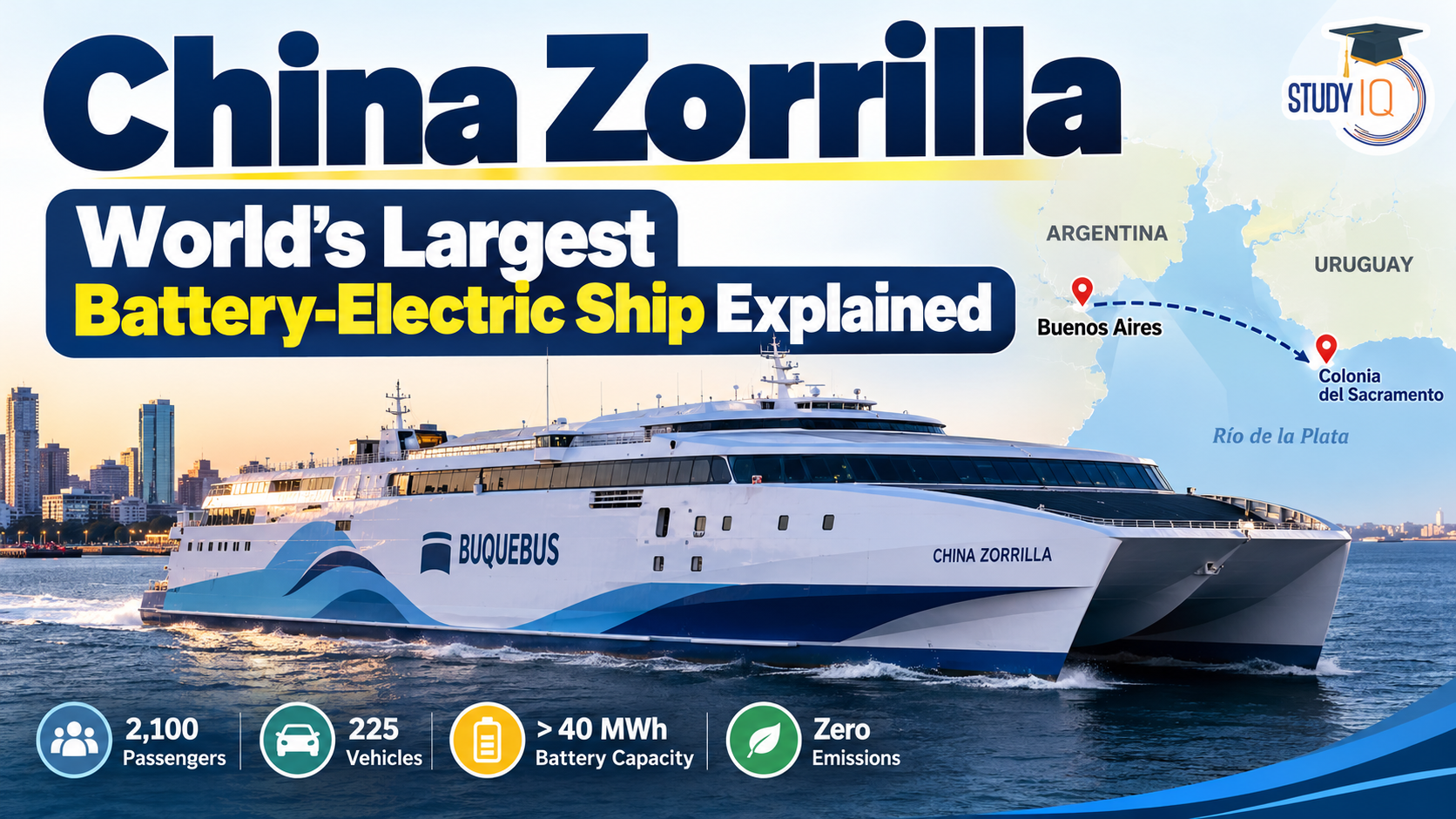
China Zorrilla is the world’s largest battery-electric vessel, designed to transport passengers and vehicles between Argentina and Uruguay. Built by Australian shipbuilding company Incat Tasmania for South American ferry operator Buquebus, the vessel represents a major development in sustainable maritime transportation.
The vessel entered commercial service after completing its maiden voyage between Buenos Aires, Argentina, and Colonia del Sacramento, Uruguay.
Key Facts About China Zorrilla
- Type: Battery-electric passenger and vehicle ferry
- Builder: Incat Tasmania, Australia
- Operator: Buquebus
- Flag country: Uruguay
- Former designation: Incat Hull 096
- Route: Buenos Aires, Argentina, to Colonia del Sacramento, Uruguay
- Namesake: China Zorrilla, a celebrated Uruguayan actress and theatre personality
China Zorrilla: Important Features
The vessel combines large passenger capacity with battery-powered propulsion, making it a significant example of electric mobility in the maritime sector.
- Length: Approximately 130 metres
- Width: Approximately 32 metres
- Passenger capacity: Up to 2,100 passengers
- Vehicle capacity: Up to 225 vehicles
- Battery capacity: More than 40 megawatt-hours (MWh)
- Battery weight: More than 250 metric tonnes
- Propulsion system: Eight electric motors connected to waterjets
- Maximum speed: Approximately 25 knots
- Journey duration: Around 90 minutes for the approximately 55–60 km route
- Additional facility: Three decks and a duty-free retail complex of approximately 2,300 square metres
How Does China Zorrilla Work?
China Zorrilla uses a large battery system to power its electric propulsion system. The electricity drives eight electric motors connected to waterjets, which propel the vessel through the water.
Unlike conventional diesel-powered ferries, the vessel does not require onboard combustion engines for propulsion. Its battery-based system therefore eliminates direct exhaust emissions during normal electric operation.
The large battery capacity is particularly important because transporting thousands of passengers and hundreds of vehicles requires substantial energy.
Environmental Significance of China Zorrilla
1. Reduction in Operational Emissions
Battery-electric propulsion eliminates direct exhaust emissions during operation, helping reduce local air pollution along busy ferry routes.
2. Sustainable Maritime Transport
The vessel demonstrates how electrification can support the transition towards cleaner passenger and vehicle transportation.
3. Lower Noise and Vibration
Electric propulsion can reduce engine noise and vibration, improving passenger comfort and the onboard travel experience.
4. Challenges of Large-Scale Electrification
Battery-electric vessels require high-capacity charging infrastructure, reliable electricity supplies and careful battery management. Their overall climate benefits also depend on the source of electricity and the environmental impact of battery production.

 UN Reform 2026: Challenges, Proposals an...
 Oskar Klein Medal 2026: Ashoke Sen Wins ...
 Mission Karmayogi 2026: UP Ranks First, ...














 WhatsApp






