Table of Contents
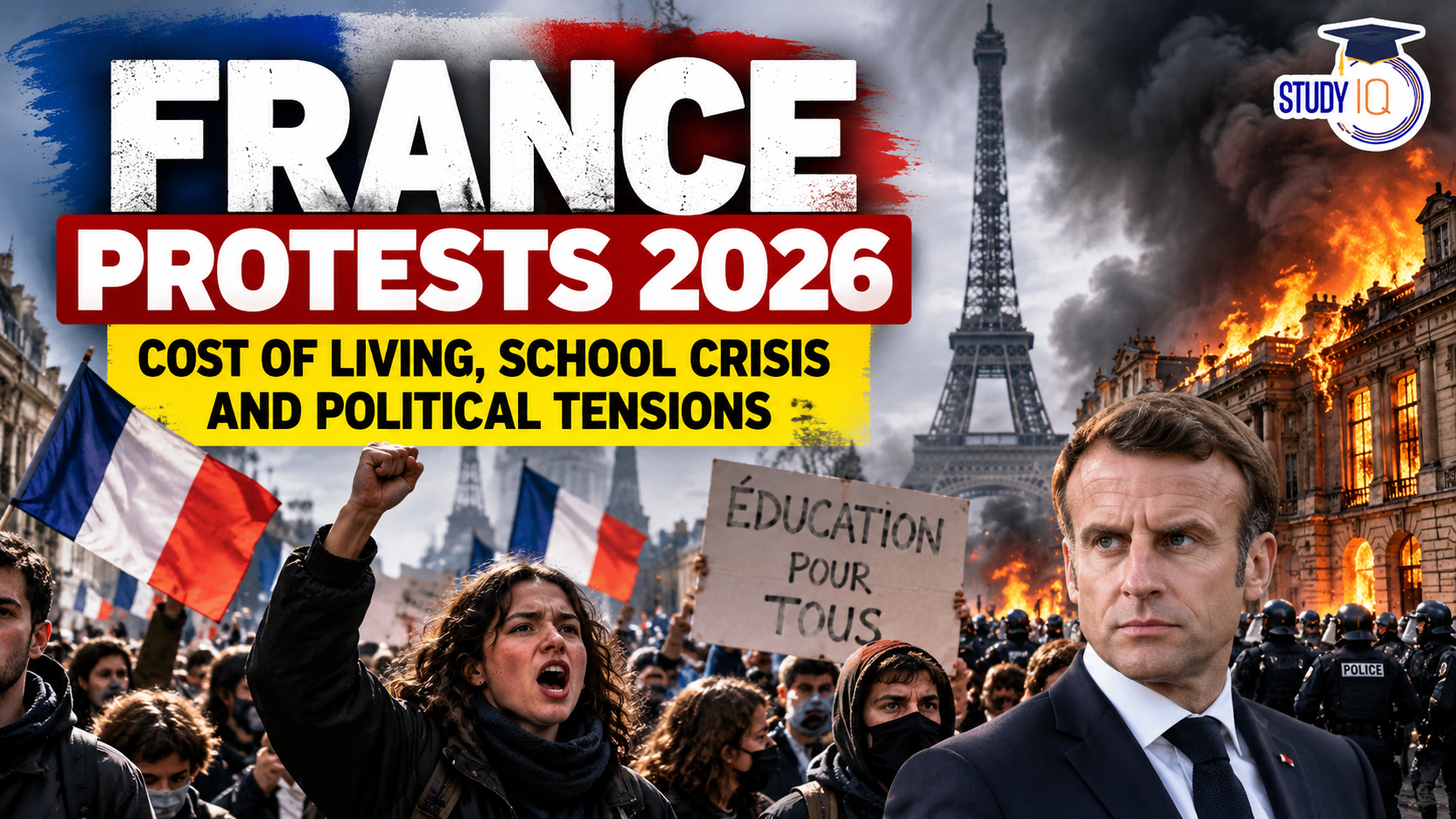
France witnessed major nationwide protests on 17 October 2026, as student demonstrations over deteriorating school conditions converged with public anger over rising living costs and declining public services. What began as a movement focused on education escalated into widespread unrest, with clashes between protesters and police, looting and fires in several cities.
According to Reuters, more than 500,000 people participated in demonstrations, while the government faced growing pressure to restore order and address public grievances. The unrest has also intensified political tensions ahead of the 2027 presidential election.
Why Are People Protesting in France?
1. Rising Cost of Living and Fuel Prices
One of the principal reasons behind the protests is the pressure on household budgets caused by the cost of essential goods and fuel.
Rising transport expenses, food prices and housing costs can disproportionately affect low-income households and workers whose wages have not kept pace with their expenses.
Trade unions have called for higher wages and pensions, lower prices and the protection of public services. The participation of cost-of-living campaigners has transformed student demonstrations into a broader movement against economic insecurity.
2. Crisis in the Education System
The immediate trigger for the student movement was dissatisfaction with conditions in French secondary schools, known as lycées.
Students have raised concerns about:
- Teacher shortages and unfilled vacancies.
- Dilapidated school buildings and inadequate facilities.
- Overcrowded classrooms and demanding timetables.
- Anxiety over access to higher education through the Parcoursup admissions system.
The movement began in the Paris suburb of Créteil in September 2026 and subsequently spread to other cities.
The education crisis has raised broader questions about equal opportunities, public investment and the ability of the state to provide quality education to all students.
3. Cuts to Public Services and Fiscal Constraints
France is also facing a difficult debate over public expenditure and fiscal consolidation.
The government’s proposed 2027 budget includes substantial cost-cutting and tax measures intended to reduce the budget deficit. Critics argue that spending restraint could place additional pressure on public services and household finances.
This creates a policy dilemma: the government must improve schools and respond to economic hardship while maintaining sustainable public finances.
The controversy illustrates the tension between fiscal discipline and social protection.
4. Political Distrust and Electoral Uncertainty
The protests have emerged amid political fragmentation and growing dissatisfaction with President Emmanuel Macron’s government.
France’s political divisions have made it difficult to build consensus on taxation, public spending and social policy. Opposition parties have criticised the government’s response, while different political groups have attempted to shape the protest movement.
With the next presidential election scheduled for 2027, the unrest could influence electoral debates over economic policy, public services, immigration, security and the future direction of France.
Why Did the Protests Turn Violent?
Although many demonstrations remained peaceful, some groups engaged in looting, arson and attacks on public buildings.
In Limoges, a fire severely damaged the historic town hall. Businesses were also looted or damaged in several cities, while clashes with riot police resulted in injuries.
The violence has raised questions about crowd management, police preparedness and the proportionality of law-enforcement responses.
It is important to distinguish between peaceful protesters expressing legitimate grievances and individuals involved in criminal acts. Violence and property destruction do not represent the demands of every participant.
Government Response
President Emmanuel Macron appealed for calm and condemned the destruction of public property. The government also indicated that authorities could restrict demonstrations where necessary to protect public buildings and businesses.
Officials have promised support for affected businesses and stressed that those responsible for violence would face legal consequences.
However, restoring order alone may not resolve the underlying causes of the unrest. Sustainable solutions require improvements in school infrastructure, effective recruitment of teachers, targeted support for vulnerable households and constructive dialogue with trade unions and students.
The Yellow Vest Movement: Historical Connection
The present unrest recalls France’s Yellow Vest movement, which emerged in 2018 in response to fuel-tax increases and rising living costs.
The movement subsequently expanded into a broader expression of anger over economic inequality, purchasing power and the perceived distance between political leaders and ordinary citizens.
The current protests share some of these grievances, but they also have a distinct education-related dimension.
The comparison highlights how economic pressure and dissatisfaction with public services can unite different social groups around a common demand for political responsiveness.
Implications for Governance and Democracy
The French protests demonstrate that economic grievances can become a wider governance crisis when citizens believe that public institutions are failing to address their needs.
The situation highlights several important issues:
- Responsive governance: Governments must address public grievances through credible policies and transparent communication.
- Social justice: Access to quality education and essential services is important for reducing inequality.
- Fiscal responsibility: Public expenditure must balance social needs with long-term financial sustainability.
- Civil liberties: Democratic governments must protect peaceful assembly while maintaining public order.
- Police accountability: Crowd-control operations must comply with applicable law and respect human rights.
Conclusion
France Protests 2026 reflect the convergence of economic insecurity, dissatisfaction with public education and political distrust. While violence has complicated the government’s response, the long-term challenge is to address the underlying grievances without compromising public safety or fiscal sustainability.
The developments offer a broader lesson for democratic governance: maintaining public order is essential, but lasting stability also depends on effective public services, economic opportunity and institutions that respond to citizens’ concerns.

 PUFFINS Telescope Mission: NASA’s $20 ...
 World Food Day 2026: Strengthening Nutri...
 International Day for the Eradication of...














 WhatsApp