Table of Contents
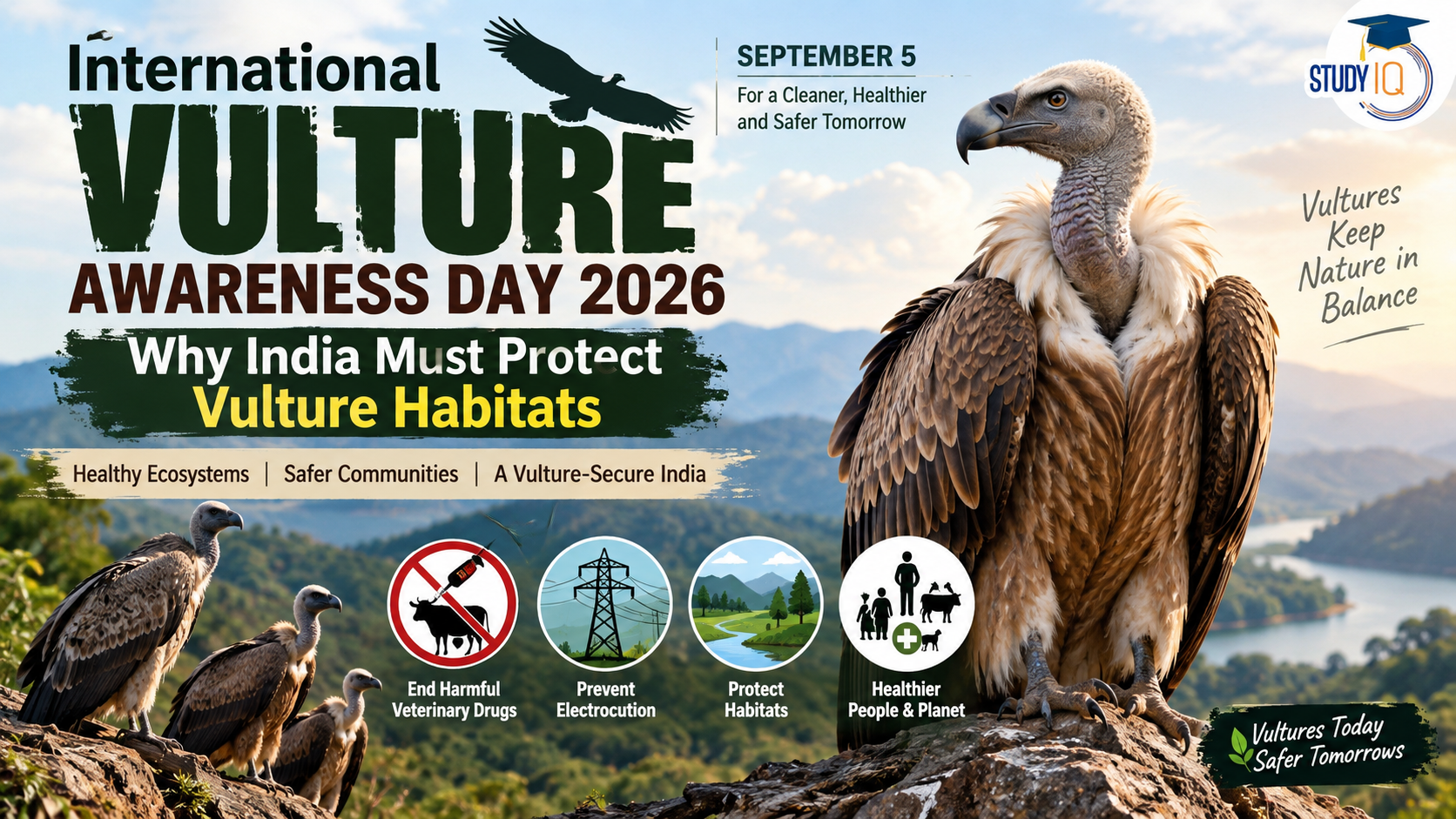
International Vulture Awareness Day 2026 is observed on September 5 to raise awareness about the ecological importance of vultures and the threats facing these vital scavengers. In India, vulture conservation has become especially important because their populations have suffered a dramatic decline over the past few decades.
Read Also: UPSC Daily Current Affairs 2026
Why Are Vultures Important?
Vultures are nature’s scavengers. By rapidly consuming animal carcasses, they help:
- Keep ecosystems clean by removing dead animals.
- Reduce the spread of pathogens and disease.
- Limit the availability of carcasses to feral dogs and other scavengers.
- Support livestock and human health through natural waste disposal.
- Maintain ecological balance in grassland, forest and rural landscapes.
Why Did Vultures Decline in India?
The most significant cause of the historic decline was the veterinary use of diclofenac, a non-steroidal anti-inflammatory drug (NSAID) given to cattle and other livestock.
When vultures fed on carcasses containing residues of diclofenac, the drug could cause kidney failure and death. Millions of vultures died, resulting in one of the most severe declines recorded among birds in India.
The loss of vultures also contributed to changes in scavenger populations, particularly an increase in feral dogs, creating wider public-health concerns, including rabies.
Electrocution: An Emerging Threat
Although toxic veterinary drugs remain a major conservation concern, electrocution and collisions with power infrastructure are increasingly important threats.
Large vultures frequently use trees, cliffs, buildings and electricity infrastructure for roosting or movement. Unsafe power lines can therefore cause fatal accidents.
This highlights an important lesson: protecting vultures requires more than protecting the birds themselves. Their entire habitat and surrounding landscape must be made safer.
India’s Vulture Conservation Efforts
India has taken several measures to revive declining vulture populations, including:
- Restrictions and bans on veterinary diclofenac.
- Regulation of other harmful veterinary NSAIDs.
- Captive-breeding programmes for threatened vulture species.
- Release of captive-bred birds into suitable habitats.
- Monitoring of wild vulture populations.
- Creation and management of vulture safe zones and conservation landscapes.
However, releasing captive-bred vultures into landscapes containing toxic drugs or dangerous infrastructure can undermine these efforts.
Why Protected Landscapes Matter
Vultures have large home ranges and depend on landscapes containing adequate food, safe nesting and roosting sites, and relatively low exposure to toxic substances.
Therefore, conservation must move from a species-centric approach to a landscape-level approach.
Protected and carefully managed landscapes can help provide:
- Safe feeding areas.
- Secure nesting and roosting sites.
- Reduced exposure to harmful veterinary drugs.
- Safer electricity infrastructure.
- Better monitoring of released birds.
- Community participation in conservation.
Way Forward
A successful vulture recovery strategy should focus on habitat security along with population recovery.
Key priorities include:
- Ensure availability of vulture-safe veterinary drugs.
- Identify and mitigate electrocution hotspots.
- Protect nesting and roosting habitats.
- Develop and strengthen vulture safe zones.
- Monitor captive-released birds after release.
- Improve awareness among veterinarians, livestock owners and local communities.
- Integrate vulture conservation with One Health and ecosystem-management approaches.
Conclusion
International Vulture Awareness Day 2026 is a reminder that conserving vultures is not simply about increasing their numbers. India must also ensure that the landscapes into which these birds are released are safe, food-secure and ecologically functional.
The future of India’s vultures will depend on combining scientific conservation, safe veterinary practices, protected habitats and responsible infrastructure planning. Saving vultures ultimately means protecting an important natural service that benefits ecosystems, livestock and human health alike.

UPSC IAS Live GS P2I Foundation 2027 Pratigya August Evening Batch 2 (Basic)
Sharing is caring!
 Special Summary Revision (SSR) 2026–27...
 Global Hunger Index 2026: India Ranks 10...
 France Protests 2026: Cost of Living, Sc...














 WhatsApp