
Table of Contents
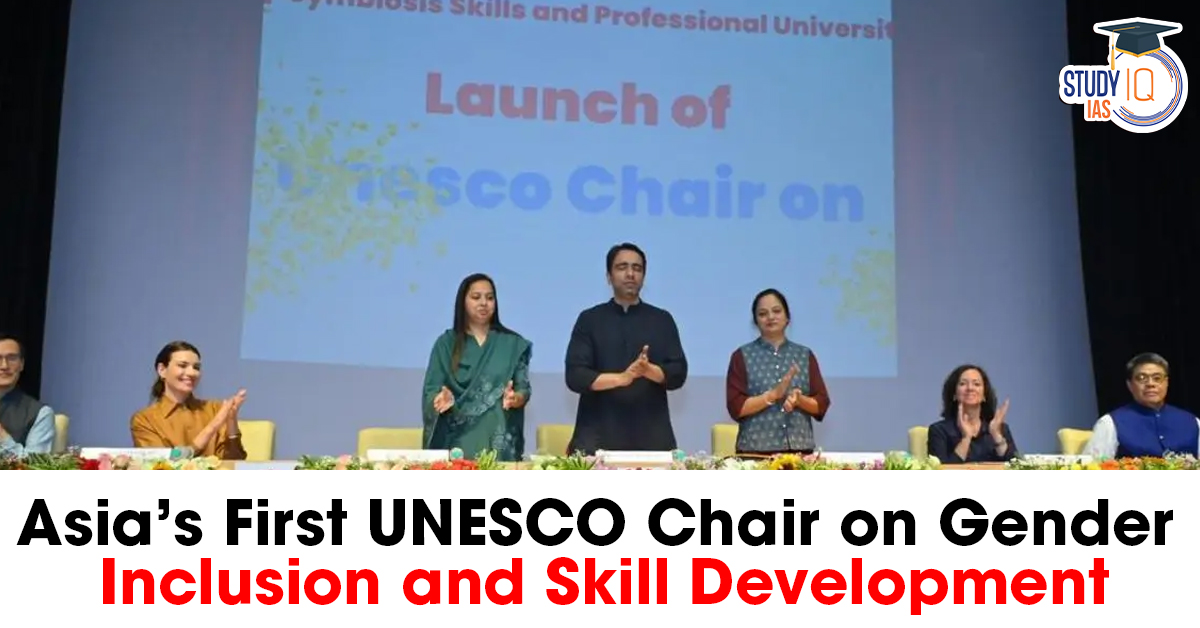
Context: The Government of India launched Asia’s first UNESCO Chair on Gender Inclusion and Skill Development at Symbiosis Skills and Professional University. The initiative aims to strengthen women’s participation in emerging sectors and promote inclusive skill development.
About the UNESCO Chair Initiative
- Launch of the UNESCO Chair: The UNESCO Chair on Gender Inclusion and Skill Development was inaugurated in Pune.
- The initiative seeks to promote research, training, and policy support for women’s participation in skill development and employment.
- Leadership and Collaboration: The programme was launched by Jayant Chaudhary in collaboration with UNESCO.
- First Such Initiative in Asia: It is the first UNESCO Chair in Asia dedicated specifically to gender inclusion in skill development.
- This highlights India’s growing role in promoting inclusive workforce policies.
- Promoting Women’s Participation in Emerging Sectors: The initiative focuses on sectors such as artificial intelligence, robotics, semiconductors, and advanced manufacturing.
- Reducing Gender Gaps in Employment: The programme aims to improve access of women to education, training, and skilled jobs.
- Women continue to face barriers in employment, especially in technology-intensive sectors.
- Building Inclusive Skill Ecosystems: The Chair seeks to connect governments, industries, and educational institutions.
Significance for India
- Economic Growth through Inclusion: Greater workforce participation by women can boost productivity and economic output. Inclusive growth helps in better utilisation of human resources.
- Support for Social Empowerment: Skill development improves women’s confidence, independence, and decision-making ability. Economic empowerment strengthens social equality.
- Alignment with National Priorities: The initiative supports India’s focus on skilling and entrepreneurship. It complements programmes aimed at preparing youth for future employment.
Challenges in Gender Inclusion
- Low Female Labour Force Participation: Women’s participation in the workforce remains lower than that of men in India.
- Social barriers, unpaid care work, and safety concerns limit opportunities.
- Digital and Skill Gaps: Many women lack access to advanced technical education and digital resources.
- This reduces their representation in high-growth sectors.
- Underrepresentation in STEM Fields: Women remain underrepresented in science, technology, engineering, and mathematics careers.
- Gender stereotypes and unequal opportunities contribute to this gap.
Way Forward
- Expand Gender-Focused Skill Training: Increase specialised training programmes for women in advanced technologies.
- Strengthen Industry Partnerships: Encourage industries to provide internships, apprenticeships, and mentorship opportunities.
- Promote Safe and Inclusive Workplaces: Ensure equal opportunities, fair wages, and supportive working conditions for women.
- Improve Access in Rural and Underserved Areas: Extend skill development initiatives to rural and disadvantaged communities.

 Skyroot Vikram-1 Mission Aagaman: India'...
 Oor Pare Prehistoric Site: Location, Roc...
 Assam Election 2026: Exit Poll, Result D...









 WhatsApp





