
Table of Contents
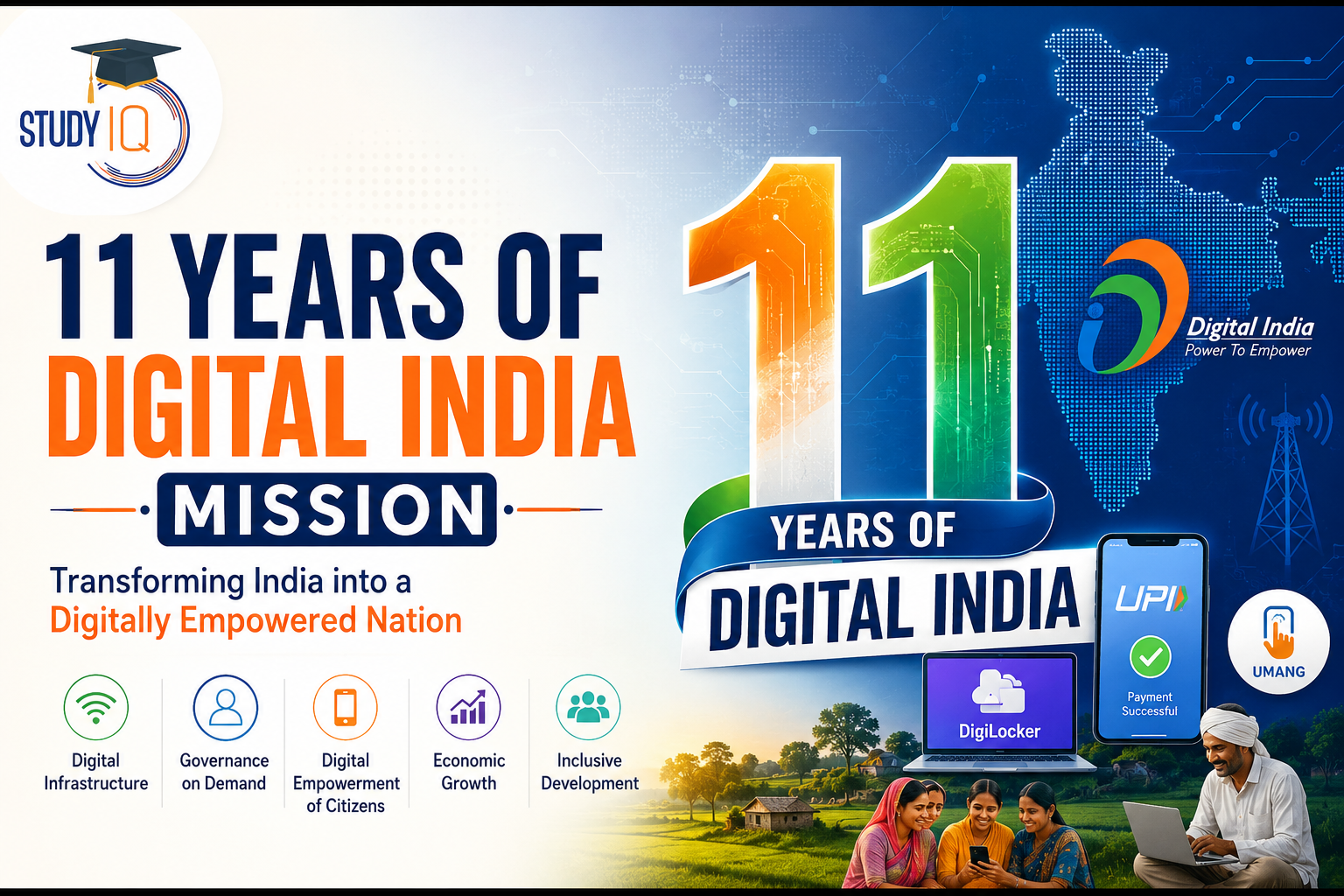
The Digital India Mission, launched on 1 July 2015, has completed 11 years of transforming India into a digitally empowered society and knowledge economy. Over the past decade, the initiative has revolutionised governance, financial inclusion, digital infrastructure, and public service delivery. One of its latest success stories is eSaras, a government-backed digital commerce platform that empowers rural women entrepreneurs by connecting them directly with customers across India.
As India celebrates 11 years of Digital India, the mission stands as a global example of how Digital Public Infrastructure (DPI) can promote inclusive growth, economic empowerment, and innovation.
What is the Digital India Mission?
The Digital India Mission is the Government of India’s flagship programme aimed at transforming the country into a digitally empowered society. Launched by Prime Minister Narendra Modi on 1 July 2015, the mission is coordinated by the Ministry of Electronics and Information Technology (MeitY).
Vision of Digital India
The mission is built on three key pillars:
- Digital infrastructure as a core utility for every citizen.
- Governance and services on demand.
- Digital empowerment of citizens.
It seeks to improve access to government services, bridge the digital divide, enhance transparency, and create opportunities through technology.
Key Achievements of Digital India in 11 Years
1. Expansion of Digital Public Infrastructure (DPI)
India has developed one of the world’s most advanced Digital Public Infrastructure ecosystems through platforms such as:
- Aadhaar
- Unified Payments Interface (UPI)
- DigiLocker
- CoWIN
- UMANG
- ONDC (Open Network for Digital Commerce)
- BHASHINI
These platforms have significantly improved service delivery, financial inclusion, and digital accessibility.
2. Growth of Digital Payments
The rapid adoption of UPI has made India one of the world’s leaders in real-time digital payments. Millions of transactions are processed daily, enabling seamless payments for businesses and citizens alike.
3. Improved e-Governance
Government services are increasingly available online through portals and mobile applications, reducing paperwork, improving transparency, and enhancing citizen convenience.
4. Rural Digital Inclusion
Expansion of broadband connectivity through programmes such as BharatNet, digital literacy initiatives, and common service centres (CSCs) has helped bridge the rural-urban digital divide.
5. Digital Empowerment of Women
Digital India has enabled women entrepreneurs, Self-Help Groups (SHGs), and rural producers to access markets, digital payments, and online services, contributing to financial independence.
What is eSaras?
eSaras is a government-supported digital commerce platform developed by the Digital India Corporation (DIC) under MeitY, in collaboration with the Ministry of Rural Development (MoRD).
The platform is implemented under the Deendayal Antyodaya Yojana – National Rural Livelihoods Mission (DAY-NRLM).
It enables Self-Help Groups (SHGs), women entrepreneurs, Farmer Producer Organisations (FPOs), and rural producer collectives to sell their products directly to consumers across India.
Key Features of eSaras
The platform offers a complete digital marketplace by providing:
- Online product catalogues
- Digital seller onboarding
- Secure payment systems
- Inventory management
- Order management
- Logistics integration
- Multilingual support through BHASHINI
- Seller verification through LokOS
- Accessibility features for persons with disabilities
It is also integrated with ONDC, enabling products to reach customers through multiple buyer applications.
How eSaras is Transforming Rural Livelihoods
eSaras is creating sustainable livelihood opportunities by eliminating intermediaries and providing direct market access.
Major Benefits
- Better income for rural women entrepreneurs
- Nationwide market access
- Promotion of local handicrafts and traditional products
- Digital financial inclusion
- Support for women-led enterprises
- Employment generation in rural areas
The platform currently supports over 8.99 crore registered Self-Help Group members, making it one of the largest women-led livelihood ecosystems in the world.
Encouraging Value Addition
Instead of selling raw agricultural produce, eSaras encourages SHGs to manufacture value-added products such as:
- Pickles
- Papad
- Honey
- Jams
- Packaged spices
- Processed pulses
- Millet-based foods
- Herbal products
Value addition increases product quality, shelf life, branding, and profitability.
Capacity Building for Rural Entrepreneurs
Technology alone cannot transform livelihoods without skills. Under DAY-NRLM, women entrepreneurs receive training in:
- Digital onboarding
- Product photography
- Branding and packaging
- Digital marketing
- Inventory management
- Customer service
- Financial literacy
- Logistics management
These initiatives help SHGs successfully compete in India’s growing digital economy.
Success Story: Khurja Pottery
A notable example is the Falak Self-Help Group from Khurja, Uttar Pradesh, known for its GI-tagged Khurja Pottery.
Before joining eSaras, the group primarily depended on local fairs and exhibitions. Through the platform, it now sells handcrafted pottery across India using reliable logistics and digital commerce, significantly improving incomes while preserving a traditional craft.
Why eSaras Matters
The eSaras initiative demonstrates how Digital Public Infrastructure can create inclusive economic opportunities.
It contributes to:
- Women empowerment
- Rural entrepreneurship
- Financial inclusion
- Digital commerce
- Local manufacturing
- Atmanirbhar Bharat
- Inclusive economic growth
The platform is also expected to support the Government’s vision of creating 6 crore Lakhpati Didis by 2029 by enabling rural women entrepreneurs to scale their businesses.
Challenges Ahead
Despite impressive progress, several challenges remain:
- Digital literacy gaps
- Internet connectivity in remote regions
- Logistics costs
- Quality standardisation
- Limited branding capabilities
- Greater awareness among rural producers
Addressing these challenges will help unlock the full potential of digital commerce in rural India.
Conclusion
Eleven years after its launch, the Digital India Mission has fundamentally reshaped governance, financial services, and digital inclusion across the country. Initiatives like eSaras demonstrate how technology can create sustainable livelihoods, empower rural women, preserve traditional crafts, and strengthen India’s digital economy.
As Digital India continues to evolve, platforms like eSaras will play an increasingly important role in promoting inclusive development, expanding digital commerce, and achieving the vision of a self-reliant and digitally empowered India.
 World Food Day 2026: Strengthening Nutri...
 International Day for the Eradication of...
 India’s Ramsar Sites Reach 103: Sukhna...














 WhatsApp





