
Table of Contents
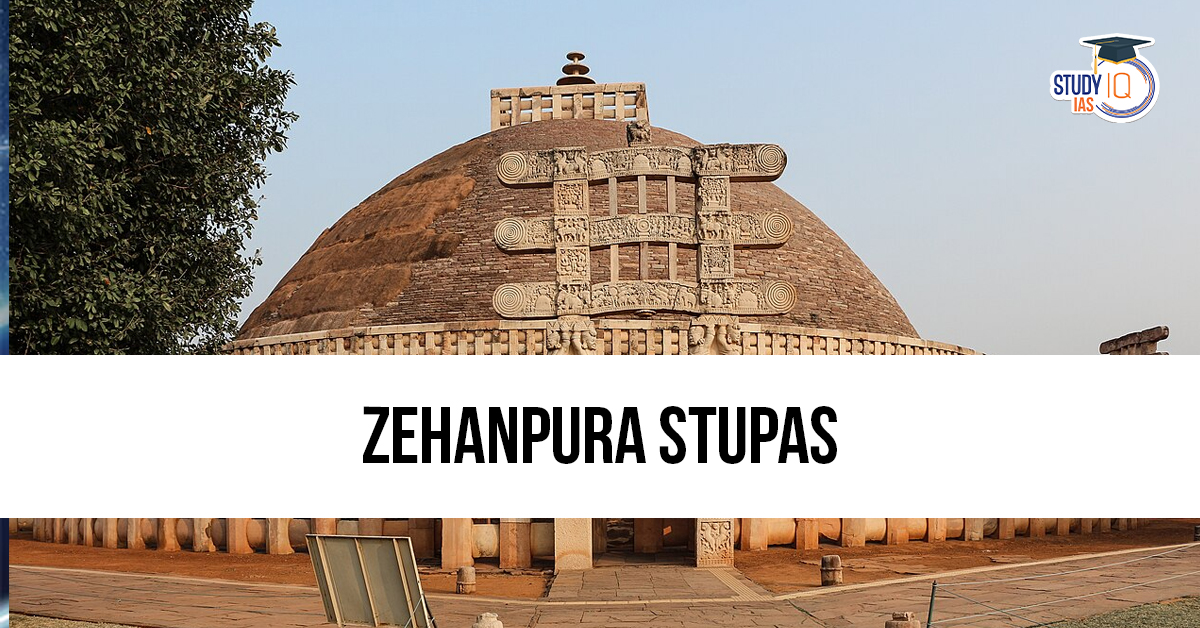
The recent excavation of the Zehanpura stupas in Baramulla, Jammu and Kashmir, has revealed a 2,000-year-old Buddhist complex from the Kushan period. This discovery is important because it shows that Kashmir was not just a remote region but a major centre of Buddhism, learning and cultural exchange in ancient times.
Where is Zehanpura and Why is it Important?
Zehanpura is located in Baramulla district of North Kashmir.
It lies on the ancient Silk Route that connected:
-
Kashmir
-
Gandhara region (modern Afghanistan and Pakistan)
Because of this location, Zehanpura became a meeting point for monks, traders and pilgrims. Ideas, religious texts and art styles travelled through this route, helping Buddhism spread beyond India.
Historical Background
-
The site belongs to the Kushan period (1st–3rd century CE).
-
Buddhism in Kashmir started earlier under Ashoka (3rd century BCE).
-
It reached its peak under Kushan rulers like Kanishka and Huvishka.
-
Kashmir later became a strong centre of Mahayana Buddhism, which spread to Central Asia, China and Tibet.
What Has Been Found at Zehanpura?
Zehanpura is not a single monument. It is a complete Buddhist complex spread over nearly 10 acres, including:
-
Several stupas
-
Chaityas (prayer halls)
-
Viharas (monk residences)
-
Signs of small settlements and daily-life activity
This shows that it was a living religious and educational centre.
Main Archaeological Features
Multiple Stupas
-
Raised platforms that look like stupa bases
-
Suggest worship, relic veneration and rituals
Clustered Layout
-
Many structures together
-
Proves it was a large organised complex, not a small shrine
Wooden Superstructures
-
Evidence of wooden structures over stone bases
-
Shows advanced building techniques
Modern Scientific Methods Used
-
Drones
-
Remote sensing
-
Aerial photography
-
Ground mapping
These techniques reveal that much of the site still lies underground.
Link with Gandhara Buddhist Tradition
Zehanpura was likely part of the Gandhara Buddhist network, which connected monasteries across:
-
Kashmir
-
Afghanistan
-
Pakistan
-
Central Asia
This network helped in:
-
Exchange of monks and scholars
-
Spread of Buddhist philosophy
-
Development of Buddhist art and architecture
Why is Zehanpura So Important?
Shows Kashmir as a Buddhist Learning Hub
The size of the complex proves Kashmir was a major centre of education and monastic life.
Helps Understand the Spread of Mahayana Buddhism
Kashmir acted as a bridge between India and Central Asia in spreading advanced Buddhist ideas.
Unique in the Region
Experts say no other site in Kashmir is as large and well-planned as Zehanpura.
Present-Day Relevance
Cultural Identity
Zehanpura highlights Kashmir’s ancient, plural and tolerant cultural tradition.
Tourism and Heritage Value
It can become an important:
-
Heritage tourism site
-
Research centre
-
Cultural landmark
Academic Importance
Useful for studying:
-
Kushan history
-
Silk Route culture
-
Buddhist architecture
Conclusion
The Zehanpura stupas are a window into Kashmir’s glorious Buddhist past. They show that Kashmir was once a powerful centre of religion, education and cultural exchange. Preserving and promoting such sites will not only protect our heritage but also help future generations understand India’s deep and diverse civilisational roots.
 Navigating Uncharted Waters: What Next f...
 Astronaut Reentry Explained: How Spacecr...
 Missile Interceptors Explained: Role in ...











 WhatsApp





