
Table of Contents
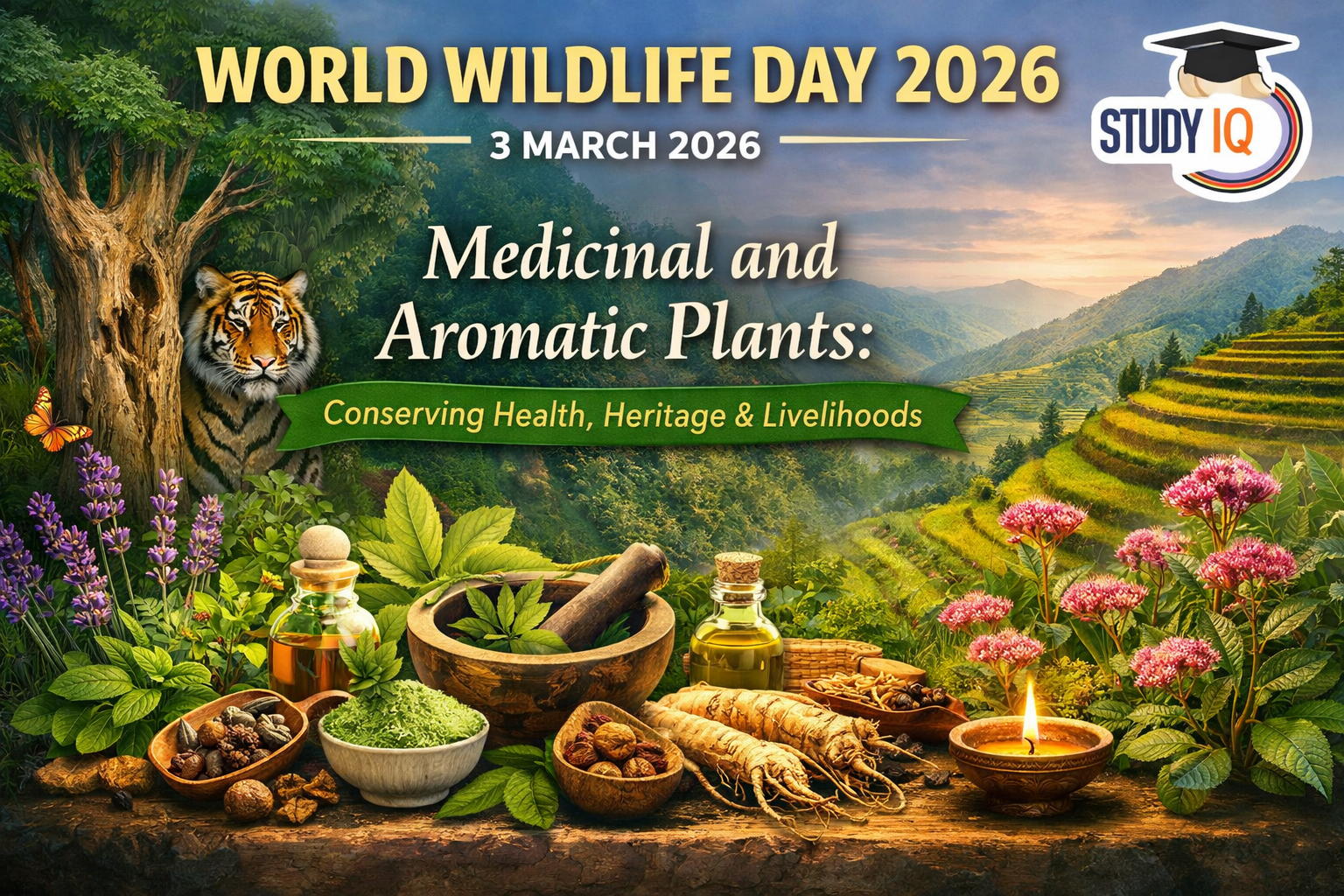
World Wildlife Day 2026 is being celebrated on March 3, 2026, highlighting the urgent need to protect wildlife and biodiversity across the globe. Observed annually under the leadership of the United Nations General Assembly, the day raises awareness about endangered species, ecosystem conservation, and sustainable development.
The theme for 2026 — “Medicinal and Aromatic Plants: Conserving Health, Heritage and Livelihoods” — shifts global attention toward plant species that play a crucial role in healthcare, traditional knowledge, and economic sustainability.
History of World Wildlife Day
World Wildlife Day marks the anniversary of the signing of the Convention on International Trade in Endangered Species of Wild Fauna and Flora (CITES) on 3 March 1973.
In 2013, the UN officially proclaimed March 3 as World Wildlife Day to:
-
Celebrate wild animals and plants
-
Promote conservation efforts
-
Regulate international wildlife trade
-
Combat wildlife crime
The CITES Secretariat facilitates the global observance, making it the most prominent annual wildlife awareness event worldwide.
World Wildlife Day 2026 Theme
“Medicinal and Aromatic Plants: Conserving Health, Heritage and Livelihoods”
The 2026 theme emphasizes the importance of medicinal and aromatic plants (MAPs) in:
-
Traditional healthcare systems
-
Modern pharmaceutical industries
-
Cultural and indigenous heritage
-
Sustainable rural livelihoods
According to the World Health Organization, 70–95% of people in developing countries rely on traditional medicine for primary healthcare, much of which is plant-based.
This makes plant biodiversity essential not only for environmental balance but also for global health security.
Significance of World Wildlife Day 2026
1. Protecting Biodiversity
Forests and ecosystems support nearly 80% of terrestrial species. Medicinal plants are integral to maintaining ecological balance and sustaining wildlife habitats.
2. Supporting Global Health Systems
Many life-saving drugs originate from plant compounds discovered in the wild. Medicinal plants form the foundation of Ayurveda, Traditional Chinese Medicine, and numerous indigenous healing practices.
3. Economic Importance
The global herbal and traditional medicine industry is worth billions of dollars annually. Sustainable harvesting ensures:
-
Stable rural incomes
-
Fair trade practices
-
Long-term availability of plant resources
4. Combating Wildlife Crime
Illegal trade and overharvesting threaten thousands of plant species. Over 1,500 medicinal plant species are regulated under CITES.
Additionally, more than 20% of medicinal plant species are listed on the International Union for Conservation of Nature Red List, highlighting their vulnerability.
 Who Was Ayatollah Ali Khamenei? Biograph...
 The Cycle of Deprivation and Affluence
 NCERT Textbook Controversy and Supreme C...











 WhatsApp





