

Table of Contents
World Pulses Day 2026 will be observed on 10 February 2026 to spread awareness about the importance of pulses in nutrition, food security, sustainable agriculture, and climate change mitigation. The day is recognized by the United Nations and promoted globally by the Food and Agriculture Organization (FAO).
In today’s world, where food insecurity, rising population, and climate challenges are major concerns, pulses are emerging as one of the most reliable and sustainable food sources.
World Pulses Day 2026 Overview
World Pulses Day 2026 highlights the global importance of pulses in ensuring food security, improving nutrition, and promoting sustainable agriculture. Celebrated annually, the day spreads awareness about how pulses support climate-resilient farming and healthy diets. It also builds global cooperation to promote pulse production, consumption, and research for future food sustainability and environmental protection.
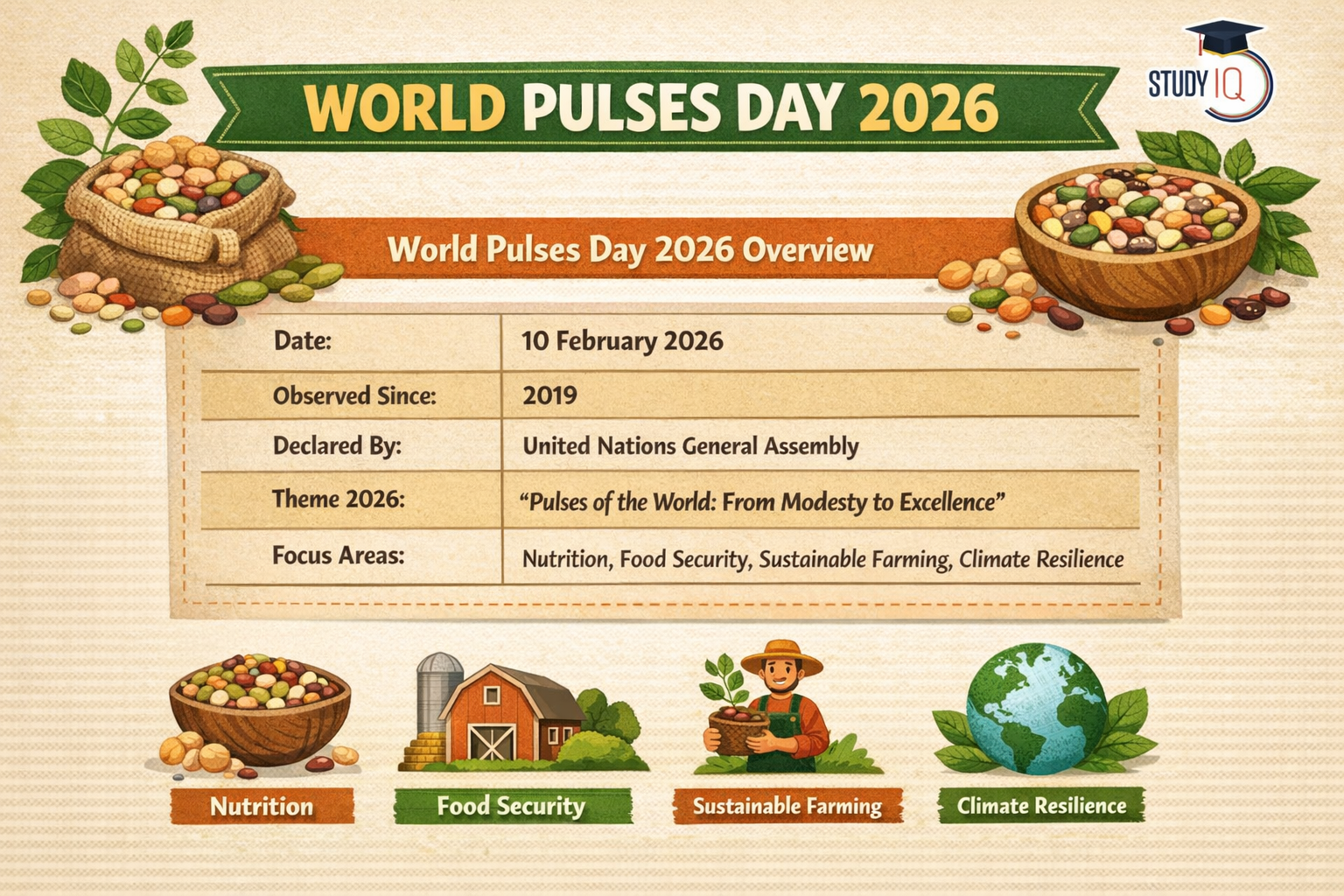
World Pulses Day was introduced after the success of the International Year of Pulses 2016 to maintain global awareness about pulses and their long-term benefits.
What Are Pulses?
Pulses are dry edible seeds of legume plants that are grown for food. They are among the most affordable and nutrient-rich foods in the world.
Common Types of Pulses
-
Lentils
-
Chickpeas
-
Dry Beans
-
Dry Peas
-
Lupins
Pulses are widely consumed in Asia, Africa, Europe, and the Americas and are especially important in vegetarian diets.
Why World Pulses Day Is Celebrated
World Pulses Day is celebrated to:
-
Promote healthy and balanced diets
-
Reduce global hunger and malnutrition
-
Support sustainable agriculture
-
Improve farmer livelihoods
-
Encourage climate-smart farming practices
-
Strengthen global food systems
In simple words, pulses are important for people, farmers, and the planet.
World Pulses Day Theme 2026
The theme “Pulses of the World: From Modesty to Excellence” highlights how pulses have evolved from being considered basic staple food to becoming globally recognized superfoods.
The theme also focuses on:
-
Growing demand for plant-based protein
-
Innovation in food products
-
Climate-friendly agriculture
-
Cultural importance of traditional foods
Health Benefits of Pulses
Pulses are known as nutritional powerhouses because they are:
-
High in plant-based protein
-
Rich in dietary fiber
-
Low in fat
-
Rich in iron, potassium, and magnesium
-
Helpful in controlling blood sugar
-
Good for heart health
Regular consumption of pulses can help reduce cholesterol and lower the risk of lifestyle diseases.
Environmental Benefits of Pulses
Pulses are considered climate-smart crops because they:
-
Fix nitrogen naturally in the soil (reduces need for fertilizers)
-
Require less water compared to many crops
-
Improve soil fertility
-
Support biodiversity
-
Have a low carbon footprint
These benefits make pulses very important for sustainable agriculture and climate change adaptation.
Global Production and Future Demand
-
Global pulse production may reach around 125 million tonnes by 2032
-
Average global consumption may reach around 8.6 kg per person per year
-
Demand is rising due to plant-based diet trends
Pulses are becoming an important part of the future global food system.
Importance of Pulses for India
India is one of the largest producers and consumers of pulses in the world.
Why Pulses Are Important for India
-
Major protein source for a large vegetarian population
-
Supports nutrition security
-
Helps farmers through crop diversification
-
Improves soil health through crop rotation
-
Supports national nutrition and agriculture programs
Major Pulses Grown in India
-
Tur (Arhar)
-
Chana (Gram)
-
Moong
-
Urad
-
Masoor
Pulses and Rural Livelihoods
Pulse farming helps:
-
Small and marginal farmers
-
Women farmers and self-help groups
-
Rural employment
-
Local agricultural economies
Pulses require relatively lower input cost, making them profitable for small farmers.
Cultural Importance of Pulses
Pulses are deeply connected with food traditions across the world:
-
India – Dal, Sambar, Chole
-
Middle East – Hummus, Falafel
-
East Asia – Red bean desserts
-
Latin America – Bean stews
Pulses are considered comfort food in many cultures.
Why Pulses Are Important for the Future
Pulses help solve major global challenges like:
-
Hunger and malnutrition
-
Climate change
-
Sustainable agriculture
-
Affordable nutrition
-
Plant-based protein demand
They combine traditional farming knowledge with modern food innovation.
|
Explore StudyIQ Courses |
|
 Important Reports and Indices in News (2...
 Supreme Court to Examine Scope of 'Right...
 Why Iran Matters More Than Venezuela: En...
















 WhatsApp





