
Table of Contents
Context
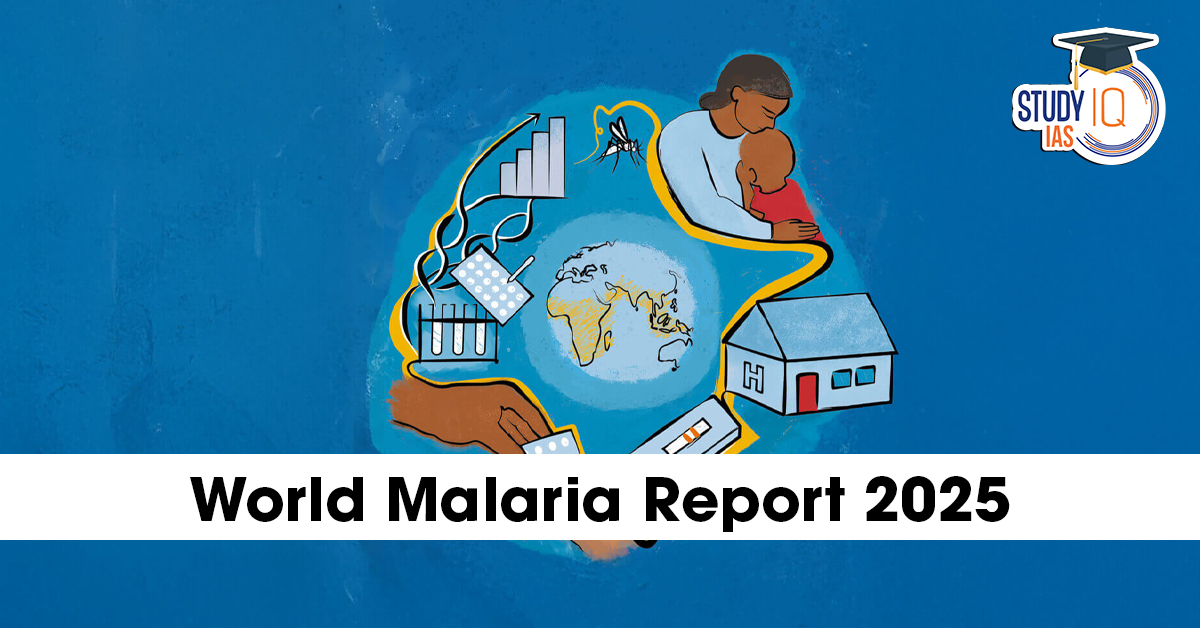
Countries in the Asia-Pacific region have committed to eliminating malaria by 2030.
Key Takeaways from the World Malaria Report 2025
- Global Progress Has Stalled: After years of decline, the global reduction in malaria cases and deaths has slowed, indicating that current control strategies are insufficient to stay on track for 2030 elimination targets.
- High Burden Concentrated in Few Countries: A small group of countries—mainly in Sub-Saharan Africa—continue to account for the majority of global malaria cases and deaths, highlighting persistent regional inequality in disease burden.
- Climate Change as a Risk Multiplier: Rising temperatures, changing rainfall patterns, floods, and droughts are expanding mosquito habitats and increasing transmission risk, especially in fragile and conflict-affected settings.
- Drug and Insecticide Resistance Threaten Gains: Growing resistance to antimalarial drugs and insecticides is undermining the effectiveness of frontline treatments and vector control tools such as insecticide-treated nets.
- Asia-Pacific Shows Mixed Progress: Nations like China and Sri Lanka have achieved malaria-free status, and others such as Cambodia, Laos, Vietnam, Timor-Leste, Malaysia, and Bhutan are close to elimination
Remaining Challenges
- Despite gains, the region still faces persistent transmission in remote and high-burden areas, especially among mobile and migrant populations.
- Drug and insecticide resistance, as well as socio-economic and geographic barriers, threaten progress and make the “last mile” harder to reach.
- Funding gaps and fluctuating international aid also pose risks to sustained elimination efforts and long-term surveillance.
| Asia Pacific Leaders Malaria Alliance (APLMA) |
|
 Second Edition of Fiscal Health Index Re...
 Finance Commission Grants to Cities
 Rajya Sabha Elections: Process, Eligibil...











 WhatsApp





