
Table of Contents
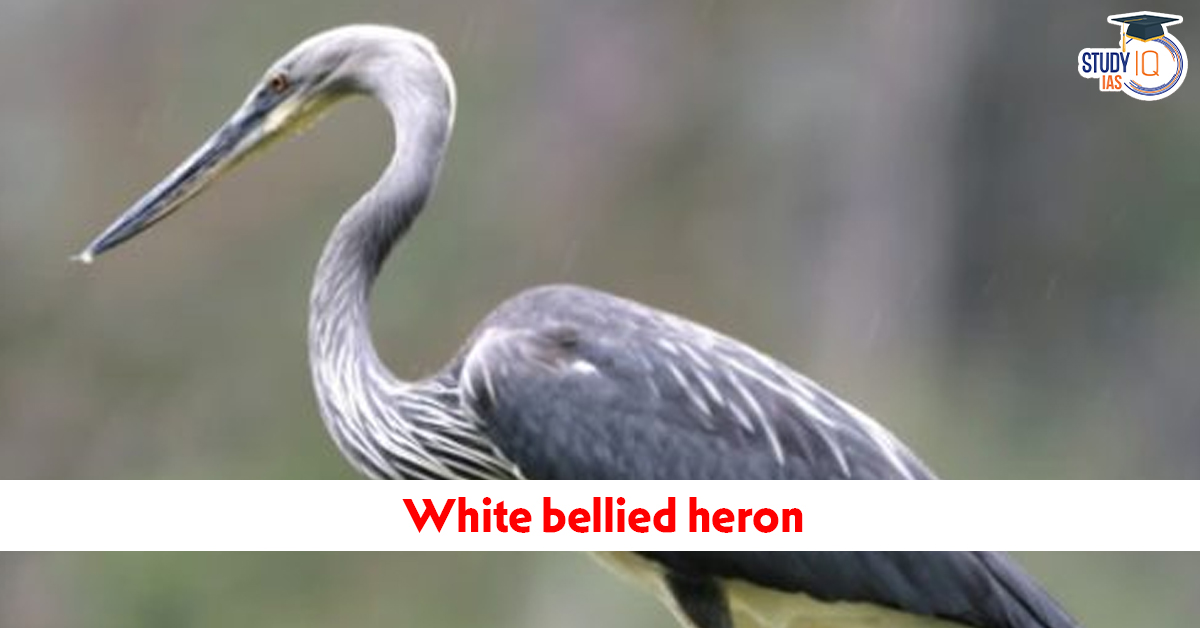
The White-bellied Heron is one of the rarest and most critically endangered bird species in the world. Found only in a few pockets of South and Southeast Asia, this elusive bird has become a major focus of conservation debates in India due to hydropower development and habitat loss in the Northeast.
White-Bellied Heron – Why in News?
The White-bellied Heron has recently come into focus following environmental concerns raised over the Kalai-II Hydroelectric Project on the Lohit River in Arunachal Pradesh. Environmentalists flagged that the project’s Environmental Impact Assessment (EIA) failed to acknowledge the presence of this critically endangered species in the Lohit river basin, despite documented sightings upstream and downstream.
About White-Bellied Heron
-
Common Name: White-bellied Heron
-
Scientific Name: Ardea insignis
-
Family: Ardeidae
The White-bellied Heron is a large riverine heron, known for its solitary behaviour and preference for undisturbed freshwater ecosystems.
Conservation Status
-
IUCN Red List: Critically Endangered
-
Indian Wildlife Protection Act, 1972: Schedule I (highest level of protection)
Population Status
-
IUCN estimates fewer than 250 individuals globally
-
Experts suggest the real population may be as low as 60 birds
-
Only 4–5 breeding pairs recorded in Bhutan
-
Very limited breeding population in India
Habitat and Distribution
The White-bellied Heron has an extremely restricted distribution.
Global Distribution
-
India
-
Bhutan
-
Northern Myanmar
Distribution in India
-
Eastern Arunachal Pradesh
-
Recorded in:
-
Namdapha Tiger Reserve
-
Kamlang Tiger Reserve
-
Lohit, Anjaw, and Changlang districts
-
Walong region (key nesting site)
-
Habitat Characteristics
-
Prefers free-flowing rivers and streams
-
Found along river rapids and sandbanks
-
Highly dependent on fish availability
-
Avoids areas with human disturbance
The species is extremely sensitive to changes in river flow and habitat structure.
Behaviour and Ecology
-
Mostly solitary and territorial
-
Feeds primarily on fish
-
Requires large undisturbed river stretches for breeding
-
Low reproductive rate, making population recovery difficult
Threats to White-Bellied Heron
The White-bellied Heron faces multiple, interconnected threats:
1. Habitat Loss
-
Hydropower projects and dams
-
River regulation and altered flow patterns
2. Human Disturbance
-
Infrastructure development
-
Tourism and riverbank activities
-
Nest abandonment due to disturbance
3. Hunting and Poaching
-
Accidental and intentional hunting in remote areas
4. Power Infrastructure
-
Collision with transmission lines
5. Declining Fish Population
-
Reduced prey availability due to ecological changes
Conservation Efforts
-
Legal protection under Schedule I
-
Monitoring by forest departments and conservation NGOs
-
Habitat studies and field research in Arunachal Pradesh and Bhutan
-
Calls for species-specific conservation plans in river basin projects
However, conservationists stress that protecting free-flowing rivers is the most critical requirement for the species’ survival.
Importance for UPSC & Environment Studies
-
Example of a critically endangered riverine bird
-
Highlights conflict between development and conservation
-
Important for GS-III (Environment & Ecology) and Prelims
-
Illustrates limitations of Environmental Impact Assessments (EIAs)
Conclusion
The White-bellied Heron is a symbol of the fragile balance between development and biodiversity conservation in India’s Northeast. With possibly fewer than 60 individuals left in the wild, even minor habitat disturbances can push the species toward extinction. Protecting this bird requires robust EIAs, river-sensitive development, and strict enforcement of wildlife protection laws.
 Viksit Bharat Shiksha Adhishthan Bill 20...
 Cyclone Maila Intensifies Over Solomon S...
 List of Military Exercises of India 2026...













 WhatsApp





