
Table of Contents
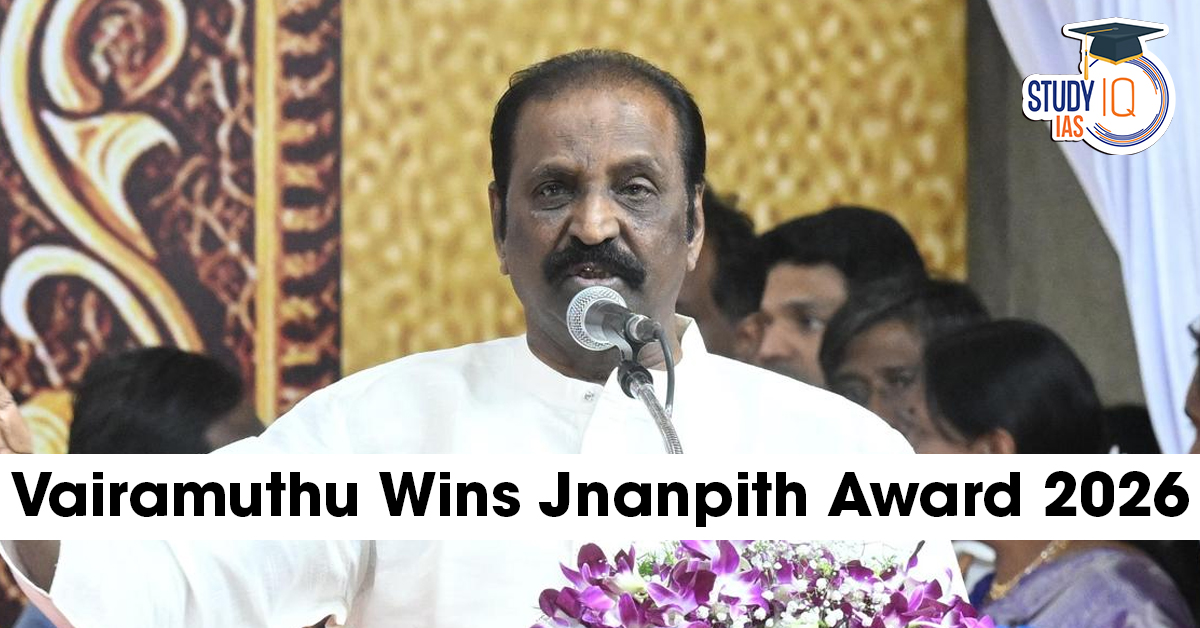
Renowned Tamil poet and lyricist Vairamuthu has been conferred with the 61st Jnanpith Award (for 2025), marking a significant milestone in Indian literature. With this achievement, he becomes only the third Tamil writer to receive this prestigious honour, highlighting the richness of Tamil literary tradition.
About Vairamuthu
Vairamuthu is one of India’s most celebrated literary figures, known for his profound contribution to Tamil poetry, novels, and film lyrics.
-
Authored numerous poetry collections and literary works
-
Renowned for blending classical Tamil aesthetics with contemporary themes
-
Played a key role in popularizing Tamil literature through cinema
His works often explore social justice, rural life, human emotions, and cultural identity, making him a significant voice in modern Indian literature.
What is the Jnanpith Award?
The Jnanpith Award is the highest literary award in India, recognizing exceptional contributions to literature.
Key Highlights
-
Established: 1961
-
First Awarded: 1965
-
Given By: Bharatiya Jnanpith
-
Eligibility: Indian citizens writing in 22 scheduled languages + English
-
Not Awarded Posthumously
Selection Process
The selection for the Jnanpith Award is rigorous and multi-layered:
-
Language experts recommend eminent writers
-
A central selection committee evaluates contributions
-
Final selection is based on lifetime achievement and literary excellence
The award focuses on the overall impact of a writer’s work, rather than a single publication.
Award Components
Recipients of the Jnanpith Award receive:
-
A cash prize (approximately ₹11 lakh)
-
A citation (Prashasti Patra)
-
A bronze replica of Goddess Saraswati (Vagdevi)
Tamil Writers and the Jnanpith Legacy
Before Vairamuthu, only two Tamil writers had received this honour:
-
Akilan (1975)
-
Jayakanthan (2002)
Vairamuthu’s recognition strengthens Tamil literature’s position in the national literary landscape.
Significance of the Award
The Jnanpith Award plays a crucial role in:
-
Promoting regional languages and literature
-
Preserving India’s cultural diversity
-
Encouraging literary excellence and creativity
-
Strengthening India’s soft power globally
It is often regarded as the Indian equivalent of the Nobel Prize in Literature.
|
Read More Notes |
|
| Environment Notes | Art and Culture Notes |
| Science and Tech | History Notes |
| Geography Notes | Indian Polity Notes |
| General Knowledge | International Relation |
|
Explore StudyIQ Courses |
|
 The Transgender Persons (Protection of R...
 WASH (Water, Sanitation, and Hygiene) Se...
 Assam Peace Settlement with Hmar and Kuk...


 WhatsApp





