
Table of Contents
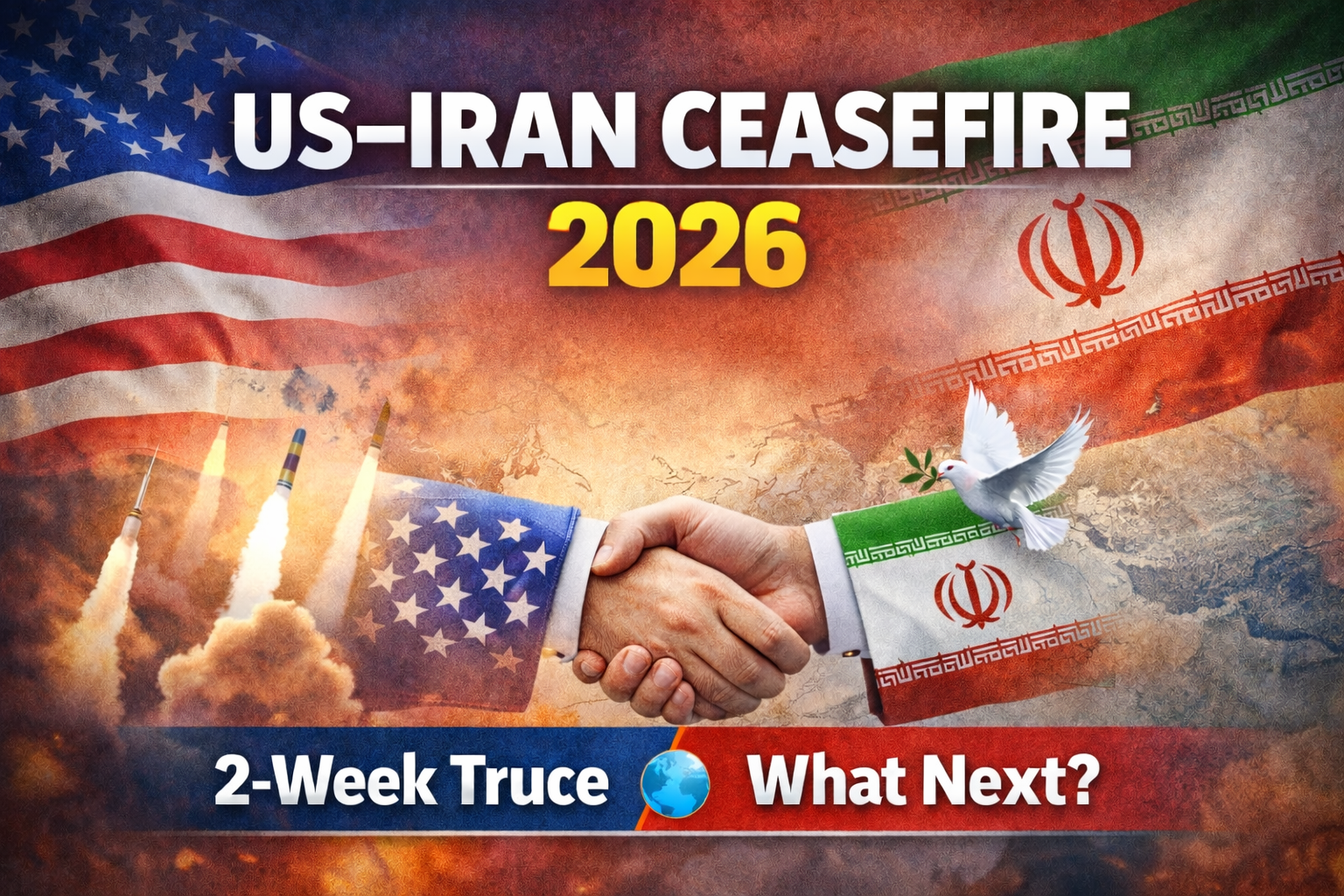
The US-Iran Ceasefire of April 2026 marks a significant pause in escalating tensions between the two nations after weeks of intense conflict in West Asia. Brokered through international mediation, the agreement reflects a temporary de-escalation amid rising fears of a broader regional war.
US-Iran Ceasefire Agreement 2026
The Iran–US ceasefire of 2026 represents a critical moment in global geopolitics, offering a brief window for diplomacy after weeks of conflict. While it has reduced immediate tensions, its success will depend on sustained negotiations and the resolution of deeper strategic issues.
Key Features of the Ceasefire
- A two-week temporary ceasefire was agreed between Iran and the United States.
- Announced around 7–8 April 2026
- Mediated by regional actors, notably Pakistan
- Aimed at:
- Halting active hostilities
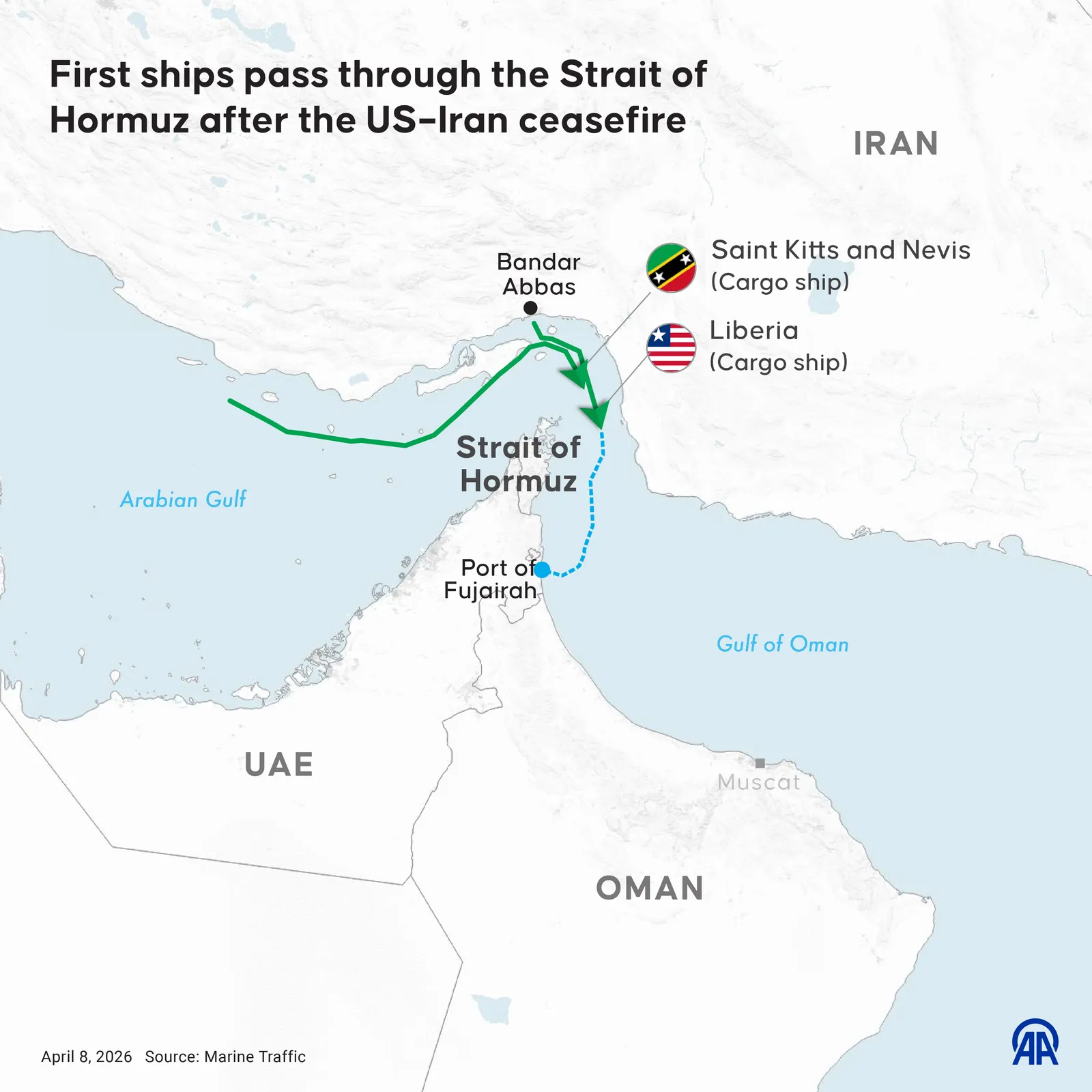
- Reopening the Strait of Hormuz (key global oil route)
- Creating space for diplomatic negotiations to achieve long-term peace
- Limited Scope: Some regions (e.g., Lebanon) may not be fully covered
The ceasefire is seen as a confidence-building measure, not a final peace agreement.
Background of the US-Iran Conflict
Earlier attempts at ceasefire negotiations had failed, with both sides rejecting proposals before finally agreeing to a temporary truce. The US-Iran ceasefire follows a prolonged period of conflict involving:
- The United States
- Iran
- Indirect involvement of regional actors, including Israel and Hezbollah
Key triggers
- Escalation over Iran’s nuclear program
- Attacks on military and strategic targets
- Disruptions in the Strait of Hormuz, affecting global energy supply
Check here for details of the US-Iran Conflict
Global Reactions
- Many countries welcomed the truce and called for permanent peace talks
- Major powers emphasized regional stability and energy security
- Oil markets responded cautiously due to uncertainty around the ceasefire
Challenges and Concerns
Despite the agreement, several issues remain unresolved:
1. Fragile Nature of the Ceasefire
- Accusations of violations have already emerged
- Conflicting interpretations of terms by both sides
2. Exclusion of Proxy Conflicts
- Fighting involving regional actors like Hezbollah continues
- Some areas (e.g., Lebanon) are not fully covered under the truce
3. Core Issues Still Unresolved
- Iran’s nuclear program
- Sanctions and economic restrictions
- Regional power dynamics
Strategic Importance of Ceasefire
The ceasefire has major global implications:
- Energy Security: Stability in oil supply routes
- Geopolitics: Balance of power in West Asia
- Diplomacy: Opportunity for long-term peace negotiations
What Lies Ahead?
The next phase depends on:
- Success of diplomatic talks
- Compliance with ceasefire terms
- Willingness of both sides to compromise
Experts view the ceasefire as a temporary pause rather than a permanent solution, with the situation remaining highly volatile.

 Assam Election 2026: Exit Poll, Result D...
 Sattankulam Custodial Deaths Case: Backg...
 Maritime Domain in India’s Strategic T...













 WhatsApp





