
Table of Contents
Context
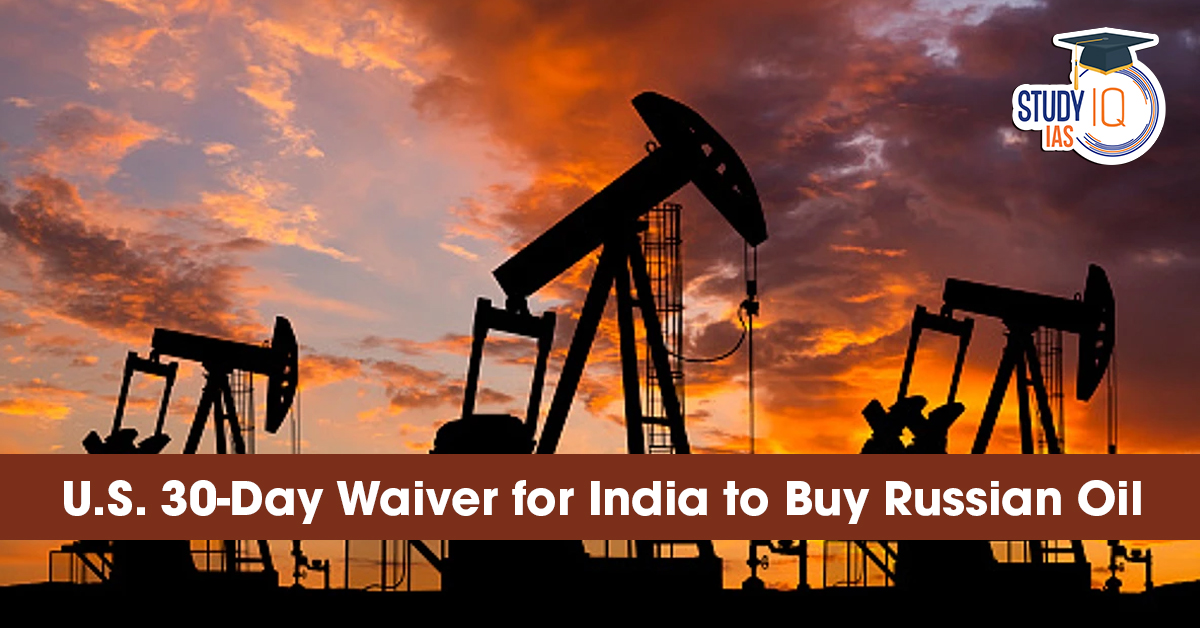
- Amid escalating conflict in West Asia and disruptions to global energy supplies, the United States issued a 30-day waiver allowing India to purchase Russia-origin crude oil already loaded on ships and stranded at sea.
Why the U.S. Issued the Waiver
- Preventing a Global Oil Supply Shock: Allowing India to absorb Russian oil already at sea helps quickly inject supply into global markets and prevent shortages.
- Stabilising Global Oil Prices: By allowing Indian refiners to process Russian crude already loaded on vessels, the U.S. aimed to reduce market panic and stabilise prices for consumers worldwide.
- Allowing Russian crude already in transit increases immediate supply, easing pressure on global refineries.
- Utilising “Floating Storage” of Sanctioned Oil: Large quantities of Russian crude were reportedly stranded on tankers due to sanctions and logistical disruptions. The waiver allows these cargoes to enter refineries instead of remaining idle, thereby easing global supply constraints.
- Maintaining Strategic Partnership with India: Washington views India as a critical geopolitical partner and energy consumer. The waiver reflects a pragmatic recognition that stabilising India’s energy supply also helps stabilise the broader global market.
Implications for India
- Short-Term Energy Security Relief: Access to Russian cargoes provides immediate supply relief during the West Asia crisis as India imports around 85–90% of its crude oil.
- Strategic Flexibility in Oil Procurement: The waiver enables Indian refiners to temporarily diversify away from Gulf supplies while maintaining operational refinery capacity.
- Economic Stabilisation: Higher oil prices directly affect India’s inflation, current account deficit, and fiscal stability. Additional crude supply helps moderate domestic fuel prices and macroeconomic volatility.
- Diplomatic Sensitivity and Strategic Autonomy: The waiver sparked debate in India because it appeared as though New Delhi required U.S. “permission” to purchase oil. Indian officials have reiterated that energy procurement decisions remain sovereign policy choices.
Implications for Russia
- Potential Revenue Boost: Even a limited resumption of sales can generate significant revenue for Russia, particularly as global oil prices rise during geopolitical crises.
- Opportunity to Redirect Oil Exports to Asia: Sanctions by Western countries forced Russia to pivot its oil exports toward Asian markets, especially India and China.
- Reshaping Global Oil Trade Flows: Since 2022, sanctions on Russia have redirected its crude exports from Europe toward Asian markets, especially India and China. The waiver reinforces this shift in global energy trade patterns.
- Limits Imposed by Sanctions Infrastructure: Transport restrictions, insurance limitations, and price caps imposed by the G7 and the European Union still constrain Russia’s ability to fully benefit from high oil prices.
- Temporary Adjustment in Sanctions Policy: Waiver does not represent a broader rollback of sanctions against Russia. Instead, it is a tactical measure to maintain energy market stability.
| Why Russian Oil Is No Longer Available at Deep Discounts |
| ● Surge in Demand During the Iran Crisis: As buyers rushed to secure alternative sources of crude, Russian Urals crude has recently traded at a premium to the global Brent benchmark in some Indian transactions.
● Decline of the “Sanctions Discount”: After Western sanctions in 2022, Russia sold crude at discounts of $10–$15 per barrel to attract Asian buyers. As markets tightened and alternative supply became scarce, that discount has narrowed significantly. ● Higher Shipping and Logistics Costs: Sanctions have increased transport costs for Russian oil because tankers must travel longer routes and often operate outside Western insurance systems. ● Growing Asian Demand: Countries like India and China continue to purchase Russian oil due to its availability and reliability, increasing competition and pushing prices upward. |
|
Read More Notes |
|
| Environment Notes | Art and Culture Notes |
| Science and Tech | History Notes |
| Geography Notes | Indian Polity Notes |
| General Knowledge | International Relation |
|
Explore StudyIQ Courses |
|
 Sinking of Iranian Warship IRIS Dena: Ca...
 Upper Indravati Hydroelectric Project (U...
 Nepal’s Election and Its Implications ...











 WhatsApp





