
Table of Contents
Context
With the Great Nicobar Island megainfrastructure project “nearing approval”, members of the Tribal Council in Little and Great Nicobar alleged that they are being pressured by the district administration to “surrender our ancestral lands” to make way for the project.
About Great Nicobar Island Development Project (GNI)
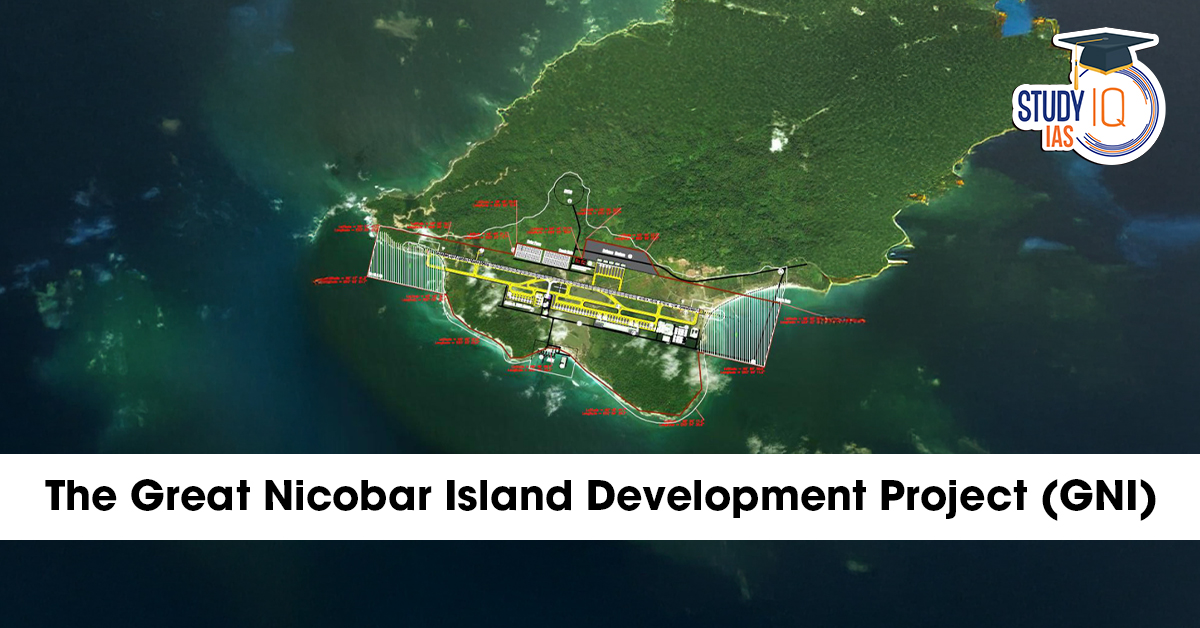
- Launched in 2021, the GNI Project envisions developing the southern tip of Great Nicobar Island into a global trans-shipment hub. Spearheaded by NITI Aayog and ANIIDCO, the ₹72,000 crore project includes:
- Trans-shipment port at Galathea Bay (capacity: 16 million TEUs/year)
- International airport (dual civil-military use)
- 450 MVA gas & solar power plant
- Township for 3 lakh residents over 166 sq km
- Intended Objectives
- Strengthen India’s logistics and shipping network.
- Enhance defence preparedness in the eastern Indian Ocean.
- Generate employment and tourism opportunities for the region.
| Significance of the GNI |
|
Risks Associated with the GNI
Ecological Risks
- Massive Deforestation: The project will destroy 130 sq km of tropical rainforest, with over 10 million trees likely to be cut, leading to massive biodiversity loss.
- Threat to Endangered Species: It threatens the nesting habitat of the endangered leatherback sea turtle in Galathea Bay, violating the Marine Turtle Action Plan (2021).
- Coastal and Marine Ecosystem Damage: Port construction in CRZ 1A areas endangers coral reefs and marine ecosystems through dredging and industrial activity.
- Increased Disaster Vulnerability: The project increases disaster risk in Seismic Zone V and weakens natural coastal defences against tsunamis and climate shocks.
Social Risks
- Disruption of Indigenous Communities: The project could displace indigenous tribes like the Shompens and Nicobarese, disrupting their sustainable lifestyle, traditional ecological knowledge, and forest-based subsistence practices.
- Weak Afforestation Substitutes: Compensatory planting in Haryana or Madhya Pradesh cannot mimic the ecological value of Nicobar’s tropical forests.
|
Read More Notes |
|
| Environment Notes | Art and Culture Notes |
| Science and Tech | History Notes |
| Geography Notes | Indian Polity Notes |
| General Knowledge | International Relation |
|
Explore StudyIQ Courses |
|
 Second Edition of Fiscal Health Index Re...
 Finance Commission Grants to Cities
 Rajya Sabha Elections: Process, Eligibil...











 WhatsApp





