
Table of Contents
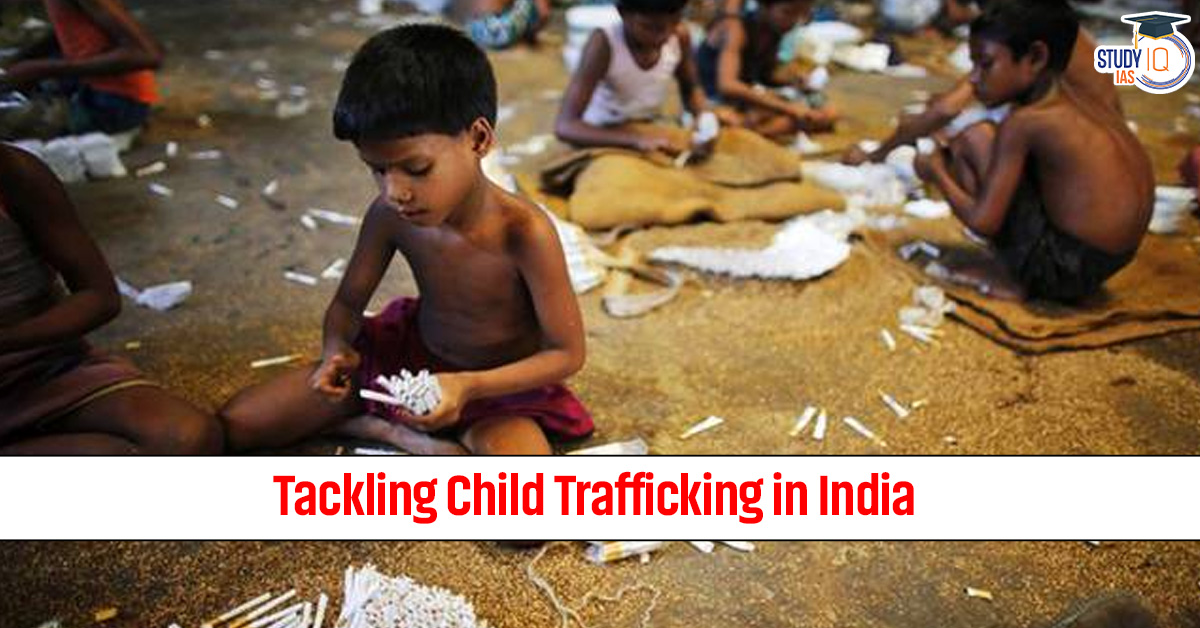
Child trafficking constitutes one of the most severe human rights violations in modern India, undermining the fundamental constitutional assurances of dignity, liberty, and life. Notwithstanding constitutional protections, legal structures, and judicial intervention, the ongoing existence of trafficking networks reveals profound systemic weaknesses. Recent court interventions, notably the Supreme Court’s ruling in K. P. Kiran Kumar v. State, have underlined that child trafficking represents a severe infringement of Article 21 of the Constitution. Nevertheless, statistics indicate a significant disparity between rescue efforts and judicial outcomes: although thousands of children are saved each year, conviction rates are exceedingly low. These promptspressing inquiries regarding enforcement, institutional capability, and societal responsibility.
Comprehending Child Trafficking: Legal Definitions and Scope from an International Perspective
Child trafficking is internationally defined under the Palermo Protocol (2000), which is the United Nations Protocol aimed at preventing, suppressing, and punishing trafficking in persons, particularly women and children. It delineates child trafficking as:
“The recruitment, transportation, transfer, harbouring or receipt of a child for the purpose of exploitation.”
The Protocol notably abolishes consent as a defence in cases concerning children, acknowledging their intrinsic fragility.
Definition in Indian Law
Section 143 of the Bharatiya Nyaya Sanhita (BNS), 2023 provides an extensive definition of trafficking. It prohibits the recruitment, transportation, harbouring, transfer, or receiving of individuals for exploitation via coercion, fraud, abuse of power, or inducement. The phrase exploitation is broadly defined to encompass sexual exploitation, forced labour, slavery, servitude, and the coerced removal of organs.
This adherence to international norms signifies a substantial advancement in Indian criminal law, recognising trafficking as a multifaceted crime rather than a limited offence.
Constitutional Principles for Child Protection
The Indian Constitution establishes a comprehensive framework for the protection of children.
- Article 23 forbids human trafficking, forced labour, and begar.
- Article 24 prohibits the employment of minors in hazardous industries.
- Article 39(e) and (f) mandates the State to safeguard children against abuse, exploitation, and moral or material abandonment.
- Article 21, as judicially interpreted, ensures the right to live with dignity, which includes freedom from exploitation.
These rules impose a positive obligation on the State to not only penalise traffickers but also to avert conditions that facilitate trafficking.
Development of Anti-Trafficking Legislation in India
Preliminary Legislative Actions
India’s preliminary response to trafficking primarily concentrated on sexual exploitation. The Immoral Traffic (Prevention) Act, 1956 aimed to mitigate prostitution and trafficking for sexual exploitation; nevertheless, its applicability was restricted and enforcement inconsistent.
Reforms in Criminal Law
The Criminal Law (Amendment) Act, 2013 substantially expanded the legal definition of trafficking to expressly encompass forced labour, slavery, servitude, sexual exploitation, and organ trafficking. It further explained that consent is irrelevant in trafficking cases.
Framework for Juvenile Justice
The Juvenile Justice (Care and Protection of Children) Act, 2015 establishes frameworks for the care, protection, rehabilitation, and reintegration of trafficked minors. Child Welfare Committees and Special Juvenile Police Units are essential in implementing victim-centred solutions.
Protection of Children from Sexual Offences Act, 2012
The Protection of Children from Sexual Offences (POCSO) Act, 2012 holds particular importance in trafficking instances related to sexual exploitation. It is gender-neutral, imposes severe penalties, including life imprisonment and the death sentence in exceptional circumstances and requires child-appropriate processes. To facilitate speedy justice, roughly 400 fast-track POCSO courts function throughout India, each intending to resolve approximately 165 cases per year.
Magnitude of the Issue: Empirical Evidence and Actual Conditions
The National Crime Records Bureau (NCRB) reported that roughly 3,098 minors under the age of 18 were rescued in 2022. Between April 2024 and March 2025, nearly 53,000 children were rescued from child labour, trafficking, and abduction.
Between 2018 and 2022, the conviction rate was only 4.8%. This disparity underscores institutional deficiencies in investigation, prosecution, witness protection, and rehabilitation, undermining deterrence and sustaining impunity.
Judicial Perspective on Child Trafficking
In Vishal Jeet v. Union of India (1990), the Supreme Court acknowledged trafficking and child prostitution as significant socio-economic issues, underscoring the necessity for a preventive and humanitarian response.
In M.C. Mehta v. State of Tamil Nadu (1996), the Court mandated the prohibition of child work in hazardous sectors, therefore reinforcing constitutional provisions.
In Bachpan Bachao Andolan v. Union of India (2011), the Court examined extensive trafficking and exploitation, mandating collaborative measures between the States and the Centre.
In K. P. Kiran Kumar v. State, the Supreme Court reiterated that child trafficking infringes on the fundamental right to life as enshrined in Article 21 and established stringent standards to prevent such offences. The ruling emphasised the State’s obligation to guarantee prevention, rescue, rehabilitation, and prosecution.
Emerging Challenges and Novel Dimensions
Socio-Economic Vulnerabilities
Poverty, unemployment, migration, natural calamities, and the disintegration of family structures markedly elevate children’s susceptibility. Marginalized communities, such as Scheduled Castes, Scheduled Tribes, and migrant populations, are disproportionately impacted.
Digital Trafficking Networks
The expansion of social media and internet platforms has introduced a novel aspect to trafficking. Children are increasingly targeted through fraudulent employment advertisements, modelling possibilities, and misleading online engagements, needing enhanced cyber surveillance and digital literacy programs.
Institutional Deficiencies
Notwithstanding legal frameworks, enforcement remains disjointed. Suboptimal coordination across States, insufficient training of law enforcement personnel, and the absence of victim support systems impede the administration of justice.
The Function of the Judiciary in Enhancing Enforcement
The judiciary serves a vital function in:
- Interpreting legislation broadly to safeguard children’s rights.
- Enforcing victim-centred protocols.
- Oversight of executive adherence.
- Ensuring responsibility by contempt and ongoing mandamus.
- Judicial sensitivity and consistency are crucial for translating legislative protections into actual experiences.
Comparative International Perspective
Countries worldwide, like the United States (Trafficking Victims Protection Act), the United Kingdom (Modern Slavery Act, 2015), and Australia, have implemented extensive anti-trafficking frameworks that integrate criminal penalties with victim rehabilitation and preventive measures.
India’s legislation is largely consistent with international standards, especially the Palermo Protocol. Nonetheless, in contrast to certain jurisdictions, India continues to face challenges in implementation, data integration, and inter-agency collaboration.
Path Ahead: Policy and Institutional Reforms
To effectively address child trafficking, India must:
- Enhance Convictions: Augment investigative quality, forensic assistance, and witness protection to elevate conviction rates.
- Improve Union-State Collaboration: Trafficking networks function across State boundaries, requiring fluid cooperation.
- Emphasise Prevention: Tackle underlying issues with education, employment, and social welfare.
- Utilize Technology: Employ digital surveillance instruments to identify internet recruitment and trafficking trends.
- Rehabilitation and Reintegration: Provide sustained psychological, educational, and economic assistance for survivors.
Conclusion
Child trafficking in India constitutes not only a criminal justice concern but also a significant constitutional and ethical dilemma. The evolution of statutory frameworks and judicial rulings has been substantial; nonetheless, the ongoing disparity between rescue and conviction diminishes both deterrence and justice. A comprehensive strategy integrating legal enforcement, social welfare, judicial oversight, and public awareness is essential. Only then can India realise its constitutional commitment to safeguarding every child’s right to life, dignity, and freedom.
|
Explore StudyIQ Courses |
|
 Trial by Social Media: Public Shaming, D...
 Governors’ Address to State Legislatur...
 Mandating Prior Approval for Corruption ...










 WhatsApp





