
Table of Contents
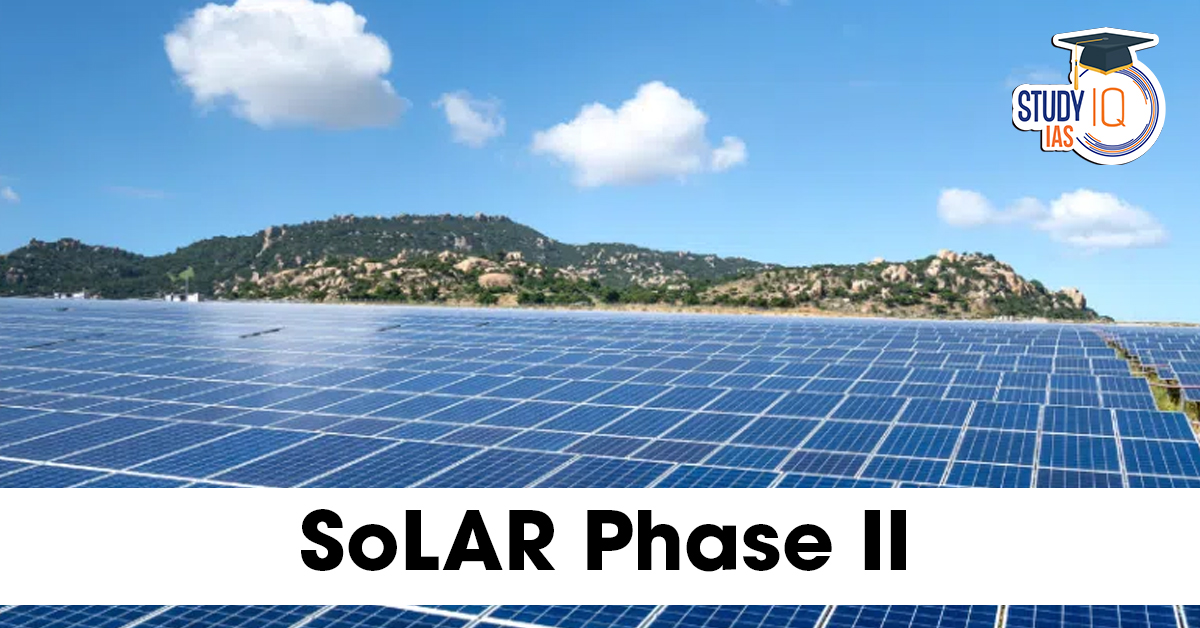
The International Water Management Institute (IWMI) and the Swiss Agency for Development and Cooperation (SDC) have officially launched SoLAR Phase II – one of the world’s most ambitious programmes to make solar-powered irrigation socially inclusive, groundwater-smart, and climate-resilient.
Starting in 2025, the new phase expands to four countries: India, Bangladesh, Kenya, and Ethiopia.
SoLAR Phase II (2025 Onwards) – Key Highlights
| Feature | Details |
|---|---|
| Countries | India, Bangladesh, Kenya, Ethiopia |
| Lead Agency | International Water Management Institute (IWMI) |
| Funding Partner | Swiss Agency for Development and Cooperation (SDC) |
| Core Focus | Socially inclusive, climate-resilient solar irrigation |
| New Innovations | Living Labs + SolaReady decision-support tool |
| Policy Impact | Direct inputs into next version of India’s PM-KUSUM (2027 onwards) |
What Phase I (2019–2024) Proved
- Grid-connected solar pumps do NOT increase groundwater extraction (landmark Gujarat study)
- Farmers achieved massive carbon offsets and higher energy returns
- Women-led solar enterprises in Madhya Pradesh dramatically improved income and irrigation access
- Both off-grid and grid-connected systems delivered outstanding technical & environmental results
Game-Changing New Tools in Phase II
- SolaReady – A first-of-its-kind spatial planning platform that maps the best locations for solar irrigation based on:
- Groundwater sustainability
- Climate adaptation & mitigation potential
- Social inclusion (especially for women & marginal farmers)
- Living Labs – Farmer-centric innovation hubs for testing context-specific solar solutions
India’s Solar Revolution: PM-KUSUM Milestone
As of July 2025, the Pradhan Mantri Kisan Urja Suraksha evam Utthaan Mahabhiyan (PM-KUSUM) has solarised pumps for over 1.43 million farmers – the largest programme of its kind globally.
SoLAR Phase II findings will directly shape the next iteration of PM-KUSUM post-2027, making it more groundwater-smart and gender-inclusive.
Why SoLAR Phase II Matters in 2025–2030
- Replaces costly, polluting diesel pumps with clean solar energy
- Protects farmers from rising fuel prices and power cuts
- Strengthens the water-energy-food nexus in climate-vulnerable regions
- Prioritises women and smallholder farmers for equitable benefits
- Helps nations meet Paris Agreement and SDG targets simultaneously
The Future of Farming is Solar – and Inclusive
SoLAR Phase II is not just about installing solar pumps; it’s about transforming millions of rural livelihoods while fighting climate change and protecting precious groundwater.
As extreme weather intensifies, programmes like SoLAR are showing the world how clean energy can power food security for the most vulnerable farmers.
 Shia Politics in India: History, Influen...
 Future of Chipmaking: Trends, Technologi...
 Nucleic Acid Testing (NAT): Meaning, Wor...











 WhatsApp





