
Table of Contents
Context
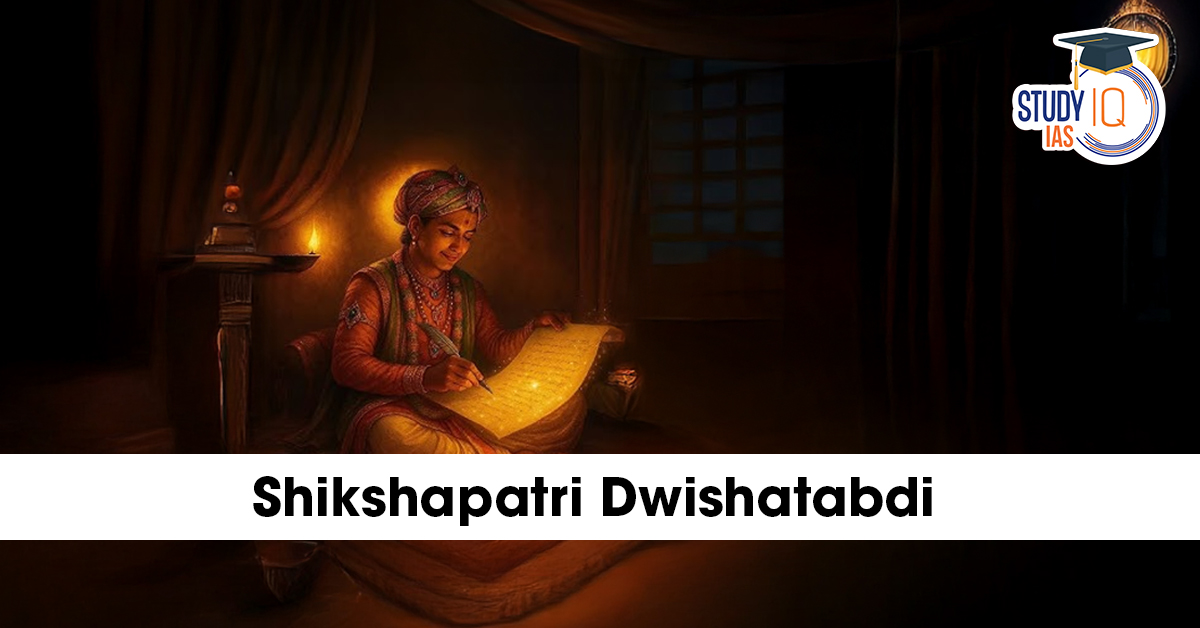
Prime Minister, in a video message at the Shikshapatri Dwishatabdi Mahotsav, noted that the occasion marks the completion of 200 years of Bhagwan Swaminarayan’s Shikshapatri.
About Shikshapatri Dwishatabdi
- Author: Personally written by Bhagwan Swaminarayan (Sahajanand Swami).
- Composition Date: Completed on Maha sud 5, Samvat 1882 (February 11, 1826).
- Language: Originally written in Sanskrit (later translated into Gujarati by Nityanand Swami).
- Structure: A concise “Epistle of Precepts” consisting of 212 verses (shlokas).
- Primary Objective: To provide a comprehensive moral, social, and spiritual code of conduct for all followers, regardless of their station in life.
About Bhagwan Swaminarayan
- Birth: Born as Ghanshyam Pande on April 3, 1781 in Chhapaiya, Uttar Pradesh. His birth coincides with Rama Navami.
- Nilkanth Varni (Renunciation): At age 11, after the passing of his parents, he left home to embark on a 7-year spiritual journey on foot across India. During this time, he practiced intense austerities and was known as Nilkanth Varni.
- Sahajanand Swami: He eventually settled in Loj, Gujarat, where he met his guru, Ramanand Swami. He was initiated as a sadhu and named Sahajanand Swami.
- Succession: At age 21, he was appointed as the head of the fellowship (the Uddhav Sampraday) by Ramanand Swami. Shortly after his guru’s passing, he introduced the “Swaminarayan” Mahamantra, after which he became known as Bhagwan Swaminarayan.
| Navya-Vishishtadvaita |
|
Bhagwan Swaminarayan propounded a unique philosophy often called Neo-qualified Non-dualism, which identifies five eternal and distinct realities:
|
|
Explore StudyIQ Courses |
|
 Second Edition of Fiscal Health Index Re...
 Finance Commission Grants to Cities
 Rajya Sabha Elections: Process, Eligibil...











 WhatsApp





