
Table of Contents
Context: In a recent judgment, the Supreme Court affirmed that individuals who convert to Christianity are no longer entitled to claim Scheduled Caste (SC) status. This decision upheld an earlier ruling by the Andhra Pradesh High Court.
Scheduled Caste Status After Religious Conversion
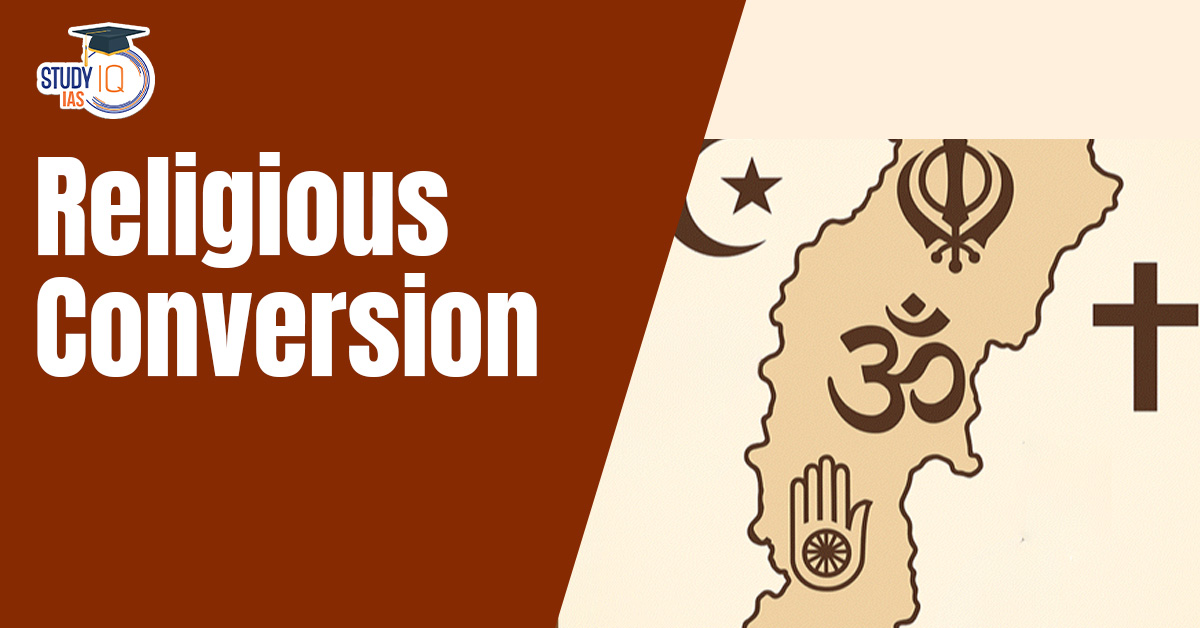
The issue of Scheduled Caste (SC) status after religious conversion is a significant legal and social debate in India, closely linked to constitutional provisions and social justice policies. Under the Constitution (Scheduled Castes) Order, 1950, SC status is traditionally restricted to individuals professing Hinduism, later extended to Sikhs and Buddhists.
However, when individuals convert to other religions, such as Christianity or Islam, they generally lose their SC status and associated reservation benefits. This has raised concerns about equality, discrimination, and the continuing social disadvantages faced by converted communities, making it a subject of ongoing legal scrutiny and policy discussion.
Recent Supreme Court Ruling on SC Status After Religious Conversion
- The Supreme Court ruled that conversion to religions other than Hinduism, Sikhism, or Buddhism leads to immediate loss of SC status.
- This reaffirmed the Constitution (Scheduled Castes) Order, 1950, which restricts SC recognition to these three religions.
- It also clarified that such individuals cannot claim benefits under the SC/ST (Prevention of Atrocities) Act.
Andhra Pradesh High Court Decision (April 2025)
The High Court ruled in favour of the accused, stating that:
- The caste system is not inherent to Christianity.
- The SC/ST Act is meant exclusively for members of SC/ST communities.
- A person who has converted to Christianity does not fall within the SC category and cannot seek protection under the Act.
Background of the Case
- The ruling arose from a complaint filed in 2021 by Pastor Chintada Anand Paul from Andhra Pradesh. He alleged caste-based abuse and violence, leading to charges under the SC/ST (Prevention of Atrocities) Act, along with relevant IPC provisions.
- The accused challenged the case, arguing that the complainant had converted to Christianity long ago and therefore could not claim SC status or invoke protections under the Act. The key legal issue was whether such protections continue after voluntary religious conversion.
Key Observations by the Supreme Court
- Tension between two realities:
- Legal framework: SC status is a legally defined identity linked to specific religions under the Constitution (Scheduled Castes) Order, 1950.
- Social reality: Evidence suggests that caste-based discrimination often continues even after conversion, particularly among Dalit Christians.
- A person cannot simultaneously: The Court clarified that a person cannot simultaneously follow a religion outside Hinduism, Sikhism, or Buddhism, and claim recognition as a Scheduled Caste
- It emphasised that this restriction is absolute, leaving no room for exceptions.
- According to the Court, these two positions are fundamentally incompatible within the constitutional structure.
- Meaning of “Profess”: Interpreting the term “profess,” the Court noted that it involves more than personal belief. It requires an outward and public expression of faith. In this case, the individual’s role as a pastor, leading prayers and organising religious gatherings, was seen as clear evidence of professing Christianity.
- Distinction Between SCs and STs: The Court drew a clear distinction between the Scheduled Castes and the Scheduled Tribes:
- For SCs, religion is a determining factor.
- For STs, identity is based on continued association with tribal customs and community recognition, irrespective of religion.
- Further, the Court stated that SC status does not fade gradually after conversion, but it ends immediately. Once a person adopts another religion, their earlier caste identity loses legal validity.
|
Read More Notes |
|
| Environment Notes | Art and Culture Notes |
| Science and Tech | History Notes |
| Geography Notes | Indian Polity Notes |
| General Knowledge | International Relation |
|
Explore StudyIQ Courses |
|

 Great Atlantic Sargassum Belt (GASB): Gr...
 China’s Global Ocean Mapping Initiativ...
 Ancient Marine Snail Discoveries in Guja...






 WhatsApp





