
Table of Contents
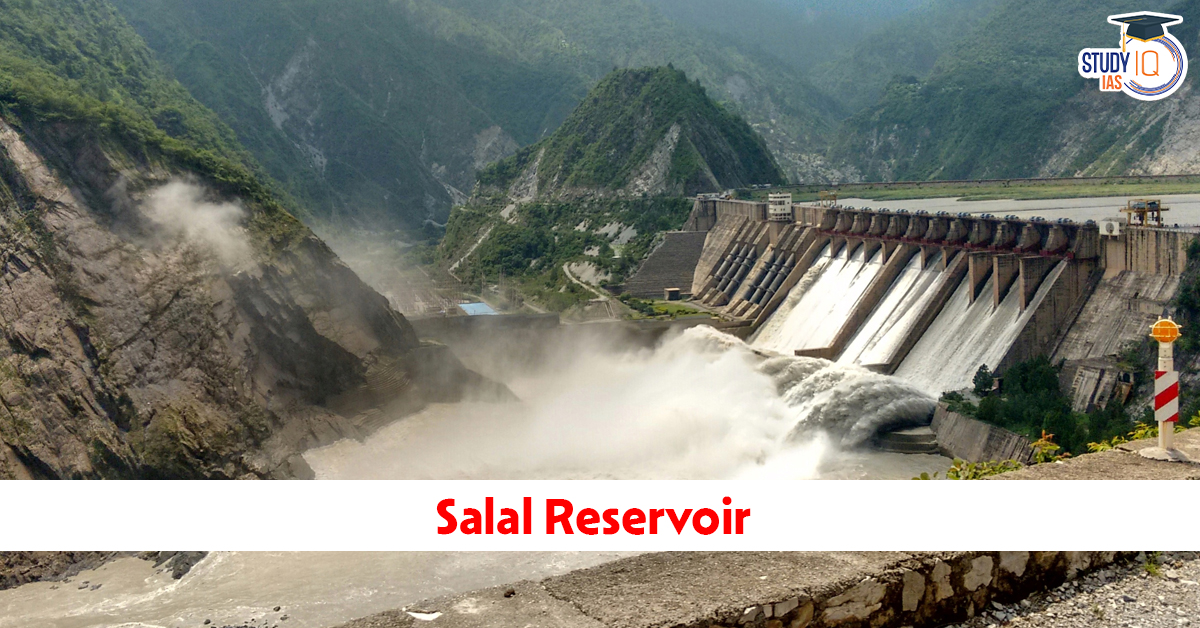
The Salal Reservoir is an important water storage component of the Salal Hydroelectric Project, located on the Chenab River in Jammu and Kashmir. Closely linked with India’s hydropower generation, water management, and Indus Waters Treaty dynamics, the Salal Reservoir holds strategic, environmental, and geopolitical significance.
Salal Reservoir – Why in News?
The Salal Reservoir has recently been in the spotlight after the Union Minister of Power directed sediment removal and flushing operations at the Salal Hydroelectric Project to ensure maximum utilisation of water resources, especially in the context of the Indus Waters Treaty being kept in abeyance between India and Pakistan.
About Salal Reservoir
-
Reservoir Name: Salal Reservoir
-
Associated Project: Salal Hydroelectric Project
-
River: Chenab River
-
Location: Reasi District, Jammu and Kashmir
-
Type: Reservoir of a run-of-the-river hydropower project
-
Owner & Operator: National Hydroelectric Power Corporation (NHPC)
The reservoir was created as part of the Salal Hydroelectric Project, which became operational in 1987. Although termed a run-of-the-river project, the reservoir plays a crucial role in regulating river flow and managing sediments.
Salal Dam and Reservoir Features
-
Dam Height: 130 metres
-
Elevation: ~1,627 feet above mean sea level
-
Designed in compliance with the Indus Waters Treaty (IWT)
-
Allows limited storage without large-scale submergence
Unlike large storage dams, the Salal Reservoir has restricted live storage capacity, as mandated under treaty provisions.
Importance of Salal Reservoir
1. Hydropower Generation
-
Supports a 690 MW hydropower capacity
-
Ensures steady water flow for turbine operation
-
Improves efficiency through sediment management
2. Sediment Management
-
The Chenab River carries high sediment load from the Himalayas
-
Regular sediment flushing is critical to:
-
Prevent turbine damage
-
Maintain reservoir capacity
-
Extend project lifespan
-
3. Strategic and Geopolitical Significance
-
First hydropower reservoir built by India under the Indus Waters Treaty regime
-
Plays a role in India–Pakistan water diplomacy
-
Recent sediment flushing signals a shift towards greater operational flexibility
4. Regional Water Management
-
Helps regulate seasonal river flows
-
Supports energy supply to Northern Grid states
-
Enhances water-use efficiency in the Chenab basin
Environmental Aspects
-
Limited submergence compared to large dams
-
Reduced displacement of local populations
-
However, sediment flushing must be managed carefully to:
-
Protect downstream ecology
-
Prevent sudden changes in river morphology
-
Distribution of Power Generated
-
12.5% of electricity is allocated to Jammu and Kashmir
-
Remaining power supplied to Northern Grid states such as:
-
Punjab
-
Haryana
-
Delhi
-
Himachal Pradesh
-
Rajasthan
-
Uttar Pradesh
-
UPSC Prelims Key Facts
-
Salal Reservoir is on the Chenab River
-
Located in Reasi district, Jammu and Kashmir
-
Part of a run-of-the-river hydropower project
-
Developed by NHPC
-
Strategically important under the Indus Waters Treaty
Conclusion
The Salal Reservoir is more than just a water storage structure—it is a strategic asset at the intersection of renewable energy, river management, and geopolitics. Recent sediment management measures highlight India’s intent to optimise existing hydropower infrastructure while navigating evolving regional water-sharing dynamics.
 Viksit Bharat Shiksha Adhishthan Bill 20...
 Cyclone Maila Intensifies Over Solomon S...
 List of Military Exercises of India 2026...













 WhatsApp





