
Table of Contents
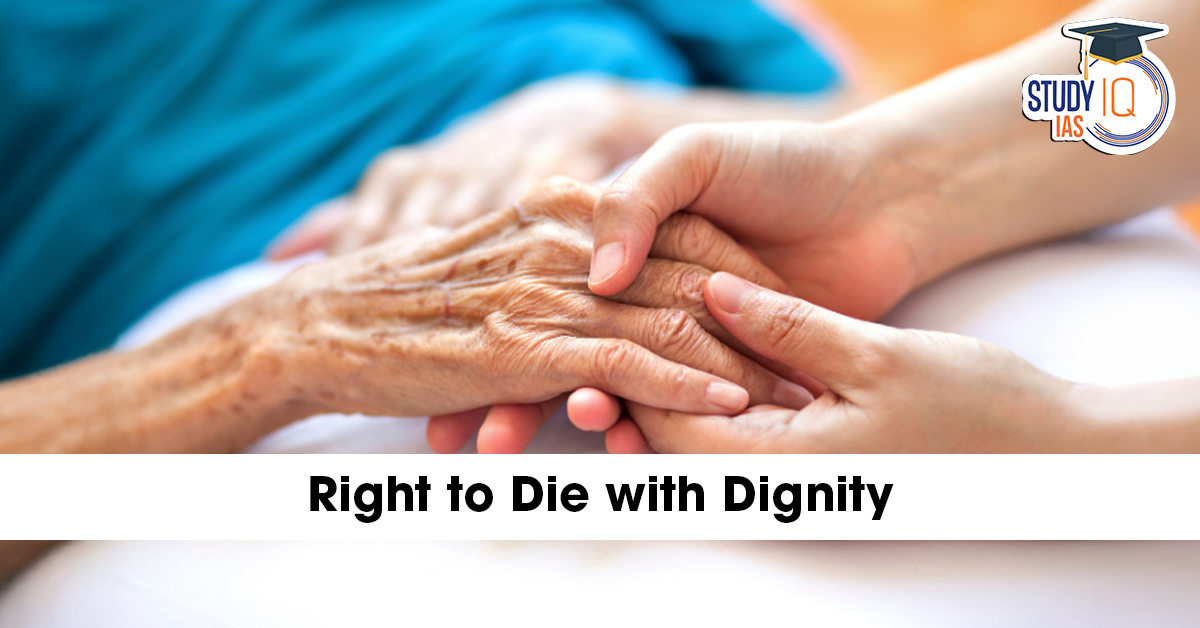
In 2013, Harish Rana, a 20-year-old man, suffered a serious fall that left him in a Persistent Vegetative State (PVS) and dependent on life-support systems. After more than a decade without any medical improvement, his parents approached the Supreme Court seeking permission to discontinue life support. The case triggered an important constitutional discussion on the scope of the Right to Life under Article 21 of the Indian Constitution and whether it also includes the right to die with dignity.
Legal developments
| Legal developments |
| ● Gian Kaur v. State of Punjab (1996): The Supreme Court clarified that Article 21 guarantees the right to live with dignity. However, it held that this provision does not include a fundamental right to die.
● Aruna Shanbaug v. Union of India (2011): In this landmark ruling, the Court permitted passive euthanasia for patients who are terminally ill and undergoing futile treatment. It also laid down procedural safeguards to guide such decisions in the absence of specific legislation.Law Commission Reports (2006 and 2012) ● Common Cause v. Union of India (2018): This judgment firmly recognised the right of individuals to refuse medical treatment as an aspect of dignity, privacy, autonomy and self-determination under Article 21. ○ The Court also issued comprehensive procedural safeguards, widely referred to as the “Common Cause guidelines.” ● The Law Commission recommended that doctors and caregivers should not face criminal liability for withholding or withdrawing life-sustaining treatment when such decisions are made in the patient’s best interests. |
Supreme Court’s decision in the Harish Rana Case
| ● Applying the principles laid down in Common Cause, the Supreme Court allowed the withdrawal of life support in Harish Rana’s case and examined two key aspects:
● Clinically Assisted Nutrition and Hydration (CANH): The Court concluded that CANH qualifies as medical treatment because it requires specialised medical supervision and intervention. ● Assessment of Best Interests: The Court observed that continuing treatment without any possibility of recovery merely prolonged biological existence without meaningful quality of life. Based on medical board assessments and the views of the family, it determined that withdrawing life support was consistent with the patient’s best interests. |
|
Read More Notes |
|
| Environment Notes | Art and Culture Notes |
| Science and Tech | History Notes |
| Geography Notes | Indian Polity Notes |
| General Knowledge | International Relation |
|
Explore StudyIQ Courses |
|
 Distinct Enumeration of DNTs in Census 2...
 Top 10 Richest Indians 2026 Full List Ne...
 The Transgender Persons (Protection of R...





 WhatsApp





