

Table of Contents
The Viksit Bharat – Guarantee for Rozgar and Ajeevika Mission (Gramin) Bill, 2025 (VB-G RAM G Bill), introduced in the Lok Sabha on December 16, 2025, by Union Rural Development Minister Shivraj Singh Chouhan, proposes a comprehensive overhaul of India’s flagship rural employment programme. This legislation seeks to repeal the Mahatma Gandhi National Rural Employment Guarantee Act (MGNREGA) of 2005, introducing structural reforms aligned with the vision of Viksit Bharat @2047.
Background of MGNREGA and Need for Revamp
Enacted in 2005, MGNREGA provided a rights-based guarantee of 100 days of wage employment per rural household annually for unskilled manual work. It served as a critical social safety net, particularly during economic distress, with significant participation from women (over 50% in many years).
However, implementation challenges persisted: average days of employment provided hovered around 50, issues with asset durability, leakages, and mismatches with agricultural cycles. The government argues that rural India has evolved, necessitating a modern framework focused on productive infrastructure and digital governance.
Key Features of VB-G RAM G Bill 2025
The bill introduces several pivotal changes:
- Increased Employment Guarantee: Statutory entitlement raised to 125 days per rural household annually, up from 100 days.
- Thematic Focus on Works: Prioritizes four domains – water security (e.g., ponds, conservation), core rural infrastructure (roads, connectivity), livelihood assets (storage, markets), and climate-resilient projects. Assets will integrate into a Viksit Bharat National Rural Infrastructure Stack for coordinated planning.
- Funding Mechanism: Shifts to normative allocation based on objective parameters, with shared Centre-State funding (approximately 60:40 ratio). Departs from MGNREGA’s demand-driven, open-ended Central funding.
- Seasonal Provisions: Allows up to 60-day pause during peak agricultural seasons to ensure labour availability for farming.
- Payment and Governance: Weekly wages (or within a fortnight), biometric authentication, geotagging, and enhanced social audits. Introduces Gramin Rozgar Guarantee Cards and multi-tier councils for oversight.
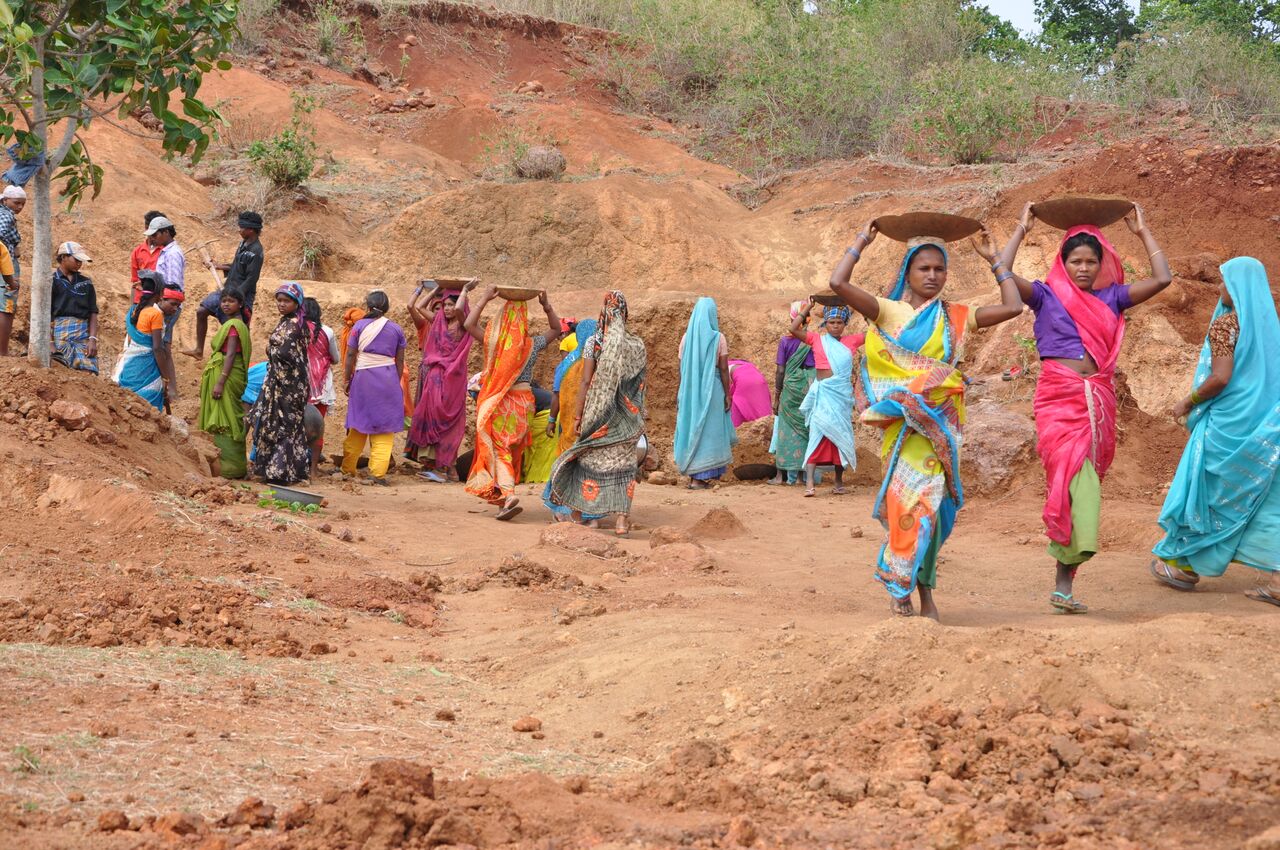
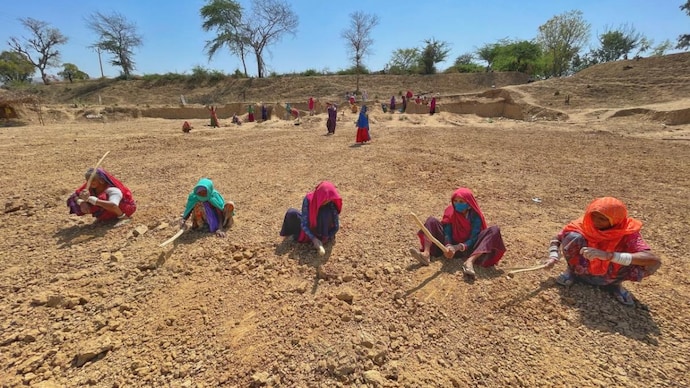
Women workers, a major beneficiary group under rural employment schemes, engaged in pond digging and conservation works:
Implications and Debates
Positive Aspects:
- Higher guaranteed days and focus on durable assets could enhance rural productivity, water security, and climate resilience.
- Digital tools aim to reduce leakages and improve transparency.
- Alignment with agricultural cycles may support farmers while providing predictable income.
Concerns Raised:
- Shift from demand-driven to supply-driven model may cap employment in high-need areas.
- Increased financial burden on states could strain fiscal resources.
- Centralisation of planning and funding decisions.
The bill’s introduction amid parliamentary discussions highlights evolving approaches to rural development, poverty alleviation, and cooperative federalism.
Budgetary Context
The allocation for rural employment remains at ₹86,000 crore for FY 2025-26, with potential adjustments post-legislation.
Queries like MGNREGA revamp 2025, VB-G RAM G Bill key changes, or rural employment guarantee India updates reflect interest in this significant policy shift. The bill’s progress will shape India’s rural livelihood framework for years ahead.
 Shaheed Diwas 2026: History, Significanc...
 Mahad Satyagraha 1927, History and Signi...
 Punjab–Rajasthan River Dispute: Raviâ€...











 WhatsApp





