
Table of Contents
Context
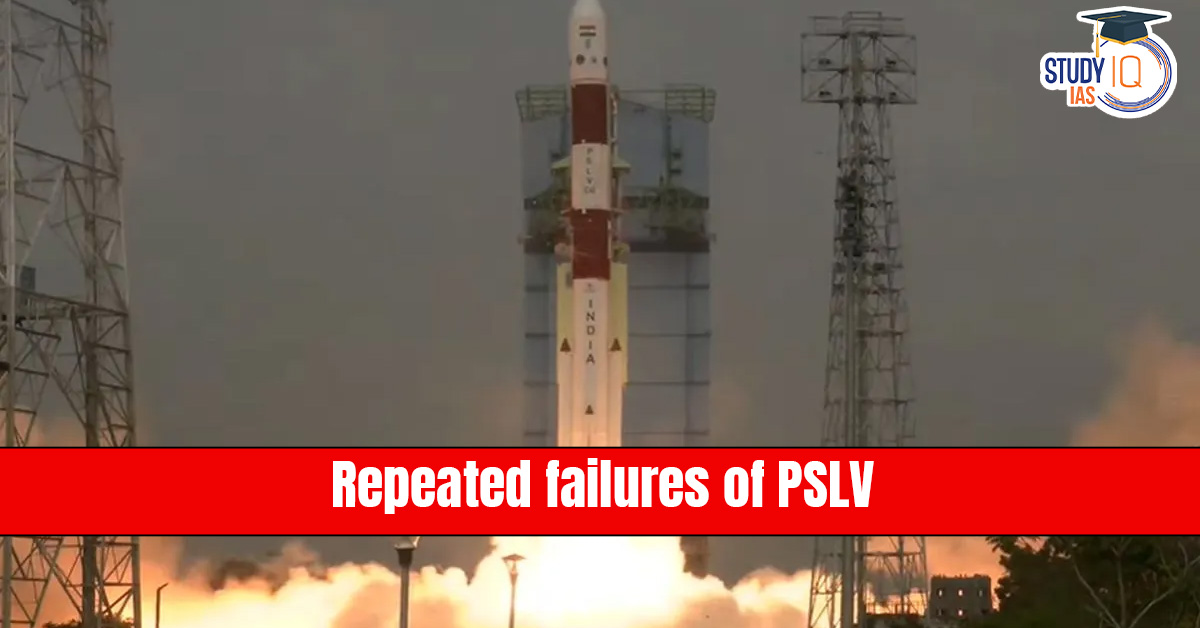
- India’s premier launch vehicle, the Polar Satellite Launch Vehicle (PSLV) — long regarded as the workhorse of the Indian space programme — has recently faced two consecutive mission failures, prompting serious institutional introspection within the Indian space ecosystem.
|
Why Consecutive Failures Are Significant |
| ● PSLV Was ISRO’s Most Reliable Rocket: PSLV maintained a success rate above 90% across decades, launching major missions like Chandrayaan-1 and Mars Orbiter Mission. Two failures in succession are therefore statistically unusual and strategically serious.
● Failure at the Same Stage Indicates Pattern: Both missions experienced malfunction in the third stage (PS3) — responsible for providing velocity needed to achieve orbit. A pressure drop or ignition anomaly prevents orbital insertion. ● Break in ISRO’s “Fail-Fix-Fly” Tradition: Historically, ISRO publicly released Failure Analysis Committee reports before the next launch. However, details of the PSLV-C61 failure were not publicly released before PSLV-C62 flew — raising transparency concerns. |
Why a Special Committee Was Constituted
- Traditionally, ISRO investigates failures through internal Failure Analysis Committees (FACs). However, the recurrence of similar failures triggered concerns about broader issues.
- The government therefore ordered a third-party systemic review to restore confidence among International launch customers and Private space companies.
- Importantly, many members are external to ISRO, ensuring independence and credibility.
Composition of the Committee: The committee includes eminent scientists and external experts, notably:
- VijayRaghavan, former Principal Scientific Adviser to the Government of India.
- Somanath, former Chairman of ISRO.
The committee is expected to submit findings to ISRO Chairman V. Narayanan before April 2026.
What the Committee Will Investigate
- Manufacturing Ecosystem Review: The committee will check whether component defects arose during production or due to inconsistent quality standards among private suppliers involved in rocket manufacturing.
- Procurement and Vendor Oversight: It will examine vendor selection, auditing, and procurement processes to see if increased outsourcing affected supervision and quality control.
- Assembly and Integration Processes: The probe will assess coordination during rocket assembly and whether integration delays or procedural lapses affected launch readiness.
- Quality Assurance and Testing: Testing and certification systems, especially third-stage ignition validation, will be reviewed to identify gaps in verification before launch approval.
- Accountability Framework: The committee will study whether responsibility can be clearly fixed across ISRO units and private partners involved in manufacturing and operations.
- Organisational Decision-Making: It will analyse institutional issues such as schedule pressure, communication gaps, and risk assessment practices within mission planning.
 Central India’s Jumbo Crisis: Human-El...
 UN Road Safety Project: Objectives, Impl...
 HPV Vaccination to be Universalised for ...










 WhatsApp





