
Table of Contents
Context
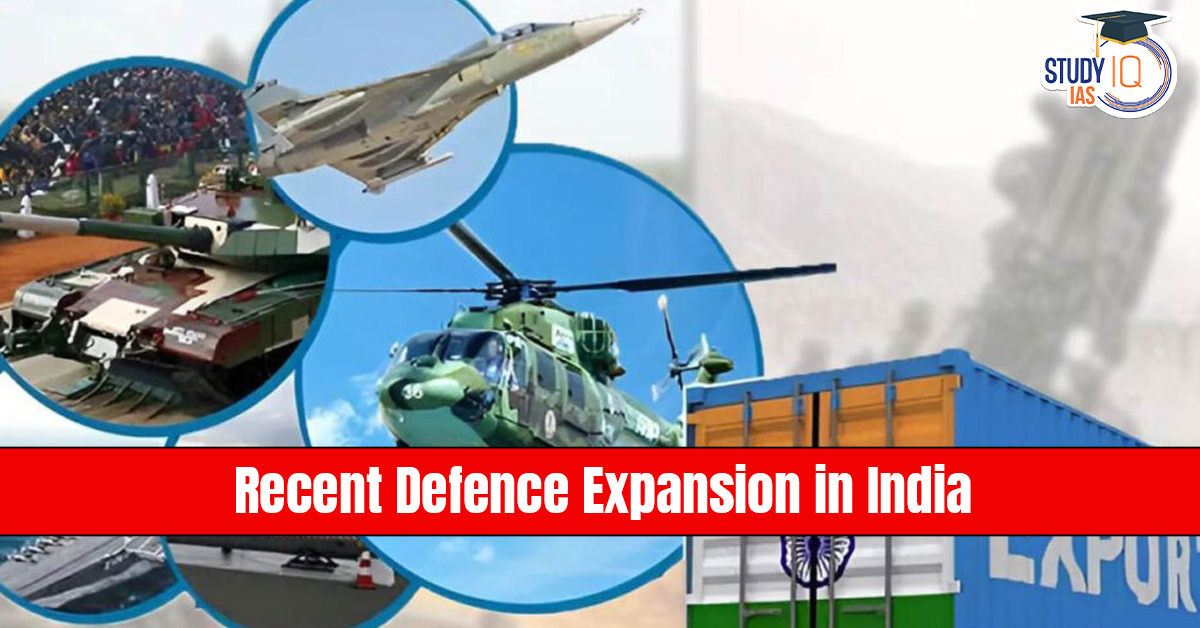
Union Budget 2026-27 has significantly bolstered its national security framework with a record allocation of Rs 7.85 lakh crore
About the Defence Budget in FY 2025-26
- This budget represents a 19 per cent increase over the previous year’s estimates and reflects priorities toward security and military preparedness.
- Capital outlay (for procurement and modernisation) saw an even sharper rise of around 8 per cent.
- Defence spending has nearly tripled since 2013–14 (from ₹2.53 lakh crore to ₹7.85 lakh crore)
- Building domestic defence industry: Nearly three-fourths of modernisation funds are earmarked for indigenous procurement, aligning with the Atmanirbhar Bharat vision
Strategic Drivers
- Link Between Budget and Deterrence: India’s defence spending aims to create credible denial capabilities that secure peace. This aligns with the argument that credible deterrence comes from capability, not slogans.
- Closing Capability Gaps: For years, India faced a mismatch between its strategic ambitions and military capabilities. Legacy platforms, dwindling fighter squadron strength, stretched naval assets, and outdated artillery highlighted gaps that could be exploited by adversaries.
- Operational Lessons — ‘Operation Sindoor’: Recent military engagements like Operation Sindoor exposed issues in readiness and force modernisation, prompting institutional recognition that preparedness cannot be deferred. The Budget’s focus on capital expenditure directly responds to these operational lessons.
- Regional Security Environment: India’s immediate neighbourhood features persistent threats:
- China’s expansion of military capabilities, including along the Line of Actual Control and into the Indian Ocean.
- Pakistan’s conventional and nuclear force posture, designed to exploit conventional imbalances.
- A deepening China-Pakistan strategic nexus adding pressure on India’s two-front security calculus.
- These realities make credible deterrence central to India’s defence outlook rather than an arms race narrative. A stronger military capability discourages coercion and reduces incentives for adversaries to take risks.
- Strategic Autonomy Imperative: Global geopolitical unpredictability — including shifts in US foreign policy priorities — underscores the need for self-reliant defence capability rather than reliance on external powers. India’s defence build-up supports strategic autonomy in a multipolar world.
Recommendations for India’s Defence Strategy
- Prioritise Indigenous Capability and R&D: Enhancing domestic arms production, boosting research and development, and nurturing defence start-ups will reduce import dependence and build strategic industrial depth.
- g. Recent defence innovation summits (e.g., in Visakhapatnam) highlight emerging synergies between the military, industry, and start-ups — a trend that must be expanded.
- Increase Capital Outlay Proportion: Shifting budget composition toward capital expenditure is vital.
- g. Encouraging reforms to reduce personnel and pension burdens over time could free up future allocations for procurements and technology.
- Streamline Procurement Processes: The Ministry of Defence should continue reforms to shorten acquisition cycles, embrace flexible contracts, and integrate private sector involvement to speed up delivery of advanced systems.
- Build Multi-Domain Deterrence: India needs balanced deterrence across domains — land, air, sea, cyber, and space.
- g. Recent expansions of sea-based nuclear assets (e.g., the growing submarine triad) strengthen second-strike capability, a key part of deterrence posture.
- Supporting projects in space-based surveillance and cyber defence should also be prioritised.
- Regional Security Partnerships: Strategic partnerships (e.g., deepened cooperation with countries like France on joint manufacturing, such as Rafale aircraft and helicopters) enhance interoperability, technology transfer, and burden-sharing in defence production.
|
Read More Notes |
|
| Environment Notes | Art and Culture Notes |
| Science and Tech | History Notes |
| Geography Notes | Indian Polity Notes |
| General Knowledge | International Relation |
|
Explore StudyIQ Courses |
|
 International Polar Bear Day 2026: Impor...
 What is El Niño Labelling and Why It Ma...
 US Duties on Solar Exports: Impact on In...











 WhatsApp





