
Table of Contents
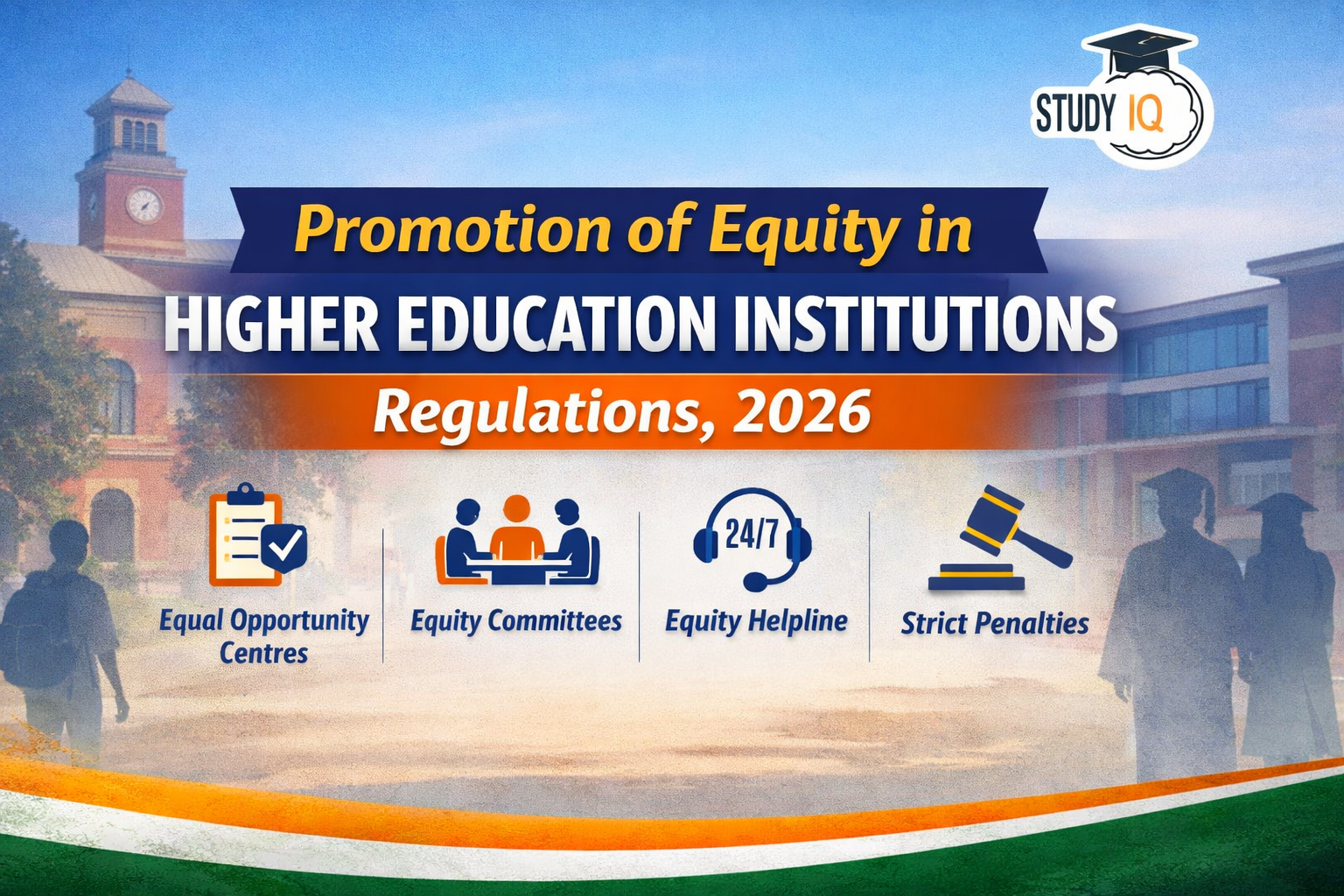
The Promotion of Equity in Higher Education Institutions Regulations, 2026, notified by the University Grants Commission (UGC), represent one of the most transformative reforms in India’s higher education governance. These regulations aim to establish fairness, dignity, inclusion, and equality as enforceable legal principles rather than optional ethical practices.
For decades, Indian campuses have struggled with discrimination based on caste, gender, disability, and socio-economic background. While constitutional guarantees existed, their implementation within educational institutions remained weak and fragmented. The 2026 Regulations address this gap by creating a comprehensive, binding, and accountable system to ensure equity in universities and colleges.
These rules:
- Strengthen anti-discrimination mechanisms
- Mandate Equal Opportunity Centres (EOCs)
- Create independent Ombudsperson oversight
- Impose strict penalties for violations
- Ensure representation of marginalised communities
- Make institutional leadership directly accountable
For UPSC aspirants, education policymakers, and administrators, the 2026 Regulations are a landmark in social justice governance.
What Are the Promotion of Equity in Higher Education Institutions Regulations, 2026?
The UGC Promotion of Equity in Higher Education Institutions Regulations, 2026 were officially notified on January 13, 2026. These regulations aim to eliminate all forms of discrimination — especially caste-based discrimination — in Indian universities, colleges, and higher education institutes (HEIs).
The regulations apply to all recognized HEIs across India and establish a comprehensive framework for reporting, addressing, and preventing discrimination based on:
- Caste
- Religion
- Gender
- Disability
- Race
- Place of birth

Background: Why Were These Regulations Needed?
Despite constitutional guarantees, Indian higher education institutions have historically witnessed:
-
Caste-based exclusion
-
Weak grievance redressal mechanisms
-
Ineffective SC/ST Cells
-
Fear of retaliation among complainants
-
Institutional bias towards reputation over justice
-
Social segregation in hostels and classrooms
The Thorat Committee Report (2007) highlighted:
-
Segregated living spaces
-
Discriminatory evaluation practices
-
Social isolation of SC/ST students
Multiple student suicides and campus conflicts further exposed the fragility of existing systems.
Earlier regulations lacked:
-
Enforcement power
-
Clear definitions
-
Inclusion of OBCs
-
Independent appellate authority
The 2026 Regulations fill these structural gaps.
Key Features of the UGC Equity Regulations
The 2026 regulations introduce several core mechanisms to promote inclusion, transparency and accountability:
1. Mandatory Equal Opportunity Centres (EOCs)
Every higher education institution must create an Equal Opportunity Centre to:
-
Drive equity and inclusion initiatives
-
Handle complaints of discrimination
-
Support disadvantaged students and staff
-
Coordinate with healthcare, legal and district authorities
2. Equity Committees and Representation
Each EOC must form a 10-member Equity Committee with mandatory representation from:
-
Scheduled Castes (SC)
-
Scheduled Tribes (ST)
-
Other Backward Classes (OBC)
-
Women
-
Persons with Disabilities
This ensures inclusive decision-making and diverse perspectives in grievance redressal.
3. Equity Squads & Helplines
UGC Regulations 2026 introduce Equity Squads — proactive teams that monitor vulnerable campus areas, prevent discriminatory behaviour, and ensure rapid response. Institutions must also operate a 24×7 Equity Helpline.
4. National Monitoring and Enforcement
A national monitoring committee will oversee implementation across institutions, review reports, and ensure compliance. Non-compliant colleges and universities may face:
-
Debarment from UGC schemes
-
Removal of accreditation
-
Suspension of online/distance programmes
How These Regulations Are Different from 2012
The 2012 UGC equity rules were largely advisory and lacked strong enforcement. The 2026 regulations:
Define caste discrimination explicitly to include SC, ST, and OBC
✔Introduce penalties for non-compliance
✔ Set strict timelines for complaint resolution
✔ Provide legal and procedural support to complainants
✔ Expand accountability at institutional and national levels
Controversy Surrounding the 2026 Regulations
The updated rules have generated debate online and offline. Critics argue they could result in “harassment” of general category students and create campus caste divisions. The absence of a separate clause on penalties for false complaints has also drawn criticism.
Supporters, however, claim these regulations are vital to:
-
Uphold constitutional values of equality
-
Provide real grievance redressal
-
Correct historical exclusion in higher education
Legal & Constitutional Backing
These equity regulations align with India’s constitutional ethos:
Article 14: Right to Equality
Article 15: Prohibition of Discrimination
Article 17: Abolition of Untouchability
Article 46: Protection of Weaker Sections
The 2026 rules reinforce existing legal obligations to protect dignity, equality and inclusion.
Impact on Students and Institutions
The UGC Equity Regulations 2026 aim to:
✔ Create safe and inclusive campuses
✔ Increase representation from marginalised groups
✔ Make institutions accountable
✔ Strengthen grievance mechanisms
For students, this means access to dedicated support systems, legal aid, and transparent complaint procedures.
For HEIs, the regulations signal enhanced governance responsibilities with enforceable compliance metrics.
Conclusion
The Promotion of Equity in Higher Education Institutions Regulations, 2026 signify a major shift in India’s higher education landscape. By combining institutional accountability, legal enforcement, and inclusive representation, the UGC aims to make campuses equitable, safe, and dignified for all.
Whether you are a student, faculty member, or policy enthusiast, understanding these education equity regulations is essential in 2026 and beyond.
|
Read More Notes |
|
| Environment Notes | Art and Culture Notes |
| Science and Tech | History Notes |
| Geography Notes | Indian Polity Notes |
| General Knowledge | International Relation |
|
Explore StudyIQ Courses |
|
 Supreme Court Upholds the Right to Die w...
 GDP Growth vs Employment Reality: Unders...
 Bill to Codify IPS Deputation in CAPFs: ...










 WhatsApp





