
Table of Contents
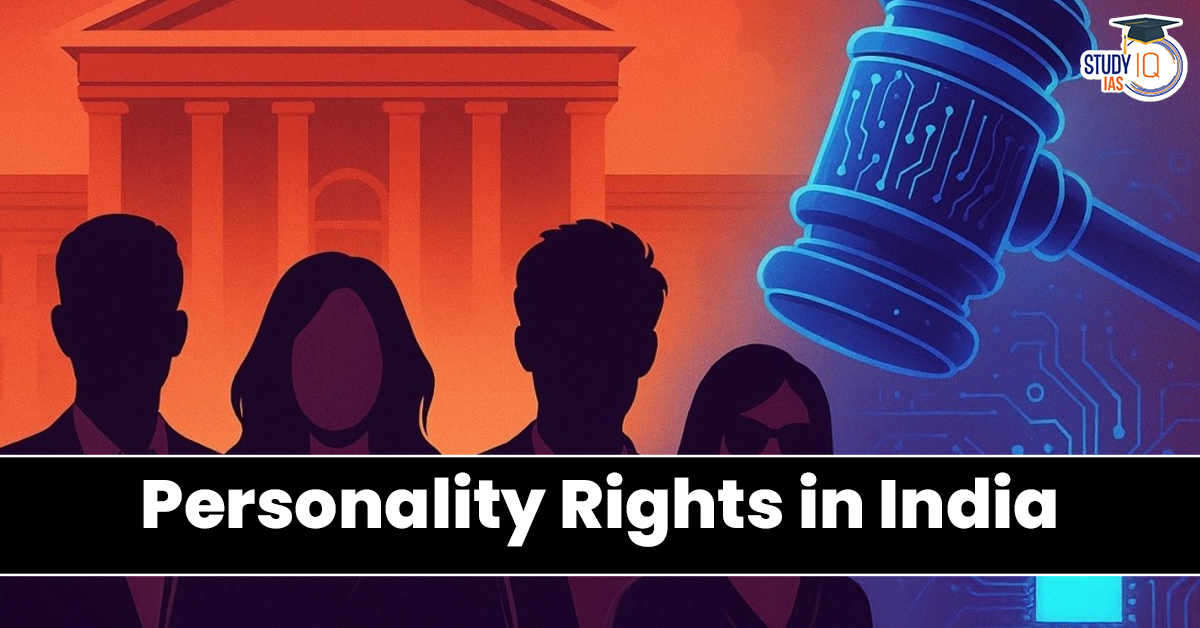
The swift advancement of digital technology, especially social media platforms and artificial intelligence (AI), has altered the processes of identity formation, reproduction, and dissemination in the public sphere. In India, this technological transition has coincided with a significant increase in litigation about “personality rights,” as celebrities increasingly pursue judicial intervention to prevent unauthorized use of their names, likenesses, voices, and mannerisms. Although these assertions are frequently presented as essential safeguards against reputational damage, privacy violations, and economic exploitation, their unregulated proliferation poses significant threats to free speech, artistic expression, and commercial endeavours in a democratic society.
Concept and Legal Origins of Personality Rights
Personality rights, sometimes known as publicity rights, are not legally enshrined in India. Rather, they have developed through judicial interpretation, utilizing a mosaic of legal theories encompassing the right to privacy, dignity under Article 21 of the Constitution, considerations of confusion and dilution in trademark law, and jurisprudence on unfair competition. These rights allow public figures to regulate the use of their identity, especially in commercial settings.
Indian courts have broadly defined personality rights to encompass several traits, including an individual’s name, image, likeness, voice, signature, unique expressions, performance styles, and catchphrases. In contrast to conventional intellectual property rights, personality rights are characterized by ambiguous legislative parameters, undefined duration, and imprecise definitions, leading to a jurisprudence that is both dynamic and inconsistent.
Technological Change and the Rise of Personality Rights Claims
The recent increase in personality rights litigation is closely associated with technological advancements. AI-generated deepfakes, voice replication, altered photos, viral memes, and synthetic endorsements have significantly facilitated the reproduction and remixing of a celebrity’s identity. These technologies carry significant hazards, including impersonation, public deceit, defamation, and indecent misrepresentation.
However, Indian law already offers remedies for such injuries. Defamation is actionable in both civil and criminal law; impersonation and cyber fraud are governed by the Information Technology Act, 2000, and the Bharatiya Nyaya Sanhita (BNS); obscene or sexually explicit material is subject to criminal penalties. Notwithstanding the current legal structure, judges and litigants have increasingly depended on expansive personality rights arguments, frequently circumventing established statutory channels.
Judicial Practice and the Problem of Subjectivity
A primary issue with the present direction of personality rights jurisprudence is its dependence on subjective interpretations of offence instead of objective criteria for injury. Examples such as Abhishek Bachchan’s objection to T-shirts featuring his image, Anil Kapoor’s objection to the phrase “jhakaas,” Karan Johar’s challenge against the use of his name in a film title, and Pawan Kalyan’s contestation of the commercial use of his photograph demonstrate how unauthorized references can incite legal action.
Courts have appropriately interfered in situations involving deepfakes that depict celebrities in indecent contexts or misrepresent endorsements; yet, certain accusations seem excessive. In the lack of explicitly defined thresholds, such as deceit, reputational harm, or verifiable economic detriment, courts have issued broad injunctions that threaten to suppress speech, satire, commerce, and artistic expression.
Judicial Caution and Conflicting Standards
Indian jurisprudence exhibits a lack of uniformity in its treatment of personality rights. Specific benches of the Delhi High Court have embraced a measured perspective. In DM Entertainment v. Baby Gift House (2010) and Digital Collectibles v. Galactus Funware Technology (2023), the courts warned against overly broad interpretations, asserting that personality rights must not supersede legitimate uses such as news reporting, criticism, parody, satire, and artistic expression.
In Bata India Ltd. v. Prakash Jha Productions (2012), the Supreme Court emphasized the significance of allowing critical commentary and creative expression, notwithstanding the focus on trademark law. Nevertheless, some judicial decisions have depended on ambiguous notions like “negative portrayal” or “harm to reputation,” without precise legal definitions, which has led to doctrinal inconsistency and uncertainty.
Privacy, Public Records, and the Right to Livelihood
A further aspect of personality rights litigation is privacy. In R. Rajagopal v. State of Tamil Nadu (1994), the Supreme Court established that people possess a right to privacy, but information that is part of the public record may be published and discussed. Numerous facets of a celebrity’s identity, performances, interviews, and public appearances are firmly situated inside the public domain. The utilization of such content, as long as it maintains dignity and does not deceive the public, should typically be lawful.
Celebrities often assert their right to livelihood, contending that unauthorized use of their identity jeopardizes their economic interests. Nonetheless, as the article indicates, such assertions are infrequently corroborated with proof. Celebrity revenue generally derives from performances, athletic accomplishments, and licensed sponsorships, rather than from monopolizing all references to their identity. Parody, fan merchandise, and cultural commentary frequently augment, rather than detract from, public awareness and financial worth.
Democratic Implications and the Chilling Effect
Granting superstars near-total authority over the representation of their identity jeopardizes the breadth of the public realm. Content makers, publishers, artists, and corporations may entirely refrain from interacting with public personalities to evade legal repercussions. This stifling impact diminishes satire, biography, journalism, cultural critique, and historical documentation, fundamental components of democratic discourse.
The freedom of expression, especially concerning public figures, is crucial for accountability, discourse, and cultural advancement. If unregulated, personality rights may convert reputational protection into a mechanism for censorship.
Comparative Perspectives from Other Jurisdictions
Internationally, personality or publicity rights are more distinctly defined. In the United States, these rights are generally acknowledged at the state level and are weighed against First Amendment protections, with robust safeguards for parody, journalistic reporting, and transformative usage. The European Union prioritizes data protection and privacy while also safeguarding artistic and journalistic freedom. The United Kingdom employs a combination of passing off, privacy, and defamation laws, eschewing the establishment of extensive, independent personality rights.
These jurisdictions illustrate that safeguarding individuals from deceit and injury does not require conferring extensive proprietary rights over identity.
Conclusion
Although safeguarding against the malevolent exploitation of digital technologies is a valid and essential goal, the present course of personality rights in India is plagued by conceptual vagueness and inconsistent judicial enforcement. The lack of explicit criteria for harm, acceptable usage, and remedies jeopardizes free expression and economic activity.
There is an imperative to strengthen and elucidate the parameters of personality rights, either by principled judicial principles or legislative action, ensuring that safeguarding against authentic harm does not undermine democratic norms. In a constitutional democracy, the law must meticulously balance the protection of individual dignity with the public’s right to express, critique, and create.
 Judicial Concerns in Vanashakti v. Union...






 WhatsApp





