
Table of Contents
Context
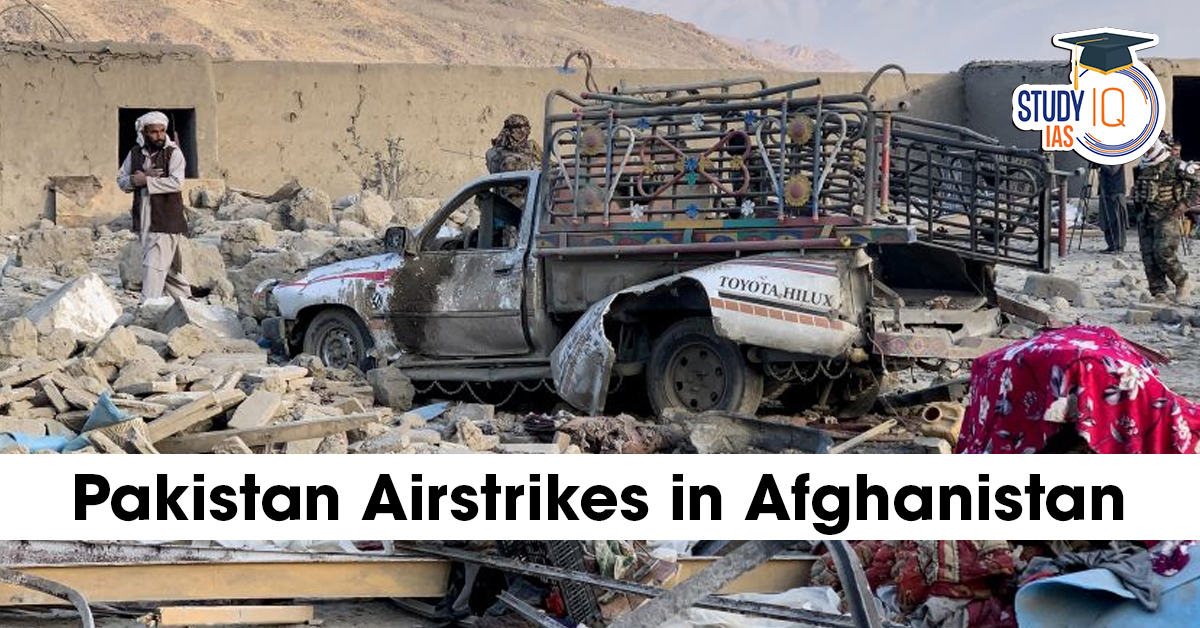
- Pakistan’s recent cross-border strikes into Afghanistan and its expanding diplomatic engagements in Washington, Europe, West Asia and China underline a paradox. For India, this combination of external assertiveness and internal fragility presents complex strategic risks.
Global Outreach
- Engagement with the United States: Sharif attended the first meeting of President Donald Trump’s Board of Peace and secured U.S. investment interest, including reported $1.3 billion backing for the Reko Diq mining project in Balochistan.
- China and Strategic Balancing: Pakistan continues close alignment with Xi Jinping, sustaining China-Pakistan Economic Corridor (CPEC) cooperation. Islamabad positions itself as a bridge between Washington and Beijing.
- Expanding Defence Diplomacy: Recent defence pacts with Saudi Arabia and arms deals with Sudan, Libya and Bangladesh enhance Pakistan’s global defence footprint.
Domestic Crisis
- Security Crisis:
- Surge in Terror Attacks: Pakistan has witnessed rising attacks by the Tehrik-e-Taliban Pakistan (TTP) and the Baloch Liberation Army (BLA). Think-tank estimates suggest over 2,400 fatalities in 2025—nearly matching 2024’s full-year toll.
- Taliban Spillover Effect: Following the Taliban’s takeover in Afghanistan in 2021, ideological and logistical spillover emboldened militant groups operating within Pakistan.
- Balochistan Insurgency: Resource-rich yet underdeveloped Balochistan faces persistent separatist violence, fuelled by grievances over economic marginalisation and enforced disappearances.
- Urban Security Concerns: Even Islamabad has witnessed suicide attacks and mosque bombings, indicating widening instability beyond peripheral provinces.
- Structural Vulnerabilities
- MF Dependency: Pakistan remains under a $7 billion IMF stabilisation programme. The International Monetary Fund projects 2026 GDP growth at around 3.2%, modest for a country facing demographic pressures.
- Employment Imperative: The World Bank estimates Pakistan must create 2.5–3 million jobs annually to avoid social unrest.
- Defence vs Development: Expanding defence partnerships enhance global visibility but do little to address unemployment, inflation and internal militancy.
- The Military’s Central Role
- Consolidation of Power: Asim Munir’s prominence reflects the military’s dominant role in foreign and security policy. Civilian leadership appears secondary in strategic decision-making.
- Historical Pattern: Pakistan’s closest ties with the U.S. historically coincided with military-dominated regimes (Zia-ul-Haq, Musharraf). External patronage often strengthens the military’s domestic leverage.
- Internal Crackdowns: Heavy-handed security operations in Balochistan and Khyber Pakhtunkhwa risk deepening alienation and radicalisation.
Implication for India
- Proxy and cross-border risk: A Pakistan led by a strong military and facing internal stress has historically resorted to proxy tools or limited military adventurism to project influence.
- g. Kargil Conflict (1999) – During a period of internal political instability in Pakistan, elements of the military initiated the Kargil intrusion, escalating tensions with India despite ongoing peace efforts.
- Periods of Heightened Proxy Activity (1990s, mid-2010s) – When civilian governments pursued rapprochement with India, cross-border militant attacks often increased, reflecting the military–jihadi nexus influencing security policy.
- Arms and technology flows. Renewed defence ties and third-country arms deals (Gulf, China, possible US investments tied to security cooperation) could improve Pakistani military capabilities in ways that affect regional balances.
- Instability spillovers. Refugee flows, cross-border militancy, and illicit trafficking from a destabilised Pakistan would create humanitarian and security burdens for India’s western states.
- Diplomatic openings. Pakistan’s engagement with multiple powers (US, China, Gulf states) also presents India an opportunity to coordinate with partners to stabilise the region and limit adverse outcomes.
Way Forward for India
- Vigilant defence posture. Maintain deterrence along western borders, strengthen coastal and border surveillance, and deepen counter-terror intelligence cooperation.
- Diplomatic engagement. Work with international partners (US, GCC, China where possible) to encourage stabilising investments conditional on inclusive governance and human rights safeguards.
- Humanitarian preparedness. Prepare contingency plans for refugee inflows and cross-border humanitarian contingencies in western states.
- Economic containment & cooperation. Monitor potential arms transfers; expand economic ties with regional partners to reduce instability incentives.
- Track civil-military dynamics. Use diplomatic channels to emphasise the value of civilian governance and inclusive solutions while avoiding steps that could be construed as interference.
|
Read More Notes |
|
| Environment Notes | Art and Culture Notes |
| Science and Tech | History Notes |
| Geography Notes | Indian Polity Notes |
| General Knowledge | International Relation |
|
Explore StudyIQ Courses |
|
 Freedom of Speech and Parliamentary Priv...
 Proteins as Quantum Sensors: New Advance...
 Illegal Use of Satellite Phones: Securit...










 WhatsApp





