
Table of Contents
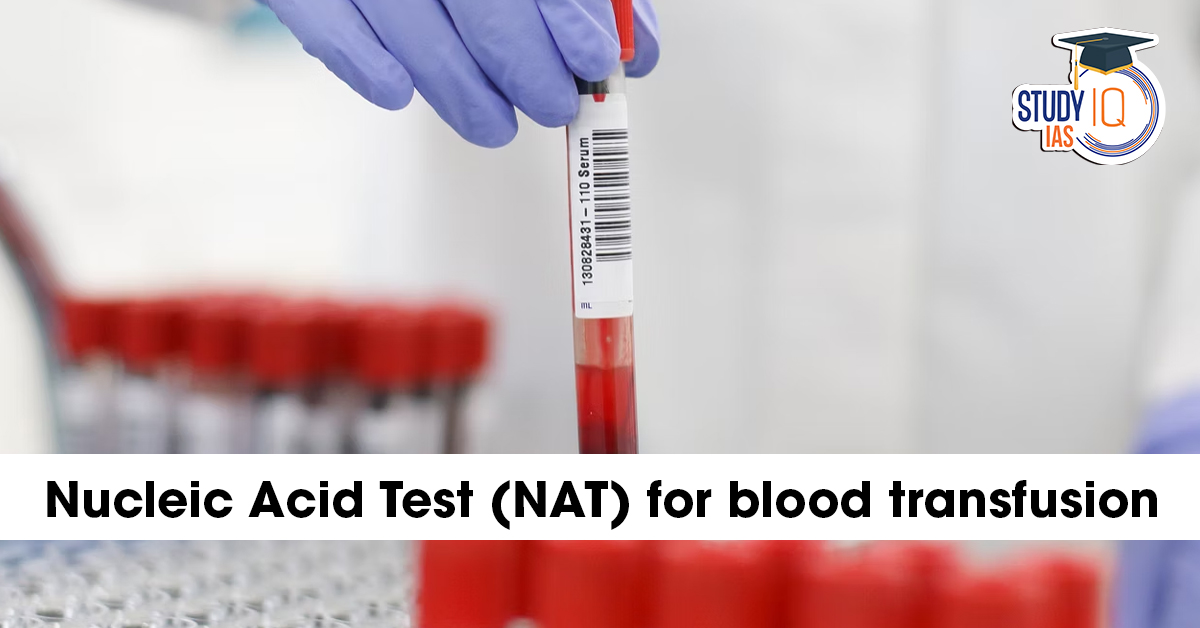
Nucleic Acid Testing (NAT) is an advanced molecular diagnostic technique used to detect the genetic material (DNA or RNA) of viruses directly in blood samples. It plays a crucial role in improving the safety of blood transfusions by identifying infections at an early stage.
Recently, the Supreme Court of India agreed to examine whether NAT should be made compulsory in blood banks across the country to enhance blood screening standards and reduce the risk of transfusion-transmitted infections.
What is Nucleic Acid Testing (NAT)?
Nucleic Acid Testing (NAT) is a laboratory technique that detects the genetic material of pathogens such as viruses in blood samples. Unlike traditional antibody-based tests, NAT identifies viral DNA or RNA directly, allowing early detection even before the immune system produces antibodies.
This early detection capability makes NAT one of the most reliable tools for screening donated blood and ensuring transfusion safety.
Scientific Principle of NAT
NAT works by amplifying small quantities of viral genetic material to detectable levels using advanced molecular techniques. Even minute traces of viral DNA or RNA present in the blood sample can be identified through amplification.
Two major techniques used in NAT include:
1. Polymerase Chain Reaction (PCR)
PCR amplifies viral DNA or RNA through repeated cycles of heating and cooling, enabling detection even when the virus is present in very small quantities.
2. Transcription-Mediated Amplification (TMA)
TMA is another molecular method that rapidly amplifies RNA sequences of viruses, making it useful for detecting viral infections at early stages.
Both techniques significantly increase the sensitivity and accuracy of blood screening tests.
Viruses Commonly Screened Using NAT
NAT is primarily used to detect major transfusion-transmitted viral infections, including:
-
Human Immunodeficiency Virus (HIV)
-
Hepatitis B Virus (HBV)
-
Hepatitis C Virus (HCV)
These viruses are major global public health concerns and can spread through contaminated blood transfusions if not properly screened.
NAT and Window Period Reduction
One of the most significant advantages of NAT is the reduction of the window period. The window period refers to the time between the initial infection and the point at which a test can detect the infection.
Traditional tests such as ELISA rely on antibodies produced by the immune system, which may take several weeks to appear. NAT, however, detects viral genetic material directly, allowing much earlier diagnosis.
| Virus | ELISA Window Period | NAT Window Period |
|---|---|---|
| HIV | ~22 days | ~9–11 days |
| HBV | ~59 days | ~20–25 days |
| HCV | ~70 days | ~7–10 days |
By significantly shortening this window period, NAT reduces the chances of infected blood being used in transfusions.
Importance of NAT in Blood Transfusion
Blood transfusion safety is a critical component of healthcare systems. NAT helps reduce the residual risk of transfusion-transmitted infections and ensures safer blood supplies.
Key benefits include:
1. Early Detection of Viral Infections
NAT can identify infections before antibodies are formed, enabling early diagnosis and prevention of transmission.
2. Improved Blood Safety
It reduces the risk of transfusion-transmitted diseases such as HIV, Hepatitis B, and Hepatitis C.
3. Higher Sensitivity and Accuracy
Molecular testing methods used in NAT are more sensitive than conventional serological tests.
4. Enhanced Public Health Protection
By improving blood screening standards, NAT contributes to overall healthcare safety and disease control.
Patients Who Benefit Most from NAT Screening
Certain patients require frequent blood transfusions and are therefore at higher risk of infection from contaminated blood. NAT is particularly important for:
-
Thalassemia patients requiring regular transfusions
-
Hemophilia patients
-
Cancer patients undergoing treatment
-
Organ transplant recipients
-
Patients with chronic blood disorders
For these groups, safer blood transfusion practices are essential to prevent life-threatening infections.
Challenges in Implementing NAT in India
Despite its advantages, widespread adoption of NAT faces several challenges:
-
High installation and operational costs
-
Limited infrastructure in smaller blood banks
-
Need for trained laboratory personnel
-
Lack of uniform national policy mandating NAT screening
These challenges have sparked policy discussions regarding whether NAT should be made mandatory across India.
Way Forward
Public health experts recommend a phased implementation of NAT across blood banks in India. Government support, financial assistance, and capacity building can help expand NAT-based screening nationwide.
Making NAT mandatory could significantly strengthen India’s blood safety system and reduce the risk of transfusion-transmitted infections.
|
Read More Notes |
|
| Environment Notes | Art and Culture Notes |
| Science and Tech | History Notes |
| Geography Notes | Indian Polity Notes |
| General Knowledge | International Relation |
|
Explore StudyIQ Courses |
|
 Future of Chipmaking: Trends, Technologi...
 Tiniest QR Code: Scientists Develop Ultr...
 Rupture Across the Durand Line: Rising T...











 WhatsApp





