
Table of Contents
The Nilgiri Tahr is a rare mountain ungulate endemic to southern India and an important flagship species of the Western Ghats biodiversity hotspot.
Key Features
-
Only Mountain Ungulate in Southern India:
Among the 12 mountain ungulate species found in India, the Nilgiri Tahr is the only one native to southern India. -
Habitat:
-
Endemic to the Western Ghats
-
Inhabits high-altitude shola–grassland ecosystems
-
Found at elevations between 1,200–2,600 metres
-
-
State Animal:
-
Official State Animal of Tamil Nadu
-
Physical Appearance
-
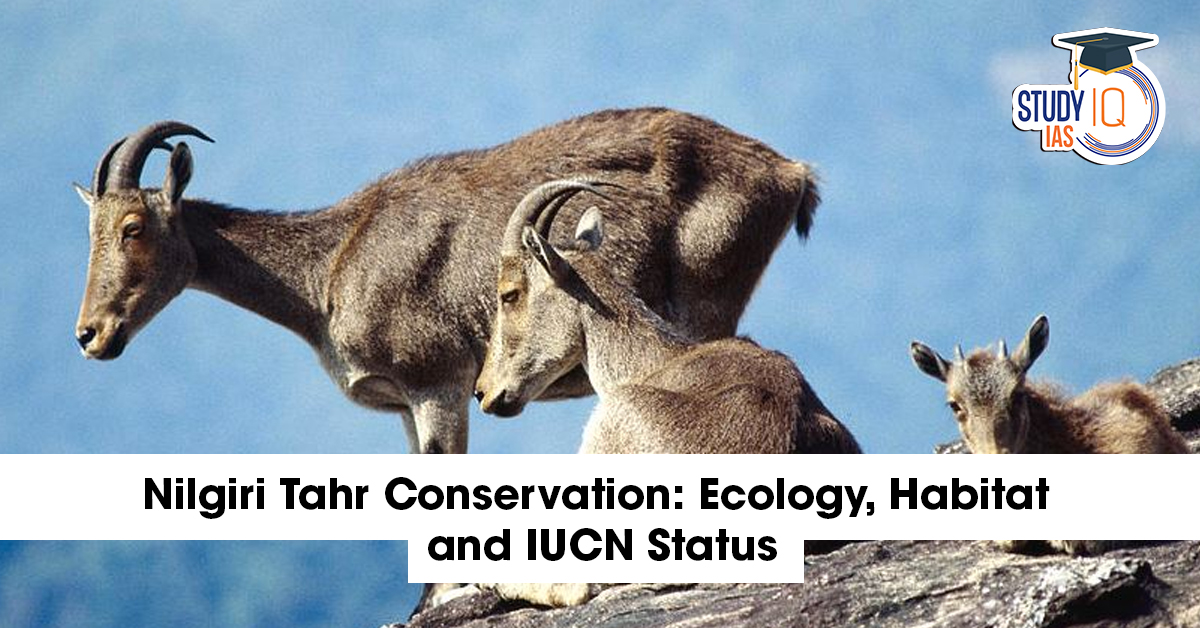
Stocky body with short, coarse fur
-
Mature males, called “Saddlebacks”, develop a distinctive light-coloured patch on their backs
-
Both males and females possess curved horns
Conservation Status
-
IUCN Red List: Endangered
-
Wildlife Protection Act, 1972: Schedule I (Highest legal protection in India)
-
CITES: Appendix I (Highest level of international trade protection)
Conservation Measures
Project Nilgiri Tahr
Launched by the Tamil Nadu government, Project Nilgiri Tahr focuses on:
-
Habitat restoration
-
Scientific population assessment
-
Disease monitoring
-
Strengthening protection measures
This project aims to revive fragmented populations and ensure long-term ecological sustainability.
Key Protected Areas
-
Eravikulam National Park
-
Hosts the largest surviving population of Nilgiri Tahr
-
-
Mukurthi National Park
-
Anamalai Tiger Reserve
Importance of UPSC and Environment Exams
-
Species endemic to biodiversity hotspots
-
Example of high-altitude grassland ecosystem conservation
-
Linked with habitat fragmentation, climate change, and invasive species issues
-
Important under the Wildlife Protection Act and international conventions
 Graphic Processing Units (GPUs) – Work...
 Gold Imports and the Indian Economy – ...
 50 Years of the Bonded Labour System (Ab...











 WhatsApp





