
Table of Contents
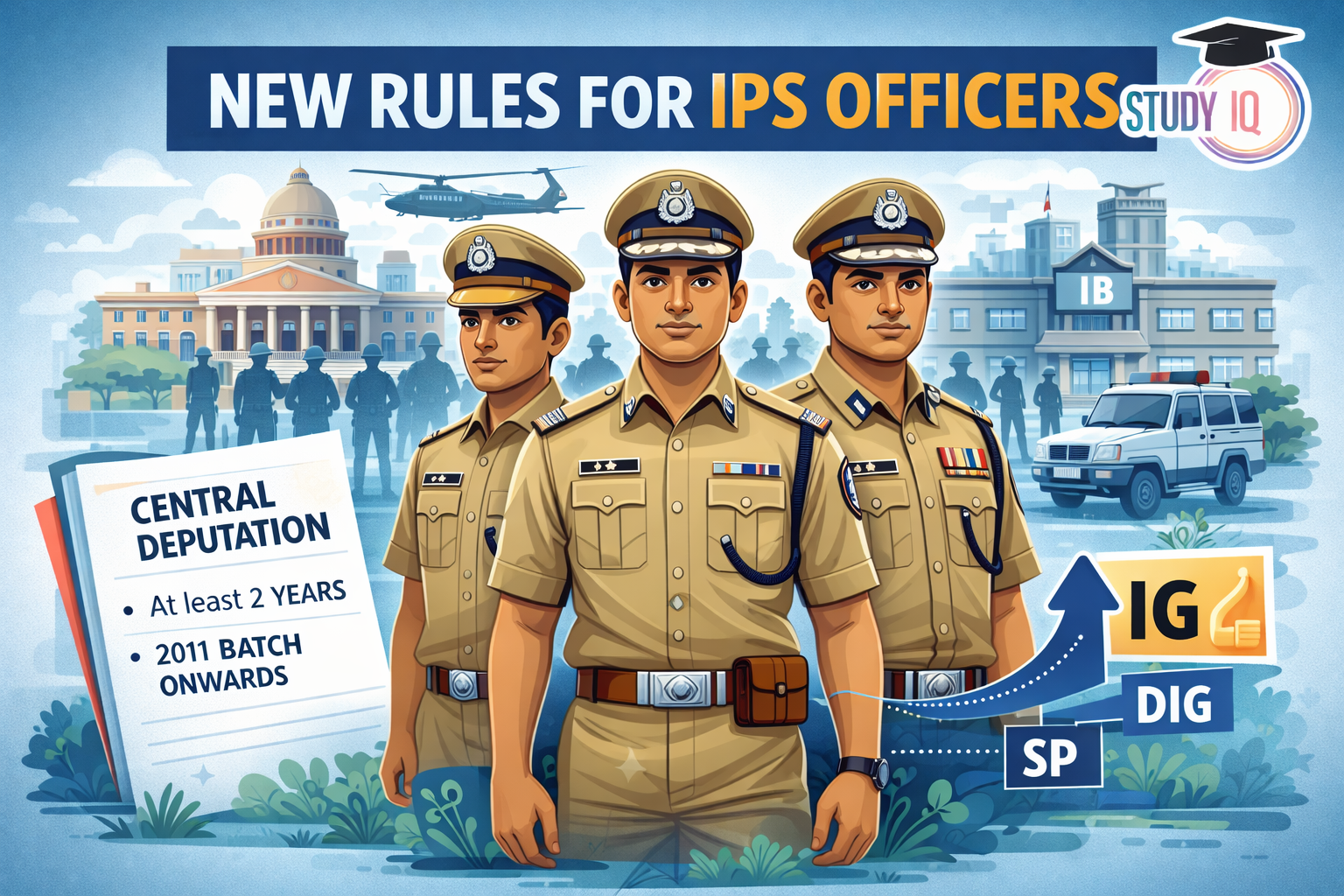
The Union government has recently modified the empanelment norms for Inspector General (IG) and equivalent posts at the Centre for officers of the Indian Police Service (IPS). Under the revised guidelines, a minimum of two years of central deputation at the level of SP/DIG or equivalent has been made mandatory for empanelment to IG-level posts for officers of the 2011 batch onwards. The move seeks to address capacity gaps in central forces and improve the quality of senior leadership in national security institutions.
Understanding Empanelment in the IPS
Empanelment is a formal process through which All India Service officers are assessed for their suitability to hold senior positions in the Central Government, including leadership roles in:
-
Central Armed Police Forces (CAPFs)
-
Central Police Organisations (CPOs)
-
Intelligence and investigative agencies
Empanelment ensures that officers appointed to strategic posts possess the required experience, competence, and institutional exposure.
Key Features of the Modified Norms
Mandatory Central Deputation
-
A minimum of two years of service on central deputation at the rank of SP/DIG or equivalent is now compulsory.
-
Earlier guidelines did not mandate central experience as an eligibility condition.
Prospective Application
-
The revised norms apply only to IPS officers of the 2011 batch onwards.
-
This avoids disruption to current empanelment and existing appointments.
Career Progression Focus
-
The modification aims to shape future leadership pipelines rather than addressing immediate vacancies.
Rationale Behind the New Rules
1. Addressing Vacancies in Central Forces
Central forces have been facing persistent shortages at middle and senior levels, especially at the SP and DIG ranks. Limited willingness among IPS officers to opt for central deputation has affected operational efficiency.
2. Improving Leadership Quality
IG-level officers in central forces deal with:
-
National security
-
Counter-terrorism
-
Inter-state and transnational crime
Mandatory prior central exposure ensures institutional familiarity and strategic competence.
3. Strengthening Centre–Cadre Integration
The rule promotes closer administrative integration between state cadres and central institutions, enhancing coordination in internal security management.
Likely Impact of the Decision
Short-Term Impact
-
No immediate impact on current IG-level empanelments.
-
Existing vacancies at the IG level remain unaffected.
Medium- to Long-Term Impact
-
Increased willingness among officers to serve on central deputation.
-
Improved staffing at SP and DIG levels in central organisations.
-
Creation of a more experienced and centre-oriented leadership pool.
Concerns and Challenges
1. Federal Balance
States may face temporary shortages of senior officers if central deputation becomes more attractive, requiring careful cadre management.
2. Uniform Eligibility Requirement
Central deputation may not be feasible for all officers due to personal or cadre-specific constraints.
3. Need for Supporting Reforms
Without improvements in:
-
Working conditions
-
Tenure security
-
Institutional autonomy
central deputation alone may not remain attractive in the long run.
Way Forward
Strengthening Incentives
-
Better housing, education facilities, and assured tenure for deputed officers.
-
Transparent career progression pathways.
Balanced Cadre Management
-
Coordination between the Centre and states to ensure optimal deployment of officers.
Capacity Building
-
Specialised training for officers before and during central deputation to meet national-level policing requirements.
Conclusion
The revised empanelment norms represent a strategic shift in grooming future IPS leadership for central forces. By linking career advancement to prior central experience, the government aims to enhance institutional capacity, improve operational effectiveness, and address chronic staffing gaps. If implemented with sensitivity to federal principles and human resource challenges, the reform can significantly strengthen India’s internal security architecture.
|
Read More Notes |
|
| Environment Notes | Art and Culture Notes |
| Science and Tech | History Notes |
| Geography Notes | Indian Polity Notes |
| General Knowledge | International Relation |
|
Explore StudyIQ Courses |
|
 Bhojshala-Kamal Maula Mosque Dispute: Hi...
 Right to Die with Dignity: Passive Eutha...
 Distinct Enumeration of DNTs in Census 2...






 WhatsApp





