
Table of Contents
Context
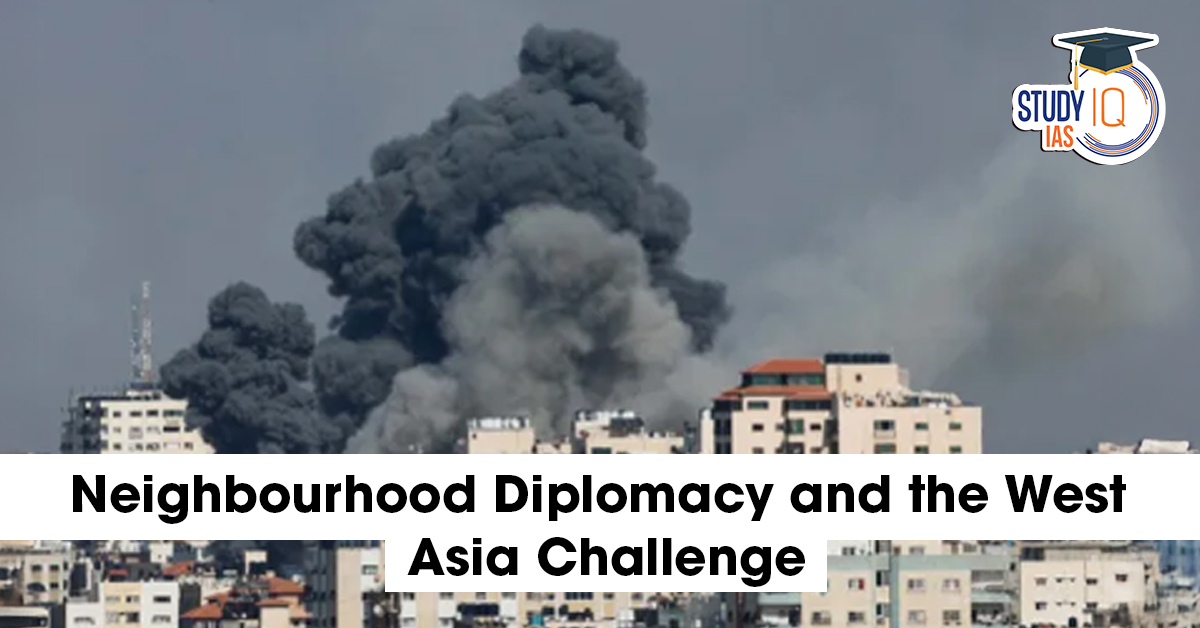
- The ongoing West Asia conflict has brought significant challenges for India’s neighbourhood diplomacy and strategic autonomy. India, which traditionally follows a balanced West Asia policy, now faces the challenge of maintaining strategic neutrality while protecting national interests.
Issues in India’s Policy After the War
- Perception of Strategic Tilt: India’s initial response appeared closer to the US–Israel position, as it did not explicitly criticise their actions while condemning Iran’s retaliation.
- Diplomatic Delay and Optics: Delay in expressing condolences over Iran’s leadership loss created concerns about India’s sensitivity to regional sentiments, especially when neighbours responded more quickly.
- Deviation from Traditional Balancing Policy: India has historically maintained strong ties with all West Asian countries, but current actions suggest a temporary departure from its neutral approach.
- Neighbourhood Sensitivities: Countries like Bangladesh, Sri Lanka, Maldives, and ASEAN members adopted more balanced positions, highlighting divergence from India’s stance.
- Challenge to Strategic Autonomy: Close alignment with Western actions may undermine India’s image as an independent global actor, affecting its credibility in the Global South.
Maintaining Economic, Regional and Maritime Security in Neighbourhood
- Energy Security Support to Neighbours: Disruption in West Asia oil supplies and Strait of Hormuz affects not only India but also neighbours like Sri Lanka, Bangladesh, Maldives, Nepal, and Bhutan, increasing their dependence on India for fuel assistance and energy stability.
- Protection of Regional Diaspora: Millions of South Asian workers in West Asia (including Indians, Bangladeshis, Nepalese, Sri Lankans) face risks, requiring India to coordinate regional evacuation, safety measures, and humanitarian response.
- Regional Supply Chain Stability: The conflict disrupts fertiliser, food, and shipping routes, affecting agriculture and trade across South Asia, making India responsible for ensuring supply continuity to neighbours.
- Neighbourhood Economic Stabilisation: Smaller economies in the region depend on India for credit lines, fuel exports, and essential goods, strengthening India’s role as a regional economic anchor during crises.
- Maritime Security for Regional Trade: Increased tensions in the Indian Ocean and Persian Gulf threaten shipping routes used by all South Asian countries, requiring India to safeguard sea lanes for regional trade and energy flows.
- Collective Security Responsibility: India’s role as a net security provider extends to protecting not just itself but also neighbouring states’ maritime and economic interests, especially during external interventions.
- Strengthening Regional Cooperation Mechanisms: India must enhance coordination through regional groupings and maritime platforms to ensure collective security, trade resilience, and crisis response for South Asia.
Restoring the Balance in India’s West Asia Policy
- Reaffirming Strategic Neutrality: India must return to its policy of engaging all sides without taking positions in conflicts, ensuring trust across the region.
- Reviving Multi-Alignment Approach: Strengthening ties simultaneously with Iran, Israel, Gulf countries, and the US to maintain strategic flexibility.
- Humanitarian and Diplomatic Outreach: Timely responses such as condolences, humanitarian aid, and evacuation support can rebuild regional goodwill.
- Balancing Global Platforms: India must use forums like BRICS, Quad, and G20 to promote dialogue, de-escalation, and regional stability.
- Energy and Connectivity Diversification: Reducing dependence on a single region by investing in alternative energy sources, strategic reserves, and diversified trade routes.
- Neighbourhood First Policy Reinforcement: Supporting neighbours with fuel, food, and economic assistance to maintain India’s role as a regional leader.
- Promoting Regional Cooperation: Encouraging trade, connectivity, and energy-sharing frameworks within South Asia to build collective resilience.
|
Read More Notes |
|
| Environment Notes | Art and Culture Notes |
| Science and Tech | History Notes |
| Geography Notes | Indian Polity Notes |
| General Knowledge | International Relation |
|
Explore StudyIQ Courses |
|
 Key Takeaways from the Expanding Conflic...
 In war on Iran, Israel knows what it wan...
 World Happiness Report 2026: Finland Top...










 WhatsApp





