
Table of Contents
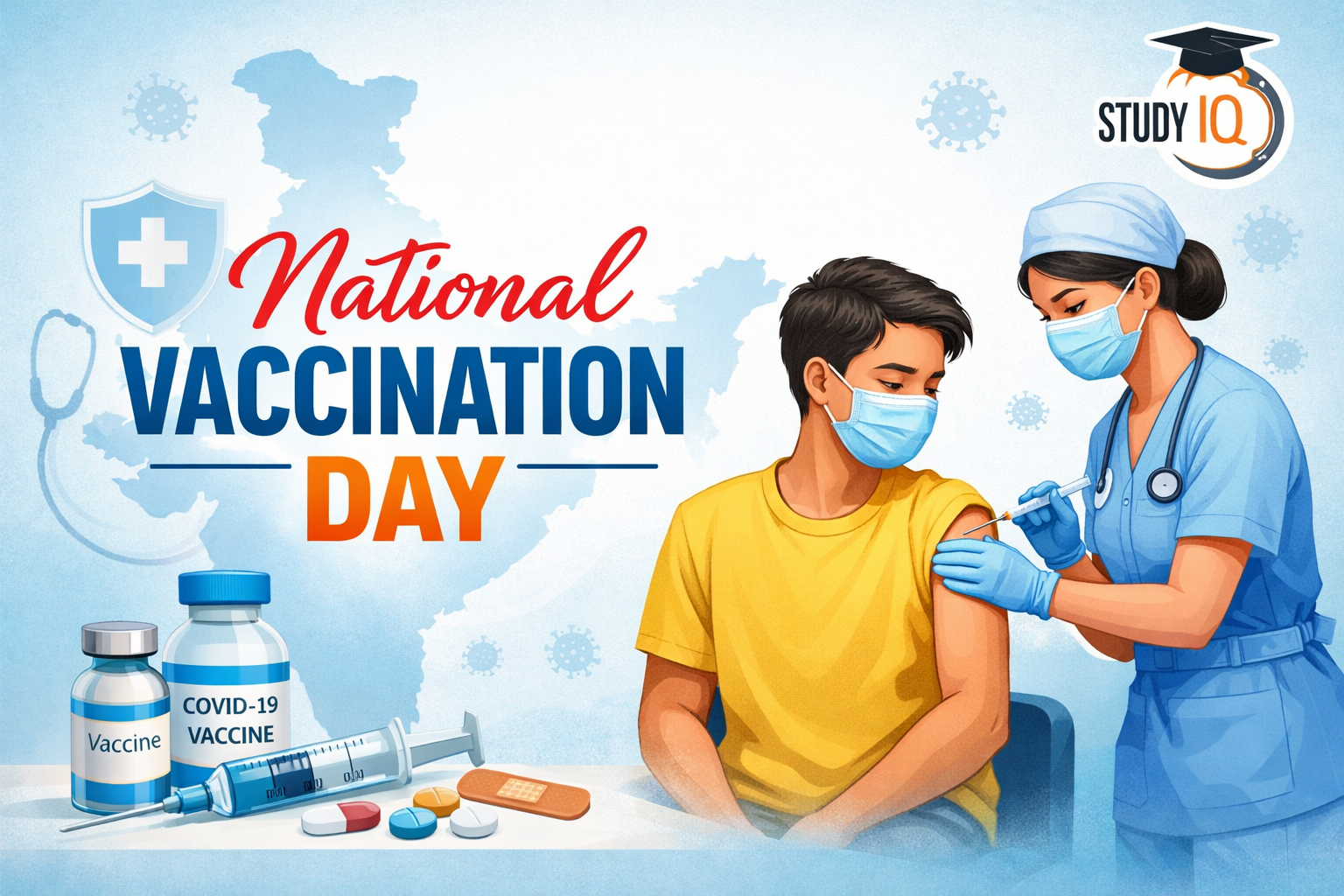
National Vaccination Day is observed every year on 16 March in India to raise awareness about the importance of vaccines in preventing infectious diseases and protecting public health. The day commemorates the launch of the Pulse Polio Immunization Programme in 1995, when the first nationwide campaign administered oral polio vaccine (OPV) to children across the country.
National Vaccination Day highlights India’s achievements in disease prevention and acknowledges the efforts of healthcare workers, scientists, volunteers, and policymakers who work tirelessly to ensure vaccination reaches every individual, including those in remote and underserved regions.
National Vaccination Day 2026 Overview
| Key Detail | Information |
|---|---|
| Observed On | 16 March |
| Country | India |
| First Observed | 1995 |
| Occasion | Launch of Pulse Polio Programme |
| Objective | Promote vaccination awareness and disease prevention |
| Major Achievement | India declared polio-free in 2014 |
History of National Vaccination Day in India
The history of National Vaccination Day is closely associated with the Pulse Polio Immunization Programme, launched by the Government of India on 16 March 1995.
The campaign aimed to eradicate poliomyelitis, a highly contagious viral disease that mainly affects children under five years of age. During the programme, millions of children were given two drops of oral polio vaccine at thousands of vaccination booths across the country.
The initiative involved large-scale mobilization of healthcare workers, volunteers, NGOs, and government agencies. Door-to-door campaigns and awareness drives ensured that vaccination reached even the most remote areas.
As a result of sustained immunization efforts, the World Health Organization (WHO) officially declared India polio-free on 27 March 2014, marking a historic milestone in global public health.
Edward Jenner and the Origin of Vaccination
The concept of vaccination traces back to the work of Edward Jenner, a British physician who made a groundbreaking discovery in 1798.
Jenner found that people exposed to cowpox virus developed immunity against smallpox, one of the deadliest diseases in human history. His discovery led to the development of the first vaccine and laid the foundation for modern immunology.
Before Jenner’s discovery, an earlier practice called variolation was used, where material from smallpox sores was introduced into healthy individuals to induce immunity. Jenner’s safer method revolutionized disease prevention worldwide.
Major Vaccination Programmes in India
India runs one of the largest immunization programmes in the world through the Universal Immunization Programme (UIP), launched in 1985. Over time, several vaccines have been introduced to protect children and adults from life-threatening diseases.
Key Vaccines Introduced in India
| Vaccine | Year Introduced | Purpose |
|---|---|---|
| Inactivated Polio Vaccine (IPV) | 2016 | Strengthens protection against polio |
| Rotavirus Vaccine (RVV) | 2016 | Prevents severe diarrhoeal diseases in children |
| Measles-Rubella (MR) Vaccine | 2017 | Eliminates measles and rubella infections |
| Pneumococcal Conjugate Vaccine (PCV) | 2017 | Reduces pneumonia-related infant deaths |
| Tetanus and Adult Diphtheria (Td) Vaccine | Introduced for adolescents and pregnant women | Prevents tetanus and diphtheria |
These vaccination programmes play a critical role in reducing child mortality and improving public health outcomes across the country.
COVID-19 Vaccination and India’s Achievements
India also demonstrated remarkable success during the COVID-19 vaccination campaign, which became one of the largest vaccination drives in the world.
The two major vaccines widely used in India were:
-
Covishield
-
Covaxin
Through an extensive nationwide campaign supported by the CoWIN digital platform, India administered over 170 crore vaccine doses. This achievement showcased the country’s strong healthcare infrastructure, scientific capability, and logistical coordination.
Importance of Vaccination in Public Health
Vaccination is considered one of the most effective and cost-efficient public health interventions. Vaccines help the body develop immunity against harmful pathogens such as viruses and bacteria.
Key Benefits of Vaccination
-
Prevents the spread of infectious diseases
-
Reduces the risk of epidemics and outbreaks
-
Protects vulnerable populations, including infants and the elderly
-
Contributes to herd immunity
-
Decreases healthcare costs and mortality rates
Vaccination programmes have played a crucial role in controlling diseases such as polio, measles, tetanus, diphtheria, and tuberculosis.
Significance of National Vaccination Day
National Vaccination Day serves as an important reminder of the role vaccines play in strengthening public health systems and safeguarding communities.
The day is significant because it:
-
Promotes awareness about immunization
-
Recognizes the contributions of healthcare workers and volunteers
-
Encourages parents to ensure timely vaccination of children
-
Strengthens India’s commitment to disease eradication and public health security
It also reinforces the importance of continued research, innovation, and global cooperation in vaccine development.
 Oscars 2026 Winners List: Full List of W...
 Supreme Court Upholds the Right to Die w...
 GDP Growth vs Employment Reality: Unders...











 WhatsApp





